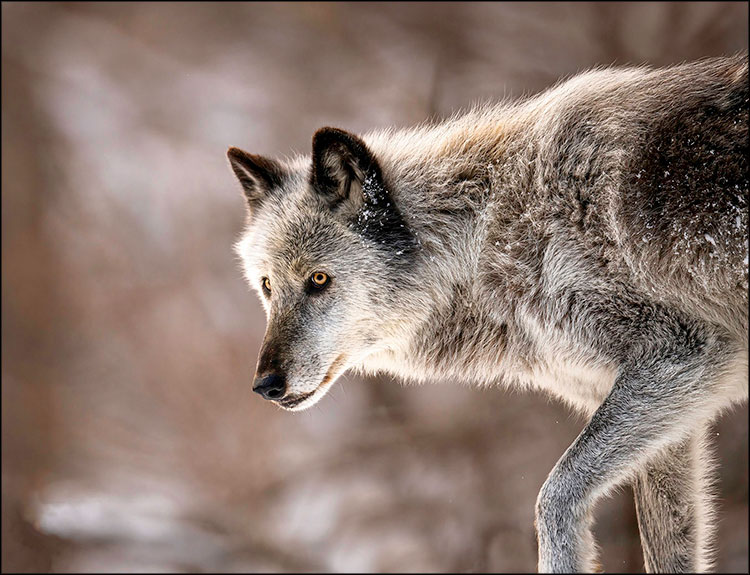
Republican Representative Nick LaLota of the First Congressional District cast a critical vote on Dec. 18 to remove Endangered Species Act protections for the gray wolf outside of Alaska. The gray wolf was first listed as endangered under the act in 1974.
The vote comes after the Trump administration proposed a series of changes to the act in mid-November. The public comment window on those changes, which could harm some of the East End’s most celebrated species, like the piping plover, monarch butterfly, Eastern tiger salamander, and North Atlantic right whale, ended on Dec. 22.
In a month dominated by holidays, over 400,000 Americans still found the time to write in to oppose the changes.
“The Trump administration’s cruel attempt to weaken protections for imperiled plants and animals has been met with a huge wave of opposition,” said Ben Levitan, a senior attorney for Earthjustice, a nonprofit public interest environmental law organization. “This attack is not just about the harm it would bring to wildlife and ecosystems; it’s also a threat from the Trump administration to violate the law and ignore the popular will in order to serve well-connected special interests.”
Through a spokesperson, Representative LaLota issued a statement on his wolf vote: “I support strong conservation outcomes and have backed animal welfare and environmental protection efforts because I care deeply about protecting wildlife,” he wrote. “Conservation policy must be guided by science, and in key regions that science shows gray wolf populations have recovered. Where recovery has occurred, it is appropriate to return management authority to state wildlife professionals while maintaining federal protections elsewhere. This approach respects the livelihood of farmers and ranchers and ensures conservation resources are focused where they are most needed.”
The congressman did not respond to a question about whether his vote showed that he had made up his mind about voting with his party to weaken the Endangered Species Act in general.
That worries Chris Allieri, the founder and executive director of the NYC Plover Project, a nonprofit dedicated to protecting the plover on city beaches.
“It’s important to remember there are a lot more people in Suffolk County that are pro E.S.A. protections than there are people against them,” he said. “None of these votes against species put food on the table for everyday Americans. None of them make us safer or clean up cities. None of this helps people. You have to ask yourself, ‘Why are they doing it?’ These votes are driven by industry, extractive industries, and an Interior Department hell-bent on opening our public lands. Congress should stay far away from these law changes. They’re trying to push through something that is unpopular and unscientific and not based on the realities of the species.”
In November, the Trump administration proposed changes that would insert economic analysis into decisions about whether to list a species as endangered or threatened. Representative LaLota’s comments about the impact of the gray wolf’s federal protections on “the livelihood of farmers and ranchers” indicates the financial impact of the wolf’s protections indeed played a role in his decision.
The congressman voted with his party to pass the legislation, officially known as the Pet and Livestock Protection Act. The law was sponsored by Representatives Lauren Boebert of Colorado and Tom Tiffany of Wisconsin. If passed by the Senate and signed by President Trump, it would remove federal protections for the wolf across the continental United States in 60 days and, importantly, would deny judicial review of the delisting.
The rule was first passed during President Trump’s first administration but struck down by a federal court in 2022.
In fact, there have been attempts to delist the wolves in certain parts of their range going back decades. In 2003, the U.S. Fish and Wildlife Service split their population into three segments, Eastern, Western, and Southwestern, but courts have consistently sided with environmentalists who have argued to maintain the protections. If President Trump’s rule changes go into effect, courts would be stripped of that ability.
Representative Pete Stauber of Minnesota spoke on the floor of the House in support of the legislation. More than half of the population of gray wolves in the continental U.S. were in his state, he said. “Most of them can be found in my district.” He showed a picture of a gray wolf in a school parking lot. “Just feet from the schoolhouse door, and because of the gray wolf’s listing status, nothing could be done to protect the lives of the students there,” he said.
“This is absolutely horrible,” Marianne Barnett, a wildlife photographer and owner of the UPS store in Sag Harbor, said recently. “I’ve visited and photographed wolves in their natural environment in several locations across North America, including the High Arctic of Ellesmere Island. It’s one of the most emotional experiences I’ve had in my lifetime. Nothing has convinced me more of the importance of keeping the E.S.A. intact,” she said.