Several contested races will be on the ballot when annual voting for school board members and district budgets takes place on Tuesday. Would that there were more challengers; the status quo isn’t apt to result in a fresh look for a solution to the growing inequities between rich and poor districts, and new blood might speed the way.

Editorials
Car Wash: Danger AheadMay 5, 2016
A for-sale sign sways in the wind outside the shuttered Star Room nightclub on Montauk Highway in Wainscott. The apparent lack of activity there, however, belies what is going on behind the scenes: A dangerous proposal to build a car wash on the roughly two-acre site is working its way through East Hampton Town offices.
Over-the-Top Complex Requires More VettingMay 5, 2016
You can’t fault Scott Rubenstein for asking. And, frankly, we might assume that even he is surprised by how smooth the path in Town Hall has been so far for his plan for a bowling alley, miniature golf course, and 200-seat sports bar.
Greening the GreenApr 28, 2016
Plans to make the East Hampton Village Green more “green” are moving ahead, with a proposal to install contaminant-absorbing landscaping near Town Pond. Another project, a bioswale (whatever that is), will go in near Hook Mill. Both will help improve water quality in Hook Pond, whose headwaters reach to roadside drains on North Main Street.
Ice Cream FolliesApr 28, 2016
Getting a snack or a little ice cream at one of East Hampton Town’s beaches on a summer’s day is one of the simple pleasures of living or visiting here. That is why (we guess) the town allows vendors to lease spots at most of the ocean beaches where lifeguards are stationed.
 No Longer Appropriate
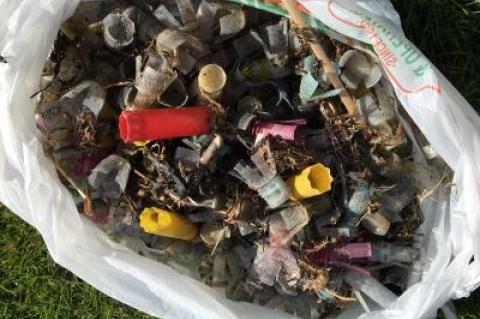
You know the sound. It’s a lovely weekend afternoon and suddenly you hear the thudding of shotgun blasts. A small group is off in the distance target shooting.
Hurry Up, It’s TimeApr 21, 2016
Five work weeks remain before Memorial Day, which hardly seems enough time for East Hampton Town officials to do what would be needed to maintain the delicate balance between the demands of summer and the interests of residents. There is a lot to do, and, while it is evident that all of summer’s ills cannot be solved in a single year, there is reason to worry that Town Hall remains satisfied with what is to many observers an unacceptable status quo.
Rare Opportunity to Save an IslandApr 21, 2016
Plum Island, a federal facility off the North Fork within eyesight of the South Fork and coastal Connecticut, could soon be sold to private interests unless a broad effort by officials at several government levels and environmental groups succeeds in having it set aside for preservation, most wisely as a national wildlife refuge.
A Historic PrimaryApr 14, 2016
It has been a long time since a New York presidential primary really mattered. And it has been a long time since a primary season has generated anywhere near this level of interest among East End residents. No matter where one might be on the political spectrum, the big-picture debates about the direction of the country have been significant.
Disparities in Focus As Schools Face VotesApr 14, 2016
The South Fork’s school districts are beginning to finalize proposed budgets for the coming year, and some boards appear willing to ask voters to authorize going above the so-called 2-percent tax cap. As tough as this might be for some residents, it reflects the fact that in most cases there are few places to make further cuts in spending after years of forced belt-tightening.
Misguided Solar BanApr 7, 2016
All but lost amid the discussion of new setbacks and coverage rules for construction in Sag Harbor was a proposal to ban rooftop solar energy systems in nearly the entire village.
Real Estate Investment: Legitimate or LaunderedApr 7, 2016
The so-called Panama Papers scandal, which took down Iceland’s prime minister on Tuesday, may seem a long way from eastern Long Island. Because the ownership of many of the most valuable properties here remains secret, however, just who might be hiding next door, so to speak, is a good question.
Hamlet Studies: Residents FirstMar 31, 2016
East Hampton Town has begun work on a set of so-called hamlet studies. Six in all, they are supposed to result in recommendations for the town’s commercial areas. The objective is to produce a document that will guide future land-use decisions and allow commerce to function while avoiding sprawl and other negative effects of growth.
 Ospreys Return But Threats Remain
The osprey were a couple of days late this week — or they were right on time. It depended on whom you asked and where, in turn, they were looking.
A Commitment To Wind EnergyMar 24, 2016
In the Northeast, to no small measure this will mean wind power — and when one thinks about wind power on a scale large enough to make a difference, that means offshore turbines.
New Approaches Needed In the Housing CrisisMar 24, 2016
The South Fork has a housing crisis. Just ask almost any employer or a prospective employee who has considered moving to the region for a job. Places to live are all but unavailable. So far, attempts by local government to find solutions have failed to meet demand.
Promising InitiativesMar 17, 2016
Attention to environmental concerns is growing here, with some positive results. We are enthusiastic about a $100,000 study of an electric “microgrid” in East Hampton Town, which could provide clean power and better electrical service during outages.
State Salaries In Albany’s SightsMar 17, 2016
Doing something about corruption and influence peddling in Albany appears high on the to-do list for lawmakers — except when it comes to their own bank accounts.
Alert and Aware Via Social MediaMar 10, 2016
These days we’ve come to expect a 24-hour news cycle. When there’s an accident on Route 27, when a major snowstorm is headed our way or a northeaster is bearing down on us, when we hear sirens or a fire whistle, we (journalists included) tend to want up-to-the-minute details. Should we reschedule that trip to Riverhead? Stay off the roads? Get our boat out of the water?
To Condemn? That’s the QuestionMar 10, 2016
Two major municipal condemnation initiatives, which are moving slowly ahead in Sag Harbor and on a long strip of beach on Napeague, warrant more public consideration.
A New Leaf For Town TrusteesMar 3, 2016
The East Hampton Town Trustees have faced the tensions of going it alone instead of cooperating with a number of other government agencies for a long time. The idea, still in currency among some members and residents, has been that since the trustees were given authority by royal decree in the 17th century, no entity can take it away.
Nearly Good to Go In AmagansettMar 3, 2016
Those in pressing need may still have a bit of a wait before that ceremonial first flush, but a public restroom for the Amagansett hamlet center appears to be nearing reality. Forget about helicopter noise — if the members of the East Hampton Town Board actually pull this off, they will go down in history.
Retail TherapyMar 3, 2016
Okay, so this winter has not been nearly as bad as the one that preceded it, but it nevertheless has been bleak, at times freezing cold, and, except for a bit of snow, lacking in seasonal diversions. How thankful we are, though, for the half-off sales. Retail, it seems, can give us something to do when there is little left other than binge-watching Netflix.
Concern About Drugs At High SchoolFeb 25, 2016
East Hampton High School has a drug problem. We know this because the administration has scheduled forums at which the use of the life-saving anti-opiate known as Narcan will be explained and kits made available for parents to take home. What we do not know is how big the problem is. School officials have not been forthcoming, saying only that there has been an “uptick” in drug-related incidents. Much more needs to be said.
The Nation’s Shoreline Circa 2100Feb 25, 2016
The year 2100 might seem a long way off, but for East Hampton Town and much of the rest of the world’s coastal communities, it is a date that should be of genuine concern. According to a new study released on Monday, oceans could rise by as much as four feet by the end of the century.
Car Wash? Think TwiceFeb 18, 2016
A recently unveiled plan for a car wash on Springs-Fireplace Road in East Hampton should not be considered in a vacuum. But that is, unfortunately, the sense we get from some members of the town planning board, who appeared favorably inclined toward the proposal presented to them on Feb. 3. They are, perhaps, to be forgiven because this part of town has become a place for businesses not welcome elsewhere. Whether that kind of use should be perpetuated there is an good question.
Towns Should Get Behind the WheelFeb 18, 2016
There are plenty of reasons why the old notion of the East End breaking away to form its own Peconic County is next-to impossible, but a new issue — how to regulate taxis and ride-sharing services — points to the necessity of some regional cooperation.
Houses Too Big for the BlockFeb 11, 2016
In the face of what seems to be increasingly outsized pressure, the East Hampton Town and Village Zoning Boards of Appeal seem to be getting tough. That’s a good thing.
Plaudits for Springs Fire DistrictFeb 11, 2016
With the Springs Fire District commissioners’ decision to supplement its volunteer ambulance squad with professional responders, a last South Fork holdout has joined the ranks of those with paid emergency providers.
Watch Out for El NinoFeb 11, 2016
It has usually been predictable that winter weather will arrive on the South Fork at around the end of January. This year, like last, saw a relatively benign December and first three weeks of January. Then, on Jan. 22 and 23, snow arrived in a storm that set records as nearby as La Guardia Airport.