
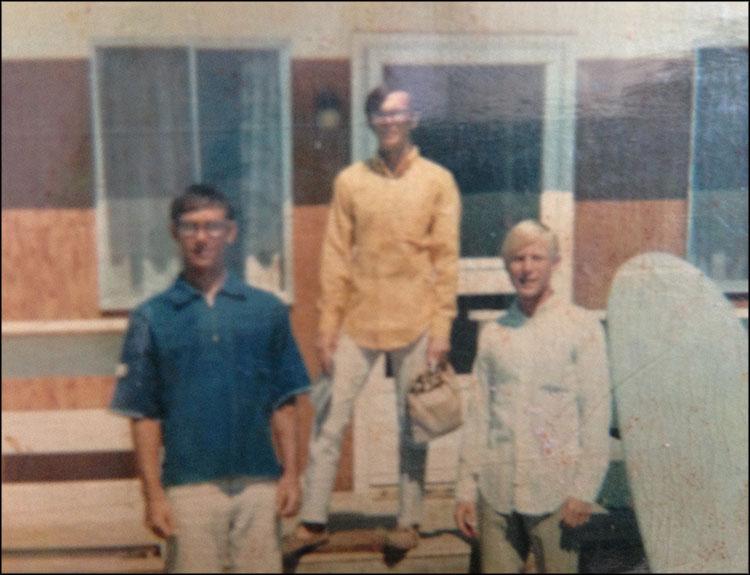
It was 1964 and the World’s Fair was in Flushing, Queens. Mike Angiulo was shooting spitballs at Steve Senese from the back of a school bus carrying Massapequa junior high schoolers on a class trip.
“These were legitimate goobers. I have to think it was seventh grade,” Mr. Senese recalled.
“And then we played Little League and our mothers sat together in the bleachers watching our 0-15 team in the Babe Ruth League. Then we started surfing together. And then we became Deadheads together.”
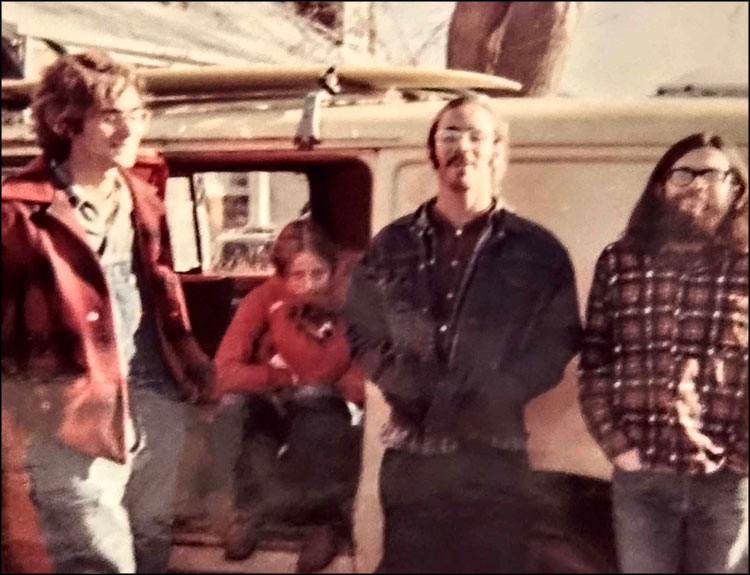
In those days, Senese and Angiulo were great friends who shared a love of surfing — especially in Montauk. At the time, surfing was illegal in New York’s state parks. If they’d had a crystal ball in the 1960s, they might have known that years later they’d become more like family — that their children would get married, and they’d share a granddaughter — or that Angiulo would eventually become an attorney and help legalize surfing in those parks.
“Two guys got tickets for surfing at West End Two, which is the furthest-most western break in the Jones Beach system, just before you cross the channel to get into Long Beach,” Mr. Angiulo said. “That was 1972. They called me up. I was an attorney who worked with the Eastern Surfing Association. I got a friend who was a litigator and I said, ‘We gotta defend these guys.’ And that’s how it started.”
Angiulo lost that case and then lost again on appeal, but it started a conversation about legalizing surfing in the state parks.
“At the time, surfers didn’t have a good reputation. I negotiated and they slowly started opening West End Two, then Robert Moses, then the state parks out here and eventually the politicians realized it was more of an aggravation to try and police a stupid rule than it was to just let everybody surf.”
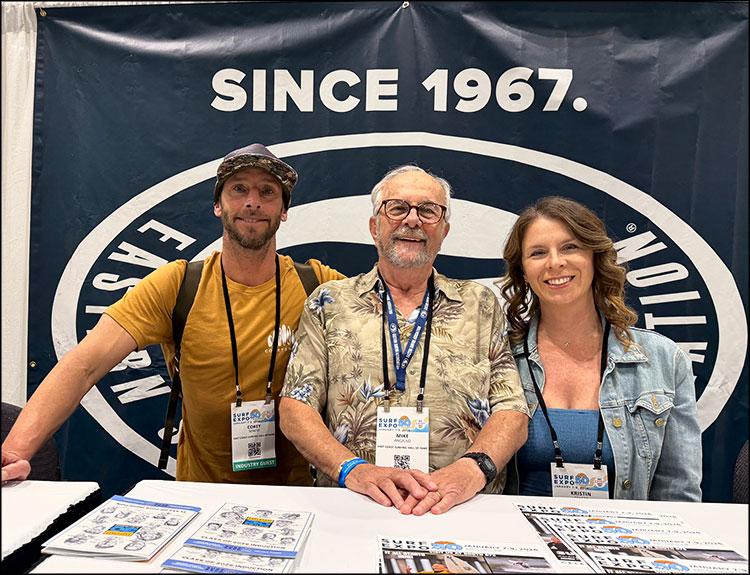
Angiulo continued to work with most of the surf associations on the East Coast until 2015, when he retired. In January, he was inducted into the East Coast Surfing Hall of Fame Class of 2026, as the recipient of the Cecil Lear President’s Award, which is given to an individual who has made a lasting contribution in leadership or mentoring to East Coast surfing. His wife, Cary, daughter, Kristin Angiulo Senese, and son-in-law, Corey Senese, joined him in Orlando to accept the honor.
“It was amazing,” his daughter said. “He wasn’t doing the contests. He wasn’t an organizer and didn’t have kids in the surfing contests. He didn’t have a surf shop or brand. Dad’s never been a surf bro, but the list of things he did, a lot of them I didn’t know about. It’s an impressive résumé and well-deserved and well-earned recognition.”
Today, Angiulo spends more time chasing his kindergarten-age granddaughter, Althea, on the beach than surfing, but his family is carrying on the proud tradition. His daughter and son-in-law run CoreysWave Professional Surf Instruction at Ditch Plain Beach, a surf school they started together in 2008.
“It’s a different world now,” Angiulo said. “Back in the old days, when you went surfing, if there were 10 people out there it was a lot. Now you go surfing and a lot is 50, maybe even 75 or 100 at one break. So it’s a completely different experience now. It’s amazing watching the little kids surf. It’s amazing watching my daughter and son-in-law surf.”
Steve Senese says he and Mike were shocked to learn their kids were a couple in 2004 after growing up spending summers together in Montauk. “Corey and Kristin were almost kissing cousins. For us to find out they were dating . . . we were like, ‘What?!’ “
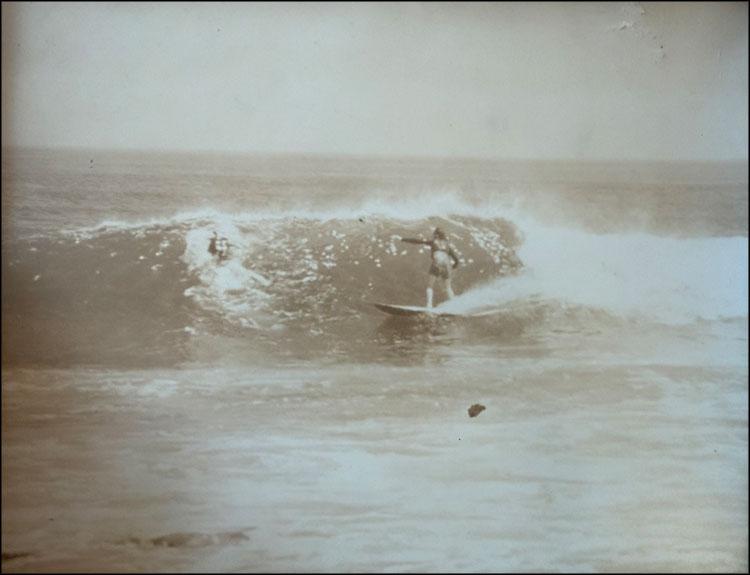
It’s less surprising that Mike Angiulo would have a lasting impact on local surfing. It clearly runs in the family. In 1967, his grandmother — also a lawyer who put herself through law school as a widow with two children in the Depression — built the Thurston house on Deforest Road, by the dirt lot at Ditch Plain. In those days, there were just two houses on the block. Nobody cared if kids were surfing. His mother and grandmother would have 18 to 20 kids sleeping at the house and would make them all pancakes before sending them out into the waves. Sometimes complete strangers would roll through.
“We were able to catch epic waves together,” said Ken Angiulo, Mike’s younger brother. “Sometimes it would be just us in the water having the time of our lives. Now when I get out of the water after a surf session at Robert Moses there is a hose to shower off with. Talk about progress!”
It’s progress that a spitball-shooting kid from Massapequa brought about. Next time you’re at Ditch, if you see two guys with gray beards chasing after their granddaughter, you might want to ask which one is Mike, and say thanks.