
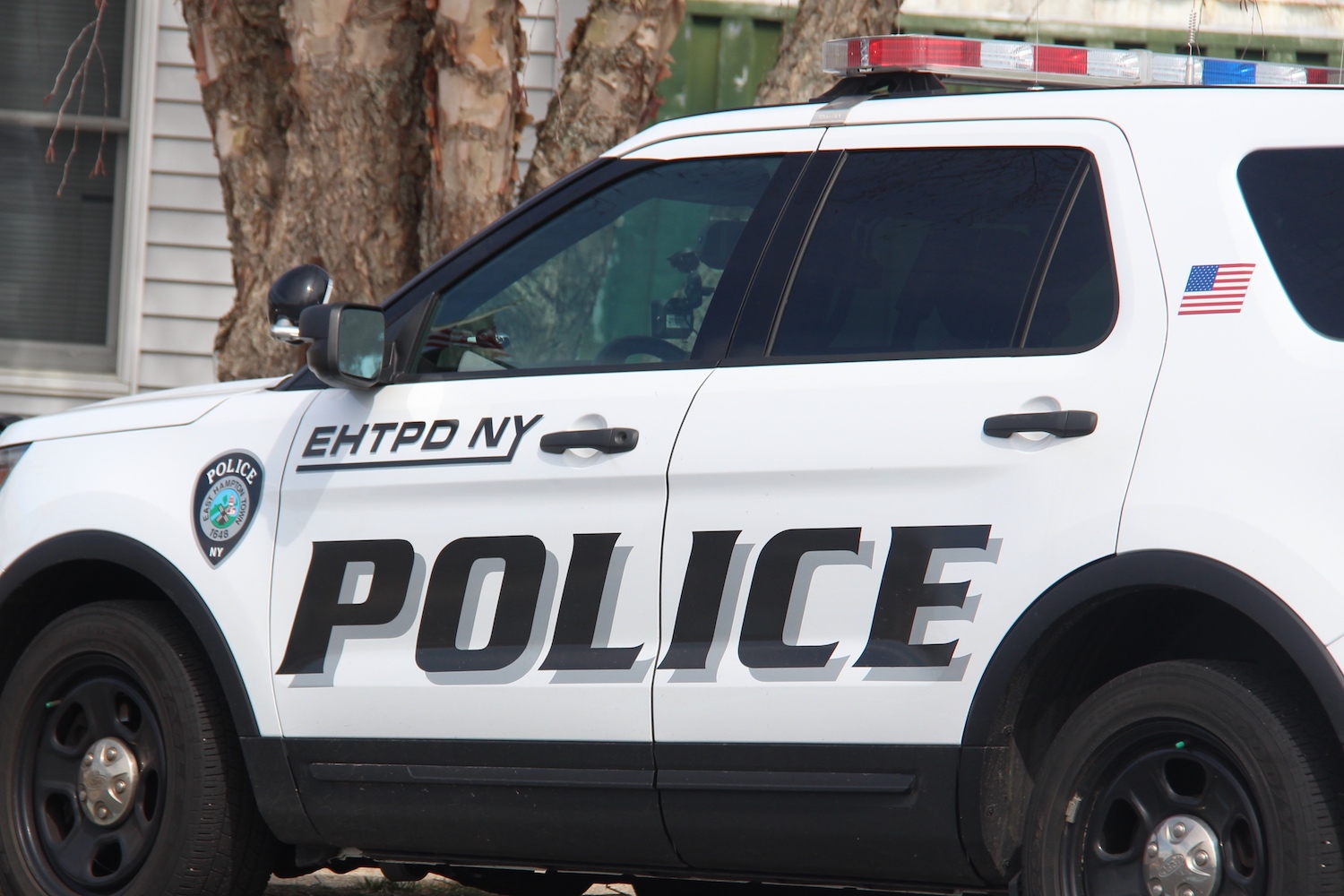
East Hampton Town will be adding two police cruisers to its fleet this year, thanks in part to federal funds secured by Representative Nick LaLota that will be funneled through the Suffolk County Police Department for the purchase.
At the Feb. 5 town board meeting, Becky Hansen, the town administrator, said that a year ago the town had met with the congressman, “and we had talked about how the federal government could help us with grants for police fleet vehicles.”
Subsequently, in a May 2025 resolution, the town board agreed to submit an application to Mr. LaLota’s Community Project Funding requests, seeking, and securing, $785,900 for seven vehicles.
The town has allocated $300,000 per year, through 2028, to its capital plan for the fleet upgrade.
“As a member of the House Appropriations Committee, one of my priorities has been making sure Long Island law enforcement has the resources they need to keep our communities safe. That includes securing federal funding to help Suffolk County upgrade its police fleet, with a portion supporting new patrol vehicles for East Hampton Town police,” Mr. LaLota said in a statement.
“Reliable, modern patrol cars are not a luxury,” he continued. “They improve response times, enhance officer safety, and help local departments operate effectively in geographically unique communities like East Hampton. I will continue working to ensure Long Island gets its fair share of federal public safety funding while supporting the men and women who protect our neighborhoods every day.”
Chief Michael Sarlo of the town police explained why cruisers can get so expensive. “A base police vehicle now costs between $55,000 and $60,000 before it is even outfitted. From there, we install radios, computers, emergency lights, sirens, cameras, prisoner containment systems, storage units, and specialized controls. Even when we are able to reuse equipment from older vehicles, the upfit can still add another $5,000 to $10,000.”
“These vehicles are built to heavy-duty specifications because they operate under constant stress,” he added. “Brakes, suspension, tires, cooling systems, and safety components are all designed for patrol use. Our main marked patrol units typically have a service life of about two years before being reassigned to other functions, if possible. That rotation keeps frontline officers in safe, reliable vehicles.”
The town’s Police Department currently maintains 16 primary marked patrol units, in addition to specialized vehicles assigned to detectives, school resource officers, traffic control officers, and others.