Nature Notes: The Great MigrationThe first column I wrote for The East Hampton Star was in March of 1981. It was about Alosa pseudogarengus, the alewife, of the now-threatened river herrings. As far as Long Island post-Columbian history is concerned, the alewife ranks right up there with the quahog, steamer clam, bay scallop, oyster, and right whale. It was, perhaps, the only catadromous fish — one that leaves salt water to breed in fresh water — the first settlers could count on, as our streams and ponds were too small for the likes of the Atlantic salmon, which bred in New England rivers.
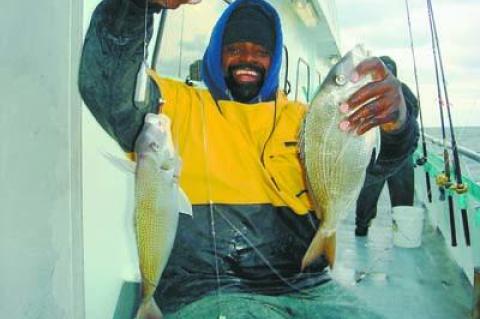
It’s just conjecture, but an early recreational fishing season seems possible given a number of signs, including the recent discovery by commercial draggers of a sizable number of porgies in 26 fathoms of water, relatively close to shore. The question is, will the fish arrive early, or did they never leave?
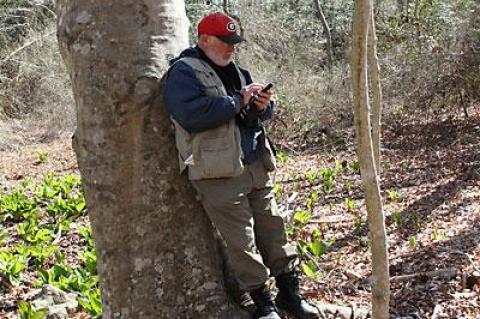
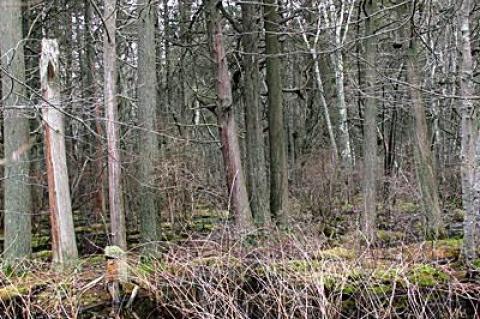
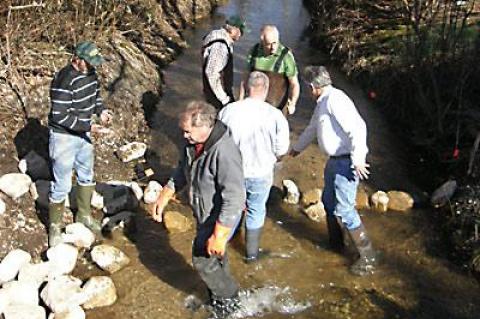
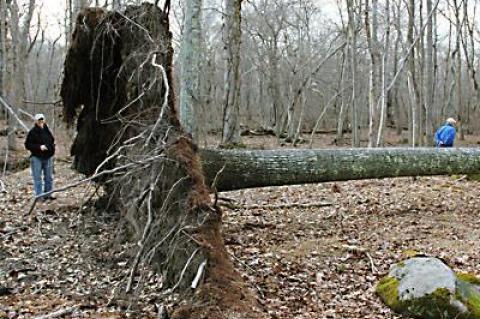
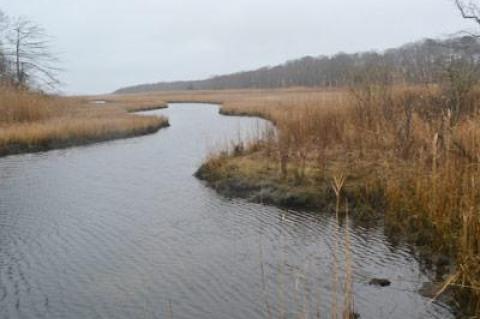
Nature Notes: A Woodland SparedThe weather was springlike on Friday and I had the good fortune of accompanying Howard Reisman and Vicki Bustamante to a Southampton Town preserve that I hadn’t visited since the spring of 1979. At that time the 50 acres or so of wooded bottomland on each side of a meandering stream was in private hands. It was up before the Southampton Town Planning Board as a proposed subdivision with umpteen parcels.
Nature Notes: Round and RoundAn authority on rope suggested to me that vines that climb up trees go up clockwise just as the first course of rope is laid in its manufacture. Do all vines go “right-handed,” like rope? Of course, a right-handed vine is only right-handed when looking up from the ground. Looking down from its top it is left-handed or counterclockwise.
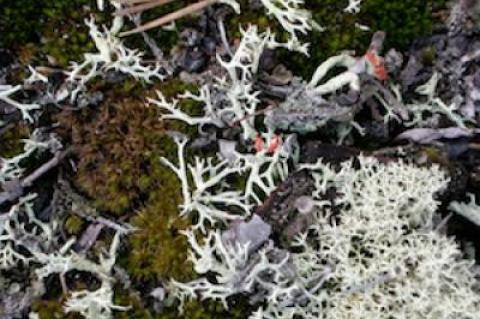
Nature Notes: Prehistoric GreeneryIt’s the middle of winter. Except for the greens of the conifers and some evergreen hardwoods, the trees are bare and the leaves that still cling to the lower branches are a drab brown.
The lawns, whether covered with leaves or raked clean, are of an ecru hue at this time, with a few exceptions. There are some brilliantly green lawns, even in winter, and the greens come in a variety of tones, from very light to a brilliant lustrous green to a dark green that reflects little light.
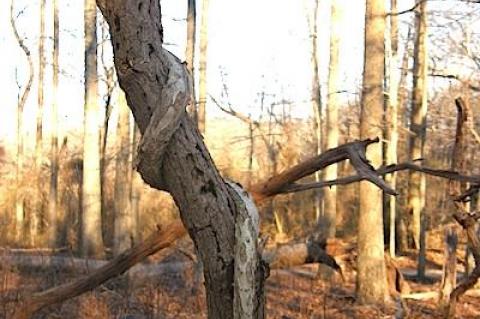
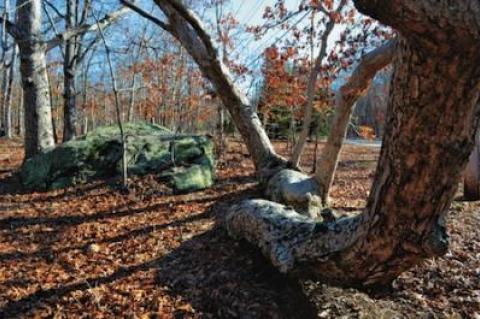
Nature Notes: Living Boundary MarkersThe South Fork of Long Island and, in particular, East Hampton Town have a quasi-natural feature that few other areas in the United States can claim, the “lop tree.” Lop trees, or boundary marker trees, are scarce in Southampton Town but abundant in East Hampton, especially so in the Northwest, Springs, and Amagansett areas.
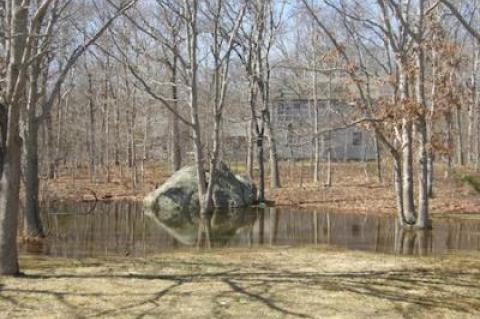
Nature Notes: Glacial ErraticsIn October, while Three Mile Harbor was being dredged by a Suffolk County contractor, Steve Brennan and Chris Martin were using side-scanning radar to follow the course of the dredging work. Side-scanning radar allows one to look sideways along the bottom of a water body and see objects that rise off the bottom such as old wrecks, sunken 55-gallon drums, and other debris. What Brennan and Martin found among other things was a very large boulder in the channel, mostly submerged but sticking up out of the bottom.
Nature Notes: A Walk on the Wild Side By Larry PennySaturday set a record for warmth in January. Sunday was a little colder but well above freezing. My wife, Julie, and I decided to drive down Noyac Road a mile and visit the most popular United States Fish and Wildlife Refuge on Long Island, the Elizabeth A. Morton Wildlife Refuge on Jessup’s Neck.
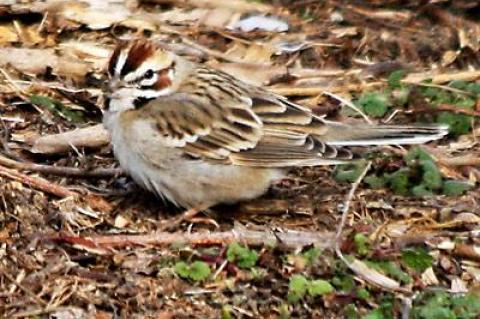
Nature Notes: Birds AboundAnother year has passed. The Christmas bird counts are in the bag. It’s time to sit back and enjoy the cold weather.
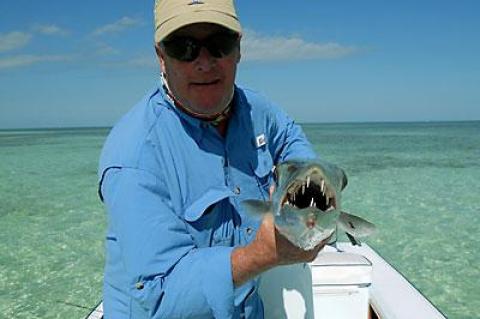
Fish Tales, Bent Rods, DoubleheadersIf the crew aboard the Viking Star on Tuesday has anything to say about it — and you can bet they will — the day they were attacked by an army of black sea bass will not be forgotten.
As the Northern Hemisphere continues to warm up, natural selection will reverse a long-term trend in warm-blooded animal evolution known as Allen’s Rule. Mammals that stay active in the winter tend to have thicker fur than those that hibernate, just as the plumage of seabirds is thicker than that of land birds in general.
An extraordinary event took place on Saturday — the annual Montauk Christmas bird count, now more than 100 years old and among the very oldest in the country.
Birders go out and rake over a 15-mile-diameter circle to record the number of different species and the number of each seen or heard from before dawn until well after dusk. The circle covers Montauk, Amagansett, including Napeague, Springs, and Gardiner’s Island, as well as part of the ocean, Block Island Sound, Napeague Bay, Gardiner’s Bay, and Accabonac Harbor.
Nature Notes: True OriginalsIt is impossible interpreting the present, but you can come close interpreting history. In my mind the history of East Hampton, and for that matter all of Long Island, is much more interesting than what is happening now. We’ve passed way beyond the age of discovery; we might better describe contemporary life as the age of packaging, marketing, distribution, and bad political theater. There are no Jeffersons, Washingtons, Lincolns, and Franklins to lead and enlighten us, only their poor likenesses recycled over and over to lull us into acquiescing submission.
Nature Notes: Rattlesnake CreekLocal discoveries and rediscoveries are still to be made.
Sunday was a perfect day to take a walk in the woods. Adelaide de Menil and I went to the South Fork-Shelter Island Nature Conservancy’s Sagg Swamp Preserve. Adelaide had never been there, I had not been since 1995 when I led a walk for the Conservancy.
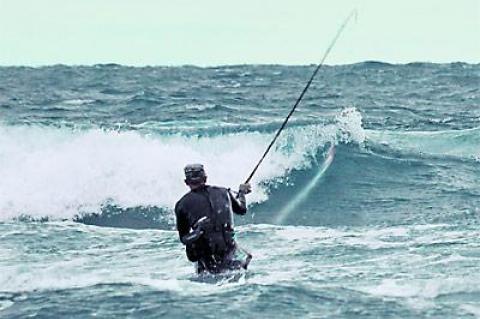
On the Water: The Missing IngredientAt 10 this morning, the Montauk SurfMasters surfcasting tournament ended with a collective whimper.
We cannot sustain ourselves without oxygen, and we can’t exist without nitrogen either, but too much nitrogen, and the balance of nature is seriously out of whack: Think red tide, brown tide, and other algae blooms.
Of Nature’s Rich BountyThanksgiving is perhaps the one holiday that has not yet had its meaning sucked from it by commercial vampires, at least not here on the East End. Maybe because of the wild turkeys grazing along the side of the road.
Certainly nature’s bounty in the form of striped bass, scallops, ducks, herring, deer, deer, and more deer, cauliflower, squash, brussels sprouts, and cranberries — if you know where the bogs lie — helps.
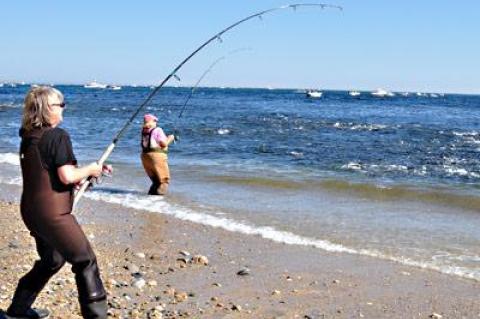
If There’s Any Justice . . .On Sunday, just when it seemed the surfcasting season was over, boaters began finding striped bass feeding on schools of herring
Nature Notes: November SongLeaves. We can’t live without them; some of us can’t live with them, particularly so after they’ve all fallen and coated every inch of landscape
The leaves are falling. It’s cold. No Indian summer this trip around the sun. No doubt a frigid winter is in store.
On the Water: Frozen Eels in My Sock“However ridiculous it may sound to have a queen, the pound is worth more than our dollar,” was Harvey Bennett’s way of announcing that the British were not only coming, they are here.
Fish Strained the ScalesWhen he ventured forth with a bag of live eels on Saturday night, John Bruno led the Montauk SurfMasters surfcasting tournament in the wetsuit division. The fish that had put him at the top of the heap a few weeks earlier weighed 49.30.
The fish he weighed in at Paulie’s Tackle shop early Sunday morning caused the scale to groan out the number 50.82. It was Bruno’s first striped bass over 50 pounds.
The Gems of NapeagueNapeague Harbor is the only tidal embayment tributary to the Peconic Estuary that has never had any part of its surface waters closed to shellfishing because of pollution.
As far as animals without backbones are concerned, insects rule the land, crustaceans co-rule the seas.
On the Water: The Waters Are TeemingSunday was Oct. 9, but it felt like Aug. 9. The parking lot at Montauk Point State Park was full. Fishing boats were spread out on the tide line like stepping stones leading all the way to Block Island.
Nature Notes: Heralding FallThe leaves are beginning to color up. The tupelos, dogwoods, red maples, and sassafras are always the first to turn.
“Insane,” was how Ken Rafferty, a light-tackle and fly-fishing guide described the action from Shagwong to Montauk Point over the weekend.
Copyright © 1996-2026 The East Hampton Star. All rights reserved.