The weekend was a blaze of glory. The sun shone, the bay waters were mostly calm, the shads and sweet cherries began to bloom to the west, and the shads along Napeague and in Montauk were on the verge of busting out.

Outdoors
 Finding the Sweet Spot
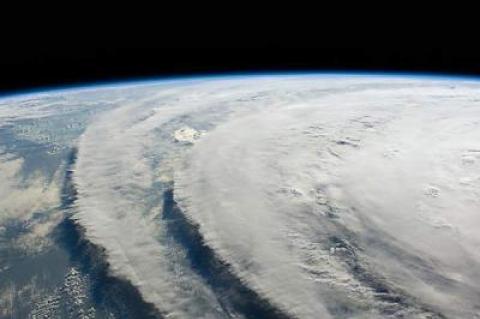
I’ve been researching how waves are formed in order to create, and by July present, a narrated video explanation for visitors to the new Oceans Institute of the Montauk Lighthouse Museum. We hope to open the doors by the Fourth of July.
 Mermaid Purses’ Treasures
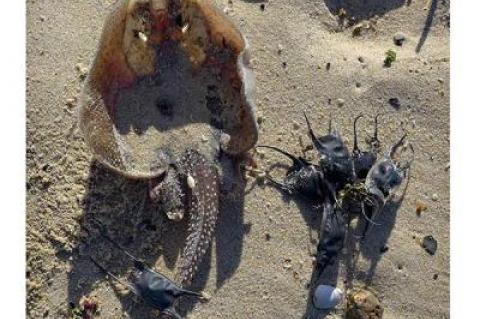
Let’s face it, if skates, with their bat wings and rat tails, flew in the sky instead of along the bottom of the sea, we’d run inside like cave people fleeing pterodactyls and wait for them to pass.
 Nature Notes: If It’s Not One Thing . . .
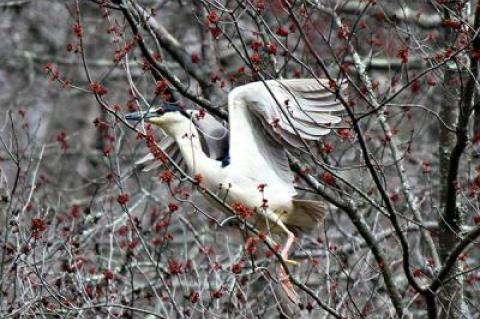
The current building boom has laid down a lot of big trees before they had a chance to leaf out, but it apparently hasn’t deterred the birds from returning from the south.
 The Scent of the Sea
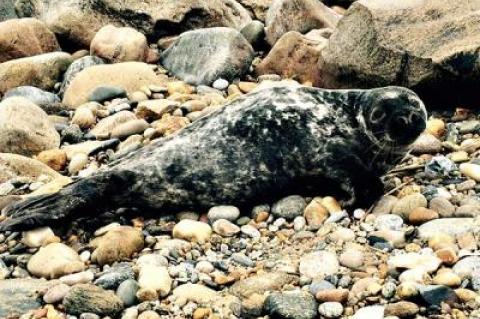
I walked east along the rocky beach from Ditch Plain into the Montauk moorlands on Friday. The day before I’d learned a new word, “brumous.” It describes a heavy mist, a good word for Friday, for this place and time of year.
 A Is for Alewife, H Is for Hawk
Consider the following as an open letter to Larry Penny, The Star’s longtime nature columnist, my good friend, and an indispensable member of the East End community.
Larry, I’m writing this to encourage you to read “H Is for Hawk,” a memoir by Helen Macdonald. Just came out. It’s a beautifully written meditation on one person’s relationship to the wild, and what “wild” means in our time.
 Nature Notes: View From California
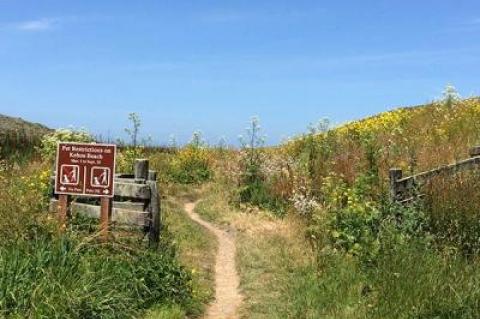
Environmental awareness is big here, as big as it is on eastern Long Island. Water, or the lack of it, is the major topic of the moment.
Butt End of a Butter KnifeApr 8, 2015
This year we decided on lobsters for Easter dinner instead of lamb. It seemed the right thing after the hard winter, although I’m not sure why. More celebratory perhaps, or because Duryea’s has a great price on a package deal that includes lobsters, New England clam chowder, and either a bag of mussels or Little Necks.
We had invited a few friends over, so I set about getting the big lobster pot out of mothballs and searching for the tools needed to pierce the lobsters’ armor. Personally, I don’t need the hinged shell crackers and meat picks.
Nature Notes: A Harsh WinterApr 8, 2015
We finally broke through to placid spring, but it was a rough one on us and a rough one on nature. Waterfowl and water birds took it on the nose and so did several fish. Greg Boeklin, the bald eagle watcher in Sagaponack, saw several dead fish at the top of Sagg Pond. He couldn’t tell the species; they were decomposing. They may have been alewives. In some years when the water from Jeremy’s Hole comes down in a gush by way of Solomon’s Creek, the alewives make it up to the little water body to reproduce.
 Nature Notes: Busting Out All Over
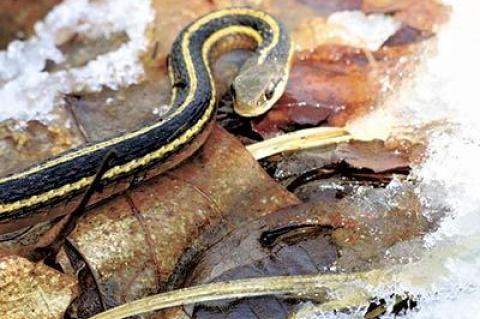
When the peepers start singing two things come to mind. There’s water in the vernal ponds and it’s warming up.
As of Monday the alewives are slow in coming but, nonetheless, many of the ospreys are back and ready to catch them as soon as they appear. On Sunday afternoon the spring peepers were peeping away in Big Reed Pond in Montauk. Evidently, they had just come up from hiding after a very long, cold, and snow-covered winter. Once they are up, they don’t retreat. They are mandated to sing and reproduce.
Oh, the Shame of ItApr 1, 2015
I’m embarrassed for my freezer. It’s pathetic, or it was. So much in and around the house that needs attention after the harsh winter just past. Where do I start? Then I opened the freezer compartment of the refrigerator and it screamed.
A frozen wasteland. A scene from “Dr. Zhivago.” The coldest, most uncomfortable day of the winter, heavy clothes strewn about the house, wet boots, the rattle of the furnace, an old, leaky window — all of it was before me when I opened the freezer door, a diorama of the winter of 2015. I closed it.
Nature Notes: Spring Marches OnMar 25, 2015
After two major retreats spring marches on. There is no turning back, or is there? In this millennium there have been several spring northeasters, and in March 2010 the East End got more than seven inches of rain in two close-together storms.
The Moral of the StoryMar 25, 2015
I’ve been working on a book. Slow going at first. But, as most writers will attest, once the narrative ball gets rolling, even if it seems at times to be rolling uphill, the work becomes an oasis of sorts, a place to repair to in your mind.
It’s a bit like having the ability to summon a dream, or a semi-obedient genie whose job it is to gather kindling to feed fantasy’s fire, or at least provide food for thought.
Nature Notes: End of a Tough WinterMar 18, 2015
The snow is melting away quickly, and the ice in the bays is disappearing almost as fast. Spring is three days away. Things are heating up. The black widow spider that lives between the panes of my south-facing window has made her end-of-winter debut. I’m sure she hasn’t eaten a thing since the end of summer, as she is the same size as when she retreated in the fall.
 Cannibalism, Two Ways
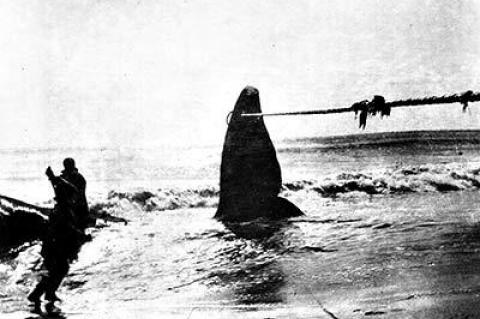
It’s 1820, the middle of the Pacific Ocean. Two sperm whales have been harpooned from the small boats launched from the whaler Essex out of Nantucket. A bull sperm whale does not like what’s going on. Enraged, it charges the Essex, ramming her bow twice. The ship fills with water, capsizes, and leaves her crew of 20 to head for the coast of South America a couple of thousand miles away in three boats with nothing but a limited supply of hardtack and very little water. Half die en route, the others barely survive by cannibalizing their fellow whalemen.
Nature Notes: More Than Dust in the WindMar 11, 2015
You might have seen Senator Charles Schumer on the news on Monday taking PSEG and the United States Environmental Protection Agency to task for allowing 95,000 or so penta-treated utility poles to be installed on Long Island. Penta, or pentachlorophenol, is not only very toxic if inhaled, touched, or ingested, it is also classified as a probable carcinogen. That is why it has already been banned for use by more than 26 countries and counting.
 The Ferrins On The Fly, Globally
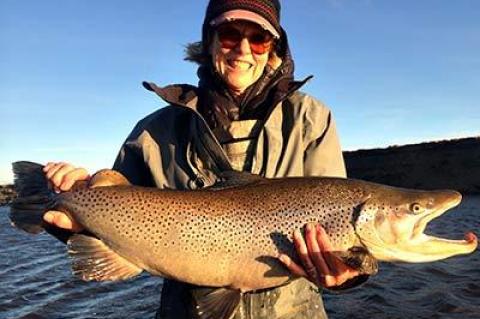
Ken Ferrin first fly-fished at the age of 19 at Flathead Lake in Montana, where he was the waterfront director at a boys camp.
A long hiatus followed, until four years ago, at the age of 78, he suggested to his wife and tennis and cycling partner, Patti, with whom he’s biked all over the world, that they forgo heli-skiing, which they’d done for 20 years, in Canada, in favor of fly-fishing.
 The Hills Are Still Alive
We had the opportunity to head for the hills and early Sunday morning we took it: the South Ferry to a sleeping Shelter Island, then we stemmed the tide and a few car-size icebergs over to Greenport on the North Ferry where we bought scones and coffee for the ride to meet the 9 a.m. Cross Sound Ferry to New London, bound for Stowe, Vt.
 Nature Notes: Plummeting Population
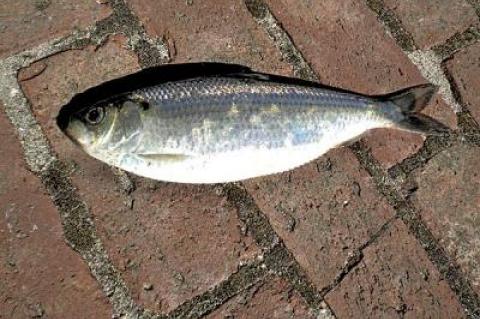
My ichthyologist buddy, Howard Reisman, who lives in North Sea, says that, notwithstanding the monthlong occupation of North Sea Harbor and other inlets and coves of the Peconics, the alewives are out there and ready to move in to Big Fresh Pond as soon as their passageway thaws. They have been arriving annually at this time every year like clockwork for at least a half-century and most likely for several centuries. The streamway connecting the harbor to the pond can be high or low, depending upon the standing level of the water in Big Fresh.
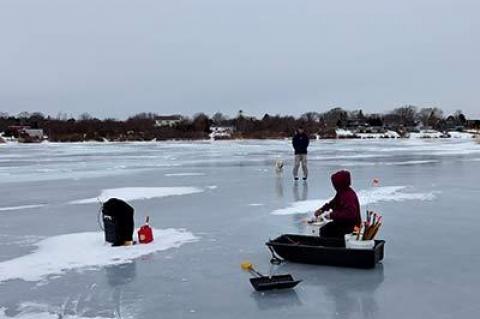 The Iceman Fisheth
The winter of 2015 refused to loosen its grip. As a result, cold-weather passions that have lain dormant in recent years returned with a vengeance in the Northeast.
Ski resorts upstate and in New England have not seen so much snow in years. Iceboats have been dragged out of storage and onto Long Island lakes and ponds. One of the more intense winter passions is the otherworldly sport of ice fishing.
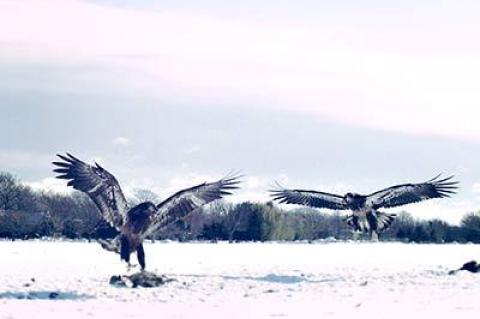 Nature Notes: The Behavior of Birds
The great American winter pastime for those of us who live not too far from the Arctic Circle: feeding and watching birds. Each bird species has its own unique way of staying active when the windchills are in the single digits and the sun is covered up by a pale gray sky for most of the day.
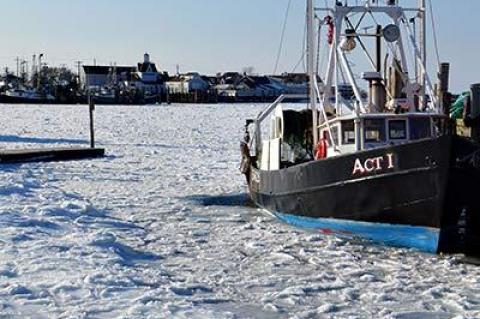 Winter on the Rocks
Consider ice: It can be a bulldozer that lifts a few thousand pounds of buoy off the bottom and carries it to new location a half mile away. It can be millions of tiny crystalline blades that scalp the terra firma from the face of a bluff. Ice can suck a piling from deep in a harbor’s clay as easily as pulling a toothpick from an olive in an ice-cold martini.
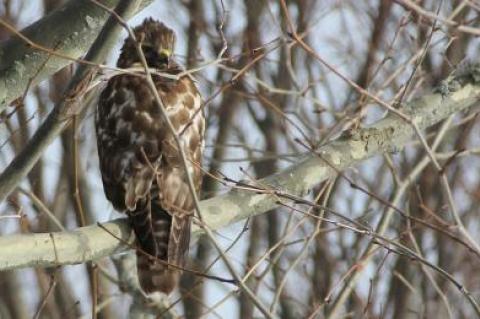 Nature Notes: Different Sort of Snowbird
As I write this on Presidents Day in the afternoon while looking out my window across the snow-covered yard to see which bird will show up next, the temperature hovers at 21 degrees. That’s the highest it’s been all day and it’s starting to sink lower. Cornell University’s Laboratory of Ornithology’s annual birdfeeder count took place over the three-day weekend. I haven’t always been a participant, even though the bird lab was started while I was studying ornithology and wildlife conservation at Cornell in the mid-’50s, but I know some who are locally and keep my ear to that grapevine.
 Just a Passing Chill
“Cabin fever” does not do justice to our frozen state of mind. True, the Arctic temperatures that have descended on us in recent days have kept us in looking out while the oil burner adds to our carbon footprint and subtracts from our bank accounts. But “fever” is not the right word. I think “numbness” or “ennui” comes closer.
 Nature Notes: Pain Relief in February
While out scanning the frozen waters of Noyac Bay and Upper Sag Harbor Cove on Monday, I noticed that one of my favorite trees and the largest tree alongside Long Beach Road, a willow, was already yellowing up, anticipating spring and flowering time, which comes early for the willow clan.
Of Fools and Fish TalesFeb 12, 2015
On the grand playing field of human intercourse, nothing gives us as much satisfaction as seeing braggarts brought low, especially if they are the cause, having dashed rather than hoisted themselves on their own petards. It’s what fools are made of, and fools have always been great entertainment.
Brian Williams, the NBC network news anchor, made one of himself with his “Nightly News” story about having been riding on a Chinook helicopter in Iraq when a rocket-propelled grenade shot it down.
Nature Notes: The Not-So-Great DivideFeb 4, 2015
All of a sudden after a worldwide record warm year in 2014, the winter turns frigid. Noyac Bay is half frozen, all of the freshwaters are iced up, the ground is still covered with a couple of feet of snow, and the land and water birds are having a hard time of it. These are the times when nature hangs in the balance and familiar themes drop out and alien ones take over.
 There’s No Place Like Home
Five a.m. on Tuesday. The house is surrounded and topped with snow and ice. It’s cold out and the wind sounds like it wants to come in as much as the cabin fever burning within me wants to go out.
Both my parents were outdoor people, especially my dad. If weather or some kind of obligation kept him inside for too long he got downright ornery, a trait he passed down to me. We walked the beach every weekend whatever the weather. Both parents skied and taught me at an early age.
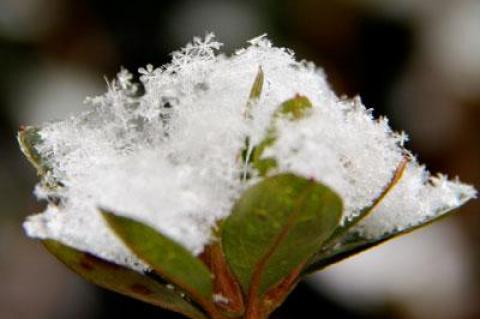 Nature Notes: Quintillion Water Molecules
The biggest Long Island snowstorm that I can remember was the one that occurred in 1947, two days after Christmas. My family was visiting my Aunt Esther and Uncle Jake’s family in West Hills for the holidays.
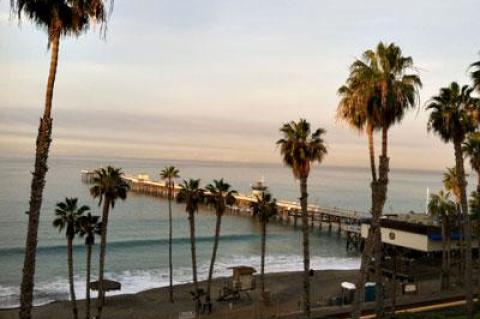 Short Walk on a Long Pier
“Go take a long walk off a short pier.” Not sure why the dismissive phrase came to mind. The pier at San Clemente was not short by a long shot, 200 yards or more. I think it’s because in our minds, piers are a staple, a construct that everyone understands.
“Why do they build them? Just to fish from? Are they for people without boats?” Kyle asked. Good question, and the answer is pretty much, yes, but more. The Pier, as societal microcosm, parade, and oceangoing adventure for pedestrians, has been perfected in California.