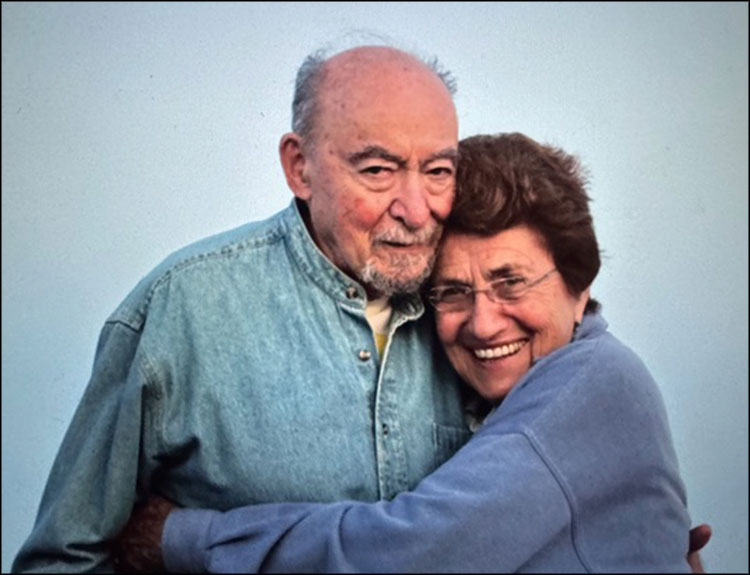
Cora Weiss of East Hampton and New York, an activist who was nominated for the Nobel Peace Prize several times, died of lymphoma in New York City on Dec. 8. She was 91.
A founder in 1961 of Women Strike for Peace, which opposed atmospheric nuclear testing, and Sane Freeze, she also became prominent in efforts to end the Vietnam War and later in the Irish peace process. Her obituary in The New York Times credited her with helping “organize some of the most important mass demonstrations of the 1960s.”
And she did not stop there. Ms. Weiss campaigned for international peace, human rights, nuclear disarmament, civil rights, and gender equality.
She was born in New York City on Oct. 2, 1934, to Samuel Rubin and Vera D. Rubin. Her father started the cosmetics and perfume company Fabergé, and owned the property in Amagansett now called Quail Hill. Her mother was a prominent anthropologist who was connected to Brandeis, Columbia, and New York Universities, Hunter College, and Cornell University Medical School.
Cora Rubin grew up in Croton-on-Hudson, N.Y., and New York City, graduating from the Ethical Culture Fieldston School in the Bronx in 1952. Hers was a liberal and “politically interesting family,” she told The Star in 2016, with her mother campaigning for Franklin D. Roosevelt. Her father established the Samuel Rubin Foundation to promote peace and justice around the world. Ms. Weiss later ran it.
“She became an activist early on, helping her mother roll bandages for the Red Cross, taking coffee and doughnuts to young men preparing to go to the front lines of World War II, and knitting clothes for relief efforts,” according to her obituary in The Times. “Those experiences inspired her interest in bringing an end to war, she said.”
She went on to study anthropology at the University of Wisconsin-Madison, where her activism continued. She was involved in efforts to recall Joseph McCarthy’s Senate seat and became one of the first women to enroll in the university’s law school, but did not finish her law degree.
On June 17, 1956, she married Peter Weiss, a lawyer who ran the International Development Placement Association, a predecessor to the Peace Corps. She had invited him to speak at the university when she was an undergraduate in charge of “recruiting social justice activists to talk on campus,” according to her Times obituary.
She served as executive director of the African-American Students Foundation from 1959 to 1963 and helped to bring some 800 African students to the States for educational opportunities. According to a 2016 article in The Star, “many of the students who participated in the airlift later returned to East Africa and became democratic nation builders.”
In 1961 she was given an honorary doctorate from Adelphi University.
After co-founding Women Strike for Peace, she told The Star in 2016, “We learned everything there was to know about strontium-90, which was the killer chemical in nuclear bombs, and we went around the country teaching newspaper editors how to spell strontium-90 and what it was all about.” Their activism would help to convince the powers that be of the dangers of nuclear testing, and two years later President John F. Kennedy signed the Limited Nuclear Test Ban Treaty.
Women Strike for Peace became leaders in opposing the war in Vietnam. Later Ms. Weiss, as co-chairwoman of the New Mobilization Committee to End the War in Vietnam, “helped organize one of the largest antiwar protests in the United States,” her obituary in The Times said.
“During the Vietnam War, Cora didn’t just protest. She acted,” reads a tribute to her on the website for Women’s Voices Now. “She traveled to Vietnam, helped return prisoners of war, and humanized Vietnamese people for American audiences. She showed the war’s devastating impact on women and children, refusing to let their stories be silenced.”
She was the architect of a major international peace conference at The Hague in 1999 and the following year helped to draft United Nations Security Council Resolution 1325, which “affirms the important role of women in the prevention and resolution of conflicts, peace negotiations, peace-building, peacekeeping, humanitarian response, and in post-conflict reconstruction and stresses the importance of their equal participation and full involvement in all efforts for the maintenance and promotion of peace and security.” It was adopted unanimously.
“Cora was audacious. She was strategic. She was generous. And she never stopped believing that the impossible could become possible when women lead,” according to Women’s Voices Now. She was president of The Hague Appeal for Peace, a coalition dedicated to education and the abolition of war.
Asked by the Nobel Women’s Initiative in 2016 how she stayed committed to the cause of peace, Ms. Weiss said, “All you have to do is look at the children and grandchildren, your own and everyone else’s. They deserve a sane and safe world to live in, and it’s our job to give it to them!”
The Weisses’ house in Bridgehampton, where they lived for decades, “was the family’s primary gathering place — with authors spending time there to write books, filmmakers using it to make documentaries, and U.N. diplomats in search of rest and relaxation,” according to the 2016 Star article. The couple moved to East Hampton in 2008, and donated the proceeds from a tag sale to establish a travel fund at the Bridgehampton School.
Mr. Weiss, a trademark and human rights lawyer who was nominated with Ms. Weiss for a Nobel Peace Prize, died on Nov. 3. He would have been 100 this month.
The couple are survived by three children, Judy Weiss of Cambridge, Mass., Tamara Weiss of Martha’s Vineyard, and Danny Weiss of Washington, D.C., and by five grandchildren. Ms. Weiss also leaves a brother, Reed Rubin of Greenport.
Her family has suggested donations in her memory to an organization supporting peace, justice, or human rights.