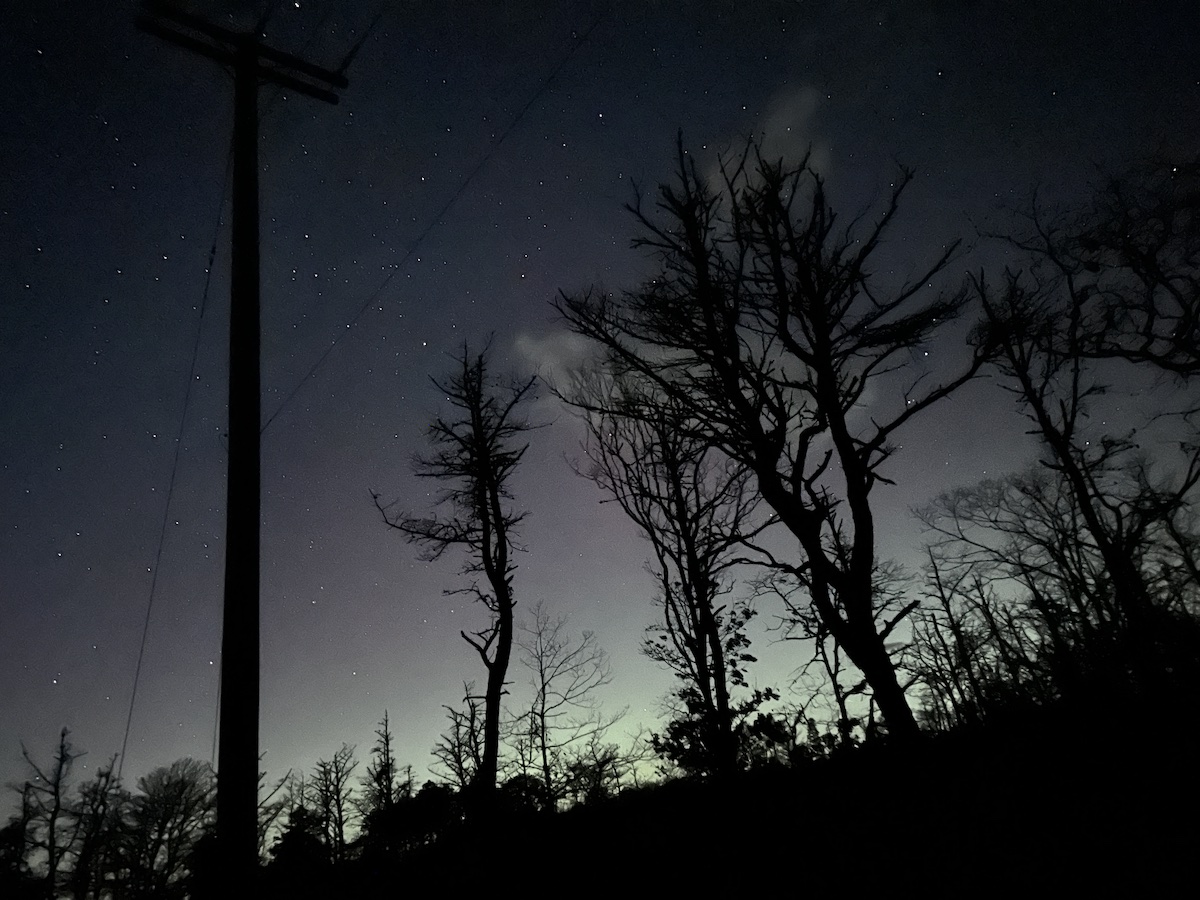
In a month when Elon Musk became the world’s first trillionaire by taking SpaceX, his satellite and space flight company, public, it’s worth asking, do you know what might happen if you were hit by a fleck of dried paint moving at 17,000 miles per hour?
No?
That’s because you’re living in the past, in a pre-space-junk world.
Answer: You’d be killed. Catastrophically.
At orbital velocity, the paint fleck would detonate with the power of two hand grenades, according to A.I. Sure, you’d have to be floating in space, in orbit, for this to happen, but why let implausibility get in the way of an engaging lead?
NASA defines “space junk” or “orbital debris” as “human-generated objects, such as pieces of space craft, tiny flecks of paint from a spacecraft, parts of rockets, satellites that are no longer working, or explosions of objects flying around in space at high speeds.”
According to the space agency, “low-Earth orbit” has become “an orbital space junkyard.” Yet in January, the Federal Communications Commission approved 7,500 of Mr. Musk’s Starlink satellites, doubling the total overhead.
They’ll also be flying closer to Earth than past satellites.
“President Trump is restoring America’s technology leadership,” said Brenden Carr, the chairman of the F.C.C. in a statement announcing the approval. “By authorizing 15,000 new and advanced satellites, the F.C.C. has given SpaceX the green light to deliver unprecedented satellite broadband capabilities, strengthen competition, and help ensure that no community is left behind.”
And that’s just for SpaceX.
Over 4,000 satellites were approved for Amazon, and another 4,000 for Logos Space Services, a startup founded by the former Google executive Milo Medin.
And then that’s in the United States alone. China has plans to launch a couple of hundred thousand, according to the International Telecommunications Union.
So, with the proliferation of satellites, it isn’t implausible to imagine a piece of space junk impacting one, causing failure. The resulting explosion would birth that much more space junk, perhaps starting an insane chain reaction.
All of this was considered as far back as 1978 (Sputnik, the first satellite, was launched in 1957) by Donald Kessler, a NASA scientist. In fact, it describes the “Kessler Syndrome,” which was named after him.
Mr. Kessler imagined a “debris belt” and posited that low-Earth orbit could become so full of objects, basically physical static, that junk babies would make more junk babies, leading to an exponential growth of space junk, that would eventually threaten GPS, communications, and space travel in general.
In fact, according to an updated paper by Mr. Kessler, “I.T.U. filings suggest more than 1 million satellites could enter orbit in the near future.”
Meanwhile, according to the United States Space Force, in 2021 our old foe, Russia, tested one of its missiles by aiming it at a defunct Soviet satellite, creating 1,500 bits of trackable space debris.
(NASA monitors each bit that’s over 10 centimeters large; there are over 34,000 such pieces up there.)
Okay.
Alan Cousins is the vice president of the Custer Institute and Observatory in Southold. He’s not really worried about space junk having much of a terrestrial impact, although sometimes bits and pieces do reach the Earth.
“If space junk were to damage a satellite, that could affect our communications,” he said in a recent phone call. “The impact of one’s enjoyment of the night sky is tied to the proliferation of satellites in general. But I’d say, by and large, for most visitors, there’s a certain excitement to seeing a satellite cross their field of vision.”
Still, Mr. Cousins says since 2007, when he became a member at Custer, the night sky viewing experience has degraded, but not because of space junk. “When I first started coming here, on a moonless night I wouldn’t be able to find my car,” he said. “Now I can easily find my car. The skies have brightened. That said, the East End is still a wonderful place to observe the night sky.”
“The key thing is that these satellite companies can’t keep creating space junk in the first place,” he added. “When their satellites end their life spans, they need to be compelled to figure out a way to make them de-orbit and burn up in the upper atmosphere.”
“The photography guys say satellites are a problem,” said Bill Crispino, the secretary at Custer. “You see more of them right after sunset, because the sun is just below the horizon and its light is reflecting off the satellites.”
In fact, Mr. Crispino said there were tentative plans to place satellites in space specifically to reflect light back down to Earth, like a giant mirror, for solar power.
Actually, it’s already happening. Reflect Orbital is a California company with two such satellites planned for 2026. By next year, they hope to have 36. In 2028, 1,000. By 2035, 50,000.
Its website explains that the beam of light will be focused on a specific area, like a field of solar panels, or corn, say, and could be switched off if necessary. The sun, it turns out, is doing a lousy job of providing our globe with energy, supplying just 7 percent.
Reflect Orbital hopes to make the sun better, more efficient.
The idea irks Susan Harder, vice president, secretary, and co-founder of the Hamptons Observatory. Ms. Harder is also the New York State Representative for DarkSky International.
“Discussions about tech in the sky that would keep daylight 24 hours? I would put that in the category of junk,” she said. “In fact, I define space junk to include anything that is going to interfere with the natural beauty of the night sky,” she said over the phone. “I’m not against technology that improves human life, but its impacts have to be tempered.”
In fact, Ms. Harder became interested in the night sky years ago. As a resident of New York City, she found she could read the newspaper at night, sitting in her window, because the city sky was so bright.
When she moved to East Hampton, she was surprised, even out here in “the country,” that a neighbor’s lights shone into her house. “I learned everything in the world I could about outdoor lighting,” she said, and even received design training.
“In terms of what’s up there, satellites, I think of the words that Joni Mitchell sang, ‘You don’t know what you’ve got ‘til it’s gone.’ A perfect night sky is something that people have never seen. It’s gradually diminishing. Kids today won’t even notice what was lost.”
But will the kids care? They’ll have super-strong internet signals.