
My thoughts keep returning to the safety and comfort of the late-20th century. Scenes of youth come to me in recurring vignettes, like the chorus of an old song.
I’m on the bus down from Concord, Mass., sharing a sticky brown bottle of peach schnapps with classmates from Concord Academy, playing Celebrity; Marcus and I wow everyone with our ability to guess the star that the other is thinking about on the very first guess. It’s Allen Ginsberg. It’s Charo. It’s Peter Sellers. We smoke and drink on the Peter Pan bus and ride blindly south toward Manhattan, not yet knowing who will end up in jail and who will end up a Seattle tech billionaire.
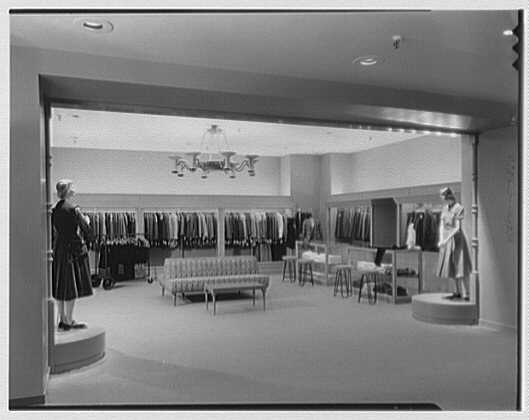
I’m at the glove counter — the glove counter! — on the first floor of Bonwit Teller, a few years later, buying a pair of black leather gloves for my mother, in the bustle and tissue-paper rustle of a palatial department store that has its own gift-wrapping department where matrons with stern expressions apply decorative silk flowers to gifts with double-sided tape and bows of wide coordinated ribbon. My mother doesn’t need gloves, but I’m in college and it’s the 1980s and middle-class families have enough disposable income to permit the teenagers to wander department stores with credit cards, choosing frivolous gifts in December. I swing back out into the Manhattan afternoon with the gift-wrapped black-leather gloves inside my beautiful Bonwit Teller shopping bag, which bears the store’s pretty trademark motif of a flyaway spray of purple violets.
I’m crossing the vast hall of the Beaux-Arts “general post office” (McKim, Mead, & White, where the Moynihan Train Hall is now), headed toward the special room at the back set aside for Operation Santa. The air is thick with glue, newsprint, and cigarettes and my rubber platform soles squeak on the magnificent marble mosaic floor as I step forward in a jostling press of Manhattan humanity, into a room crowded with people and paper, where I will choose a Letter to Santa. I carry the Letter to Santa across the avenue to Macy’s and I use my mother’s credit card again to buy armloads of presents for a family of strangers in the Bronx. A little girl in the Bronx wants an oversize jean jacket from Marithé and François Girbaud, with boxy shoulders and dolman sleeves.
Corinthian colonnades shift and fall — slowly, slowly. The Statue of Liberty holds high its beacon, buried up to its shoulders in the sand, the last scene of “Planet of the Apes.” The Rose Garden is bulldozed. The Art Deco bas-relief nudes on the front of Bonwit Teller on Fifth Avenue are pulverized by jackhammers to make way for Trump Tower.
It never occurred to me how much I would miss the solid, grand old institutions of yore. Somehow this sorrow at the loss of the pre-digital world keeps coming to me in waves of nostalgia for the department store. Lord and Taylor. B. Altman. All those pretty paper shopping bags.
Rock Center, paper coffee cups with the blue-and-white Greek key: “WE ARE HAPPY TO SERVE YOU.” I never thought “The Office” would so quickly turn into a period piece. The whiff of Wite-Out like amyl nitrite. Where have you gone, Donald Draper?
Last month, a teenage Ukrainian houseguest — down from boarding school in New Hampshire with my son — asked me if I thought life had been better before or after the internet. The Ukrainian teenage houseguest is a smart kid, polite and good at chess. We were eating smoked salmon. My answer was unequivocal: Life was better, way better — way, way better — in a purely experiential sense, before our minds went online.
But, countered the smart teenage war refugee, did A.I. not make life easier? Did it not bring many improvements and relieve us of much drudgery?
Sure, I eagerly conceded, employing the rhetorical device the scholars call “concessio”: It’s wonderful to have artificial intelligence in our hip pocket to do dumb stuff like scan documents for us (so we don’t have to transcribe property surveys or minutes of dull committee meetings by hand) as well as to do some of the smarter stuff (like scour past court cases to find legal precedents that would take a human paralegal six weeks of labor). But just your basic experience of life in what we used to call the Real World? Way, way better, I told the young war refugee. Way, way, way better. The emotional experience of doing things in the analog way was incomparably better, in terms of pure sensory pleasure and interest.
I’m a boring old curmudgeon of a middle-aged church lady, harping on about this as I do, but venturing out into the actual, earthly, material world to feel April brighten your cheek with a wind-whipped blush, to smell the full purple lilacs, to stroll the park under the moonlight — living in the actual world was way, way better than sitting home alone under the covers watching a short-form video about photogenic garden beets from the TikTokers Char and Marv.
My children, and the Ukrainian guest, grew up within the early days of the digital Oneness.
Now I sound like the jackass on line behind Woody Allen to see “The Sorrow and the Pity” at the New Yorker Cinema in “Annie Hall,” blabbing loudly about Marshall McLuhan, but . . . kids these days? They are native denizens of McLuhan’s “Global Village” and they don’t know what they missed.
Marshall McLuhan was very obviously correct. How about that?
We are no longer raising children whose brains and thoughts were formed by the printing press and the phonetic alphabet. We, the predigital dinosaurs, were raised in a world of geographic distance, communication by word, and linear logic. We, the dinosaurs, wander around our houses a bit shellshocked, as the monolithic institutions of what McLuhan called the “Gutenberg Galaxy” — centralized hubs for exchange of culture, ideas, and material goods — splinter and collapse. The department stores, the newspapers, the Congress, the Ivory Tower, the office in Midtown. Condé Nast, and Peter Jennings. Typographic Man.
The loss of the institutions of our youth feels, on an emotional level, like a loss of security. It also feels like the loss of entire worlds of things and sensations, the erasure of culture.
Am I the only melancholy dinosaur?
When I was young I was hardly one for institutions. I loved nothing better than to leap out into the world without a safety net: moving to Paris at 18 with a few phone numbers in a pocket diary (which I would never dial); going to Budapest at 25 with $300 and the address of an English-language newspaper. I preferred to live life without a safety net. I was brave when I was young. I am less brave now.
I said at the top of this week’s column that my memories of the comfort and safety of the late-20th century return to me, especially at night, especially in my dreams, like the refrain of a song. The song is “Skylark,” tune by Hoagy Carmichael, lyrics by Johnny Mercer: “Skylark / I don’t know if you can find these things / But my heart is riding on your wings / So if you see them anywhere / Won’t you lead me there?”