
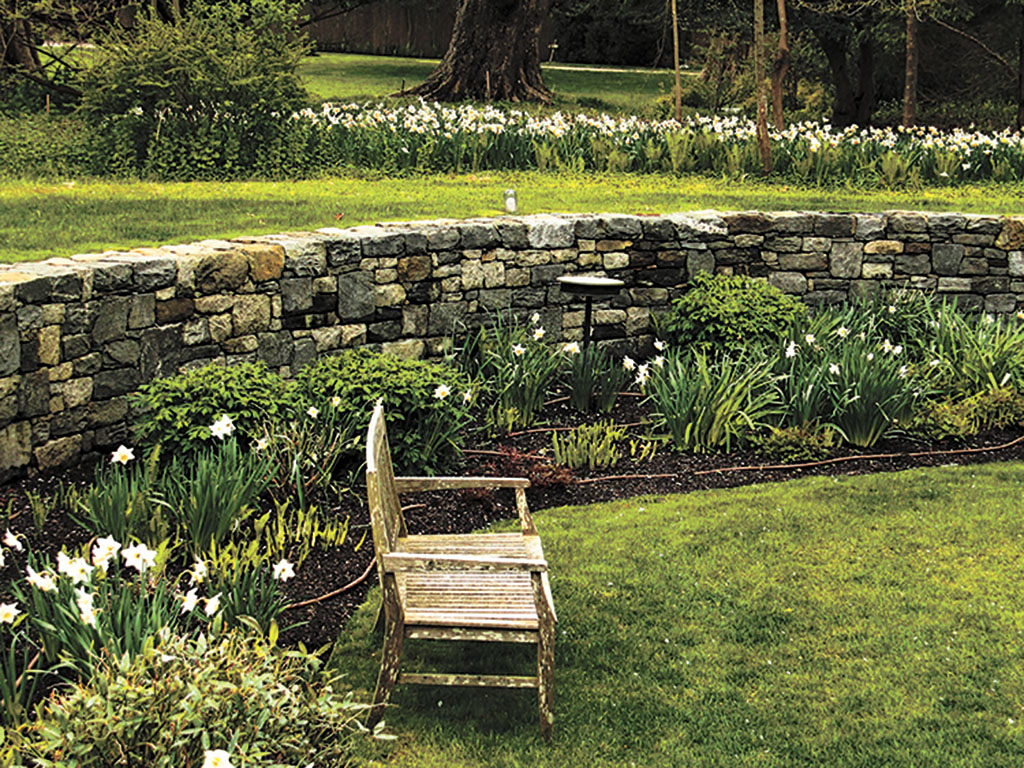
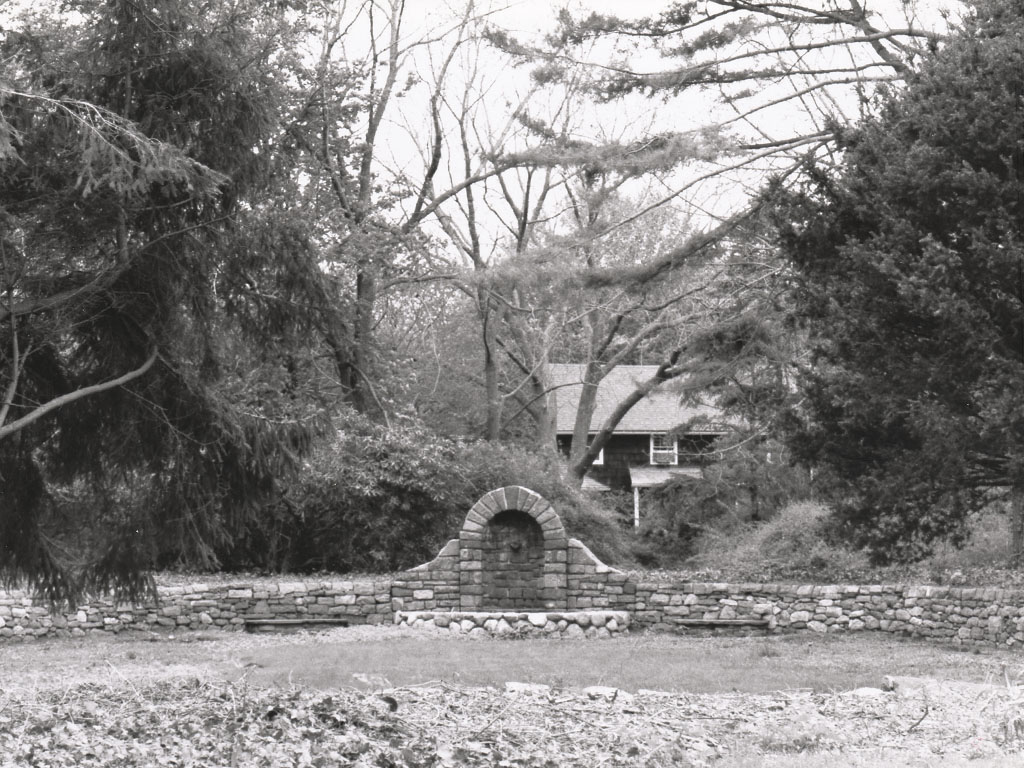
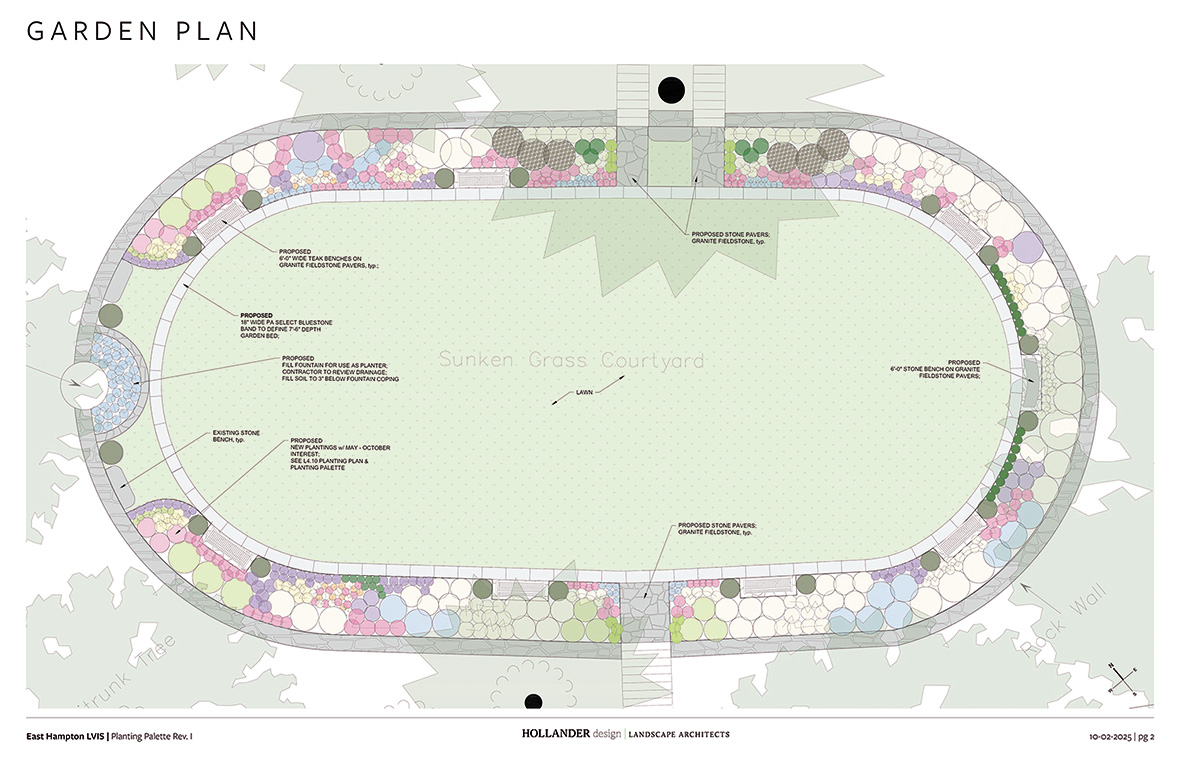
It’s officially spring and all around East Hampton Village, there are signs of change: buds ready to burst at the Nature Trail, peepers serenading whoever’s listening, weather that won’t make up its mind . . . and a big pile of earth on the grounds of the Ladies Village Improvement Society’s headquarters, the historical Gardiner Brown House on Main Street.
There, the landscape feature called the sunken garden is getting an overhaul sparked by major deer damage in 2024. The ravages of deer are not an unfamiliar problem on the East End, of course, but at a site as publicly prominent as the L.V.I.S. property, damage to aesthetic loveliness becomes a more acute problem. The venerable women’s club has done many mighty things in its 131 years of fighting to preserve the beauty and heritage of the village — from getting the power lines buried and billboards banned to leading the charge to create historic districts — but when it comes to boots on the ground and shovels in the dirt, according to Rachel Cooper, the organization’s executive director, the overhaul of the garden effort is “one of the bigger projects that L.V.I.S. has taken on.”
“This is really taking a very long view of the sustainability of this garden,” Ms. Cooper said in an interview late last month. “Gardens are living and breathing entities that don’t last forever, but there is so much thoughtful consideration going into what this will be for the next 20 to 30 years.”
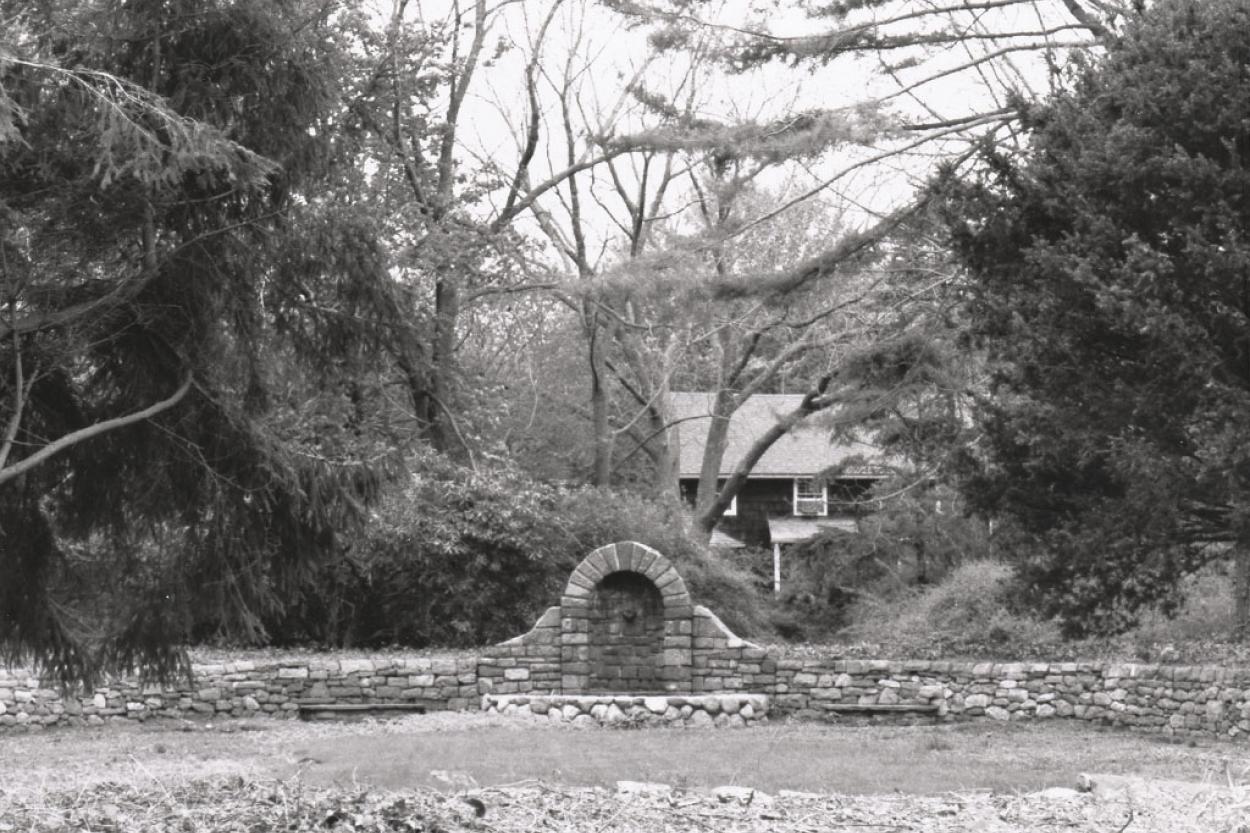
The sunken garden has long been a rather enchanted gathering place. According to reporting in The Star going back a hundred years or more, it was a society destination in the early decades of the 20th century, when the house, built in 1740 for the fourth proprietor of Gardiner’s Island, was owned by his descendant Winthrop Gardiner. For example, on the evening of August 9, 1930, some 250 elegant guests gathered in the garden for “a brilliant supper dance” in honor of young Isabel Gardiner’s debut. Friends came from all the summer colonies — Southampton, Westhampton, even the north shore of Long Island — to do what society folks did under the lights that had been strung up to sway in the breeze.. A few years later, when Isabel married Olney Blanchard Mairs Jr., a dance floor was laid down on the grass of the sunken garden for their wedding reception, with Al Donahue’s eight-piece orchestra providing the music for all-night dancing. (Surely the orchestra played “Stardust,” a hit in 1931: “Besides the garden wall / When stars are bright / You are in my arms / The nightingale tells his fairytale / Of paradise where roses grew. . . .”)
The L.V.I.S. took over stewardship of the property in the late 1980s, after a prolonged tussle with Village Hall, which in 1982 had proposed razing the historic structure, then in ramshackle disrepair, in order to expand the adjacent Reutershan Parking Lot. With an assist from the Village Preservation Society — formed to save the structure from demolition — the L.V.I.S. bought the house from the village in 1988. The sunken garden had sunk into disrepair by then, too. It was overgrown with “a dense jungle” of vegetation, The Star reported in March 1990. Mrs. Elizabeth Magill, then the L.V.I.S. grounds committee chairperson, explained that Doc Whitmore of Whitmore’s nursery had to remove “entwined vines and other extraneous materials,” to once again reveal “the fine lines of the sunken garden and its rock wall.”
In the decades since, society girls in bias-cut silk gowns have been replaced by a different cast of interesting characters in the garden, as members of the public have flocked there during the L.V.I.S.’s annual summer fair. You might have seen a circus magician pulling doves from a hat, or a jazz band with dueling Dixieland banjos, or the gentlemen of the Lions Club grilling barbecue chicken.
This time around, it is Ed Hollander and his expert landscape designers and builders — along with community-minded businesses including Summerhill Landscaping, Whitmores, Ruddy and Sons Masonry, and Groundworks — who are performing the careful work of restoring and repairing the sunken garden. These specialists are largely offering their work pro bono, to boot.
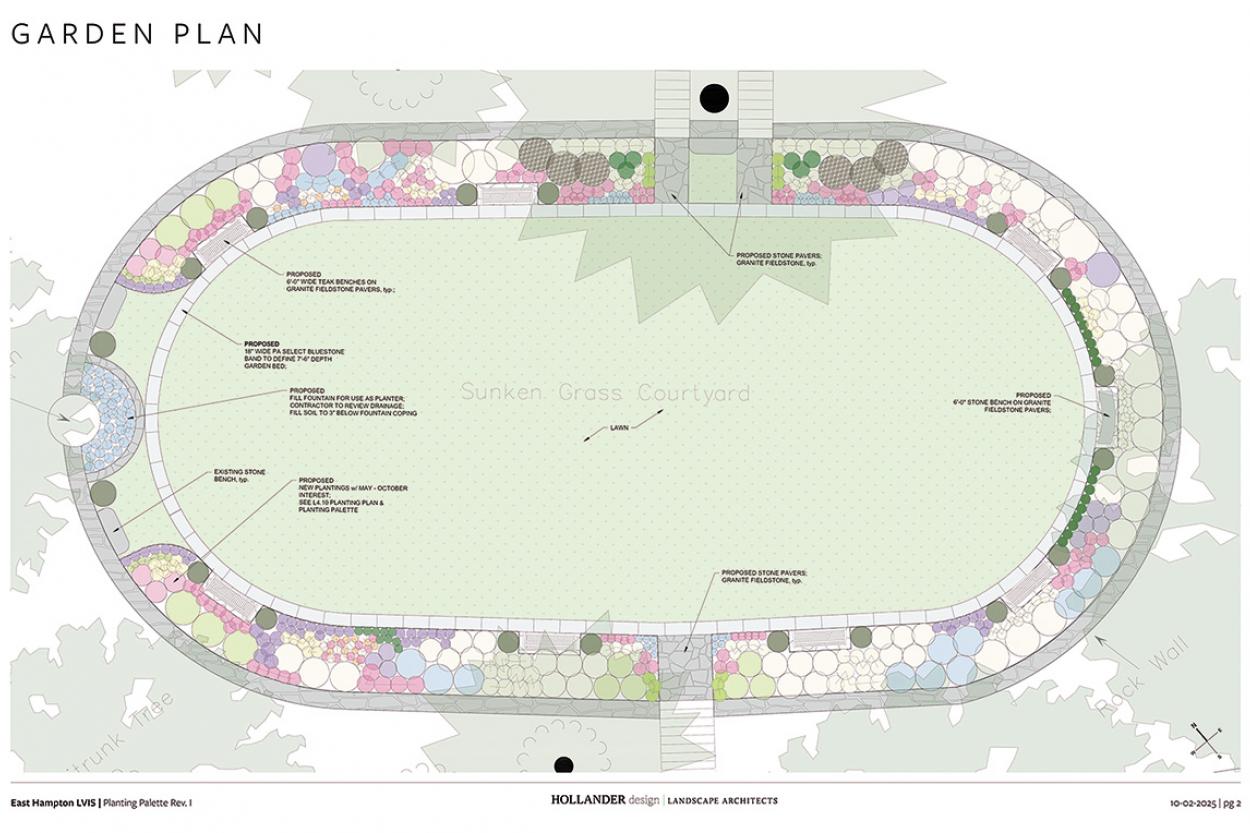
The grounds committee chairwoman, today, is Leslie Clarke of Amagansett, who said the project has evolved since it first began as an effort to simply recover from the deer-dining frenzy. “Initially we thought, okay, the deer-repelling equipment we had didn’t work. So we thought we’d have to figure out a fence that would be period-appropriate,” Ms. Clarke said. But while the fence was in progress, the committee realized there were other problems, too: drainage issues, soil quality concerns, and a nearly total takeover by ferns, hostas, and unruly hydrangeas.
“This will be a much more varied design, and one that will basically have three-season interest,” said Ms. Clarke. “I think previously it was more of a spring and summer interest that faded as the summer went on. This will be far more interesting.”
To accomplish this end goal of year-round color, Mr. Hollander’s team, including Suko Presseau, the designer who created the proposed garden layout, advised the L.V.I.S. that the clay-clogged soil would have to be remedied. “In fact, 600 cubic yards of clay have been removed from the garden, and five French drains have been installed to keep the moisture even. There will be new topsoil and compost,” Ms. Clarke said. “It’s been an enormous job that I can’t imagine how we could’ve done without the generosity of all these companies under the direction of supervision of Ed Hollander.”
Nearly 40 years ago, amid the restoration of March 1990, Carol Mercer, an L.V.I.S. member who pitched in, summed up the spirit of the garden this way: “I envision this as a place for charity teas, storytelling sessions, talks on flowers and gardens, and an ideal place to become engaged.”
Gatherings in the sunken garden will remain a constant, said Ms. Cooper. She said she is looking forward to hosting tours, meetings, music, picnicking, and quiet reflection after the renovation is complete.
“I think it really is going to be something that will be enjoyed by the community,” she said. “At least, that’s our hope.”
Ms. Clarke said Mr. Hollander has assured the committee that the sunken garden would be fully planted in time for the L.V.I.S. fair on Saturday, June 13. “A lot of the plants will go in and will need to mature for a year or two. It will still look like a very new project, but hopefully we’ll be celebrating its opening.”