
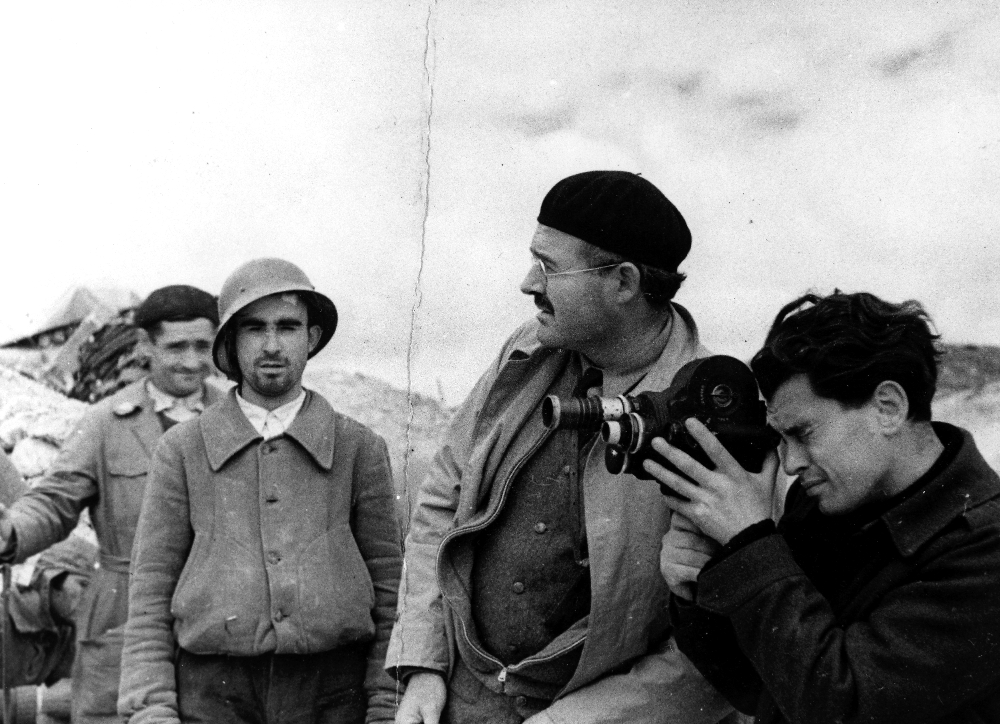
After an irreligious Ernest Hemingway had left his first wife for Pauline Pfeiffer, who was desirously well off, but also a practicing Catholic, his attendance at Mass following a hasty conversion apparently led to a leavening of his bout of impotence.
I can’t say that’s why I was there Sunday. Seeking comfort, maybe. Looking for political comment, probably.
“Well, old Mackerel Snatcher, wolf a wafer and a beaker of blood for me,” F. Scott Fitzgerald needled Hemingway in a 1928 letter, his own Catholic upbringing long gone in the rearview mirror. “Best to Pauline!”
The homily at the Sacred Hearts Basilica in Southampton had more to do with heart, love, coming as it did the day after St. Valentine’s Day, named for an Italian bishop, or priest, or maybe they were a single martyr, even the Vatican seems unsure, beheaded in the 200s for performing miraculous healing and refusing to renounce faith in you know who.
Then again, political comment is where you find it.
“We speak a wisdom to those who are mature, not a wisdom of this age, nor of the rulers of this age who are passing away,” the Apostle Paul wrote, emphatically laying it out for the Corinthians. Our own age is not wise, the modern American may reflect, its rulers part of a gerontocracy resolutely hanging on, and to ill effect at that.
“Rather,” the letter continues, relayed from the pulpit on this sixth Sunday in ordinary time, “we speak God’s wisdom, mysterious, hidden . . . and which none of the rulers of this age knew; for, if they had known it, they would not have crucified the Lord of glory.”
State-sponsored executions do need to be called out, that’s true.
Further on letters, Hemingway, and his wives, his third, Martha Gellhorn, not only outdid him as a war correspondent, she was a master of the epistolary arts.
In 1991, when she was 82, she recalled sobbing from a box at a concert in Mexico City roughly a decade after the Spanish Civil War, as the pianist played Chopin, whose music to her “meant the death of the Republic of Spain, all that bravery and suffering for nothing,” she wrote to the biographer Victoria Glendinning, “since we always opened the windows against the blasts and played Chopin on E’s wind-up gramophone during artillery bombardments of Madrid. Not defiance, I don’t think, but a reminder of loveliness in the world.”
I read that more than 27 years ago. Funny that it should come to mind now.