The proposed New York Health Act, which would create a universal single-payer health plan providing comprehensive health coverage for all New Yorkers with no co-pays, deductibles, or out-of-network costs, could see passage in the upcoming legislative session, advocates say.
The act would be funded through a payroll tax and federal money received for Medicare and other federally-funded, low-cost health insurance programs. It would replace private insurance and out-of-pocket costs, which proponents say would result in massive cost savings to all, including municipalities and school districts that are seeing sharp annual cost increases.
The act, which if implemented would make New York the first state to establish a universal, single-payer health care system, is not a new idea: Former Assemblyman Richard Gottfried initially sponsored it in 1991. The current version of the bill is presently in the State Senate’s Health Committee.
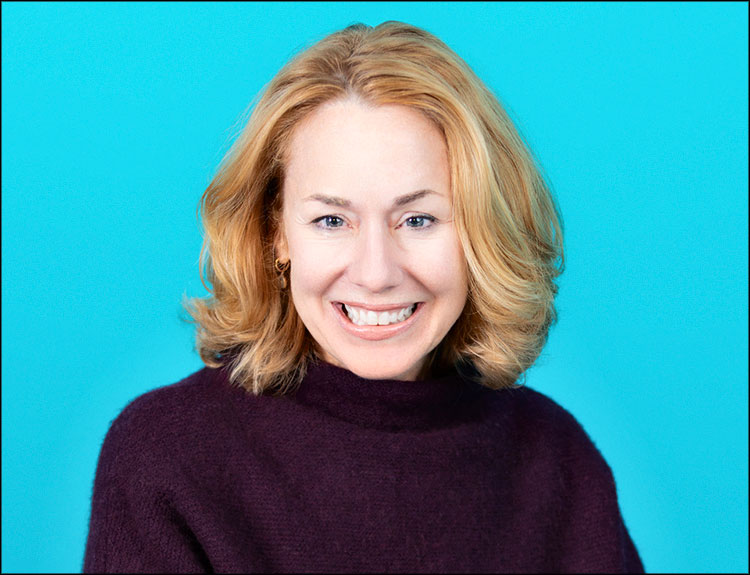
Cheryl Cashin of Shelter Island is the managing director of global health systems for Results for Development, a nonprofit with a mission to work with government and private-sector leaders to create self-sustaining systems for health, education, and nutrition. With Judith Esterquest, the League of Women Voters’ health care issues specialist for New York State, she wrote a white paper positing that the act could significantly reduce overall health care spending by eliminating private insurer profits and marketing costs, improving administrative efficiency, and leveraging stronger bargaining power to negotiate prices.
The white paper analyzes the New York Health Act’s fiscal impact on local governments and school districts using Suffolk County, Islip Town, and the Brentwood School District as examples. According to their analysis, by replacing insurance costs with the NYHA payroll tax Suffolk would see a 92-percent reduction in health care costs, or more than $745 million; Islip would see an 87-percent reduction, and the Brentwood School District would see an 84-percent reduction. “The analysis suggests that by replacing health insurance-related costs with the progressive payroll tax, local governments could save on average between 12 and 14 percent of their total budgets,” the white paper concludes.
“I came to my support of this as a professional working 30 years in global health, seeing every possible option tried and failed,” Dr. Cashin told The Star. “I’m coming at this from a professional-practical viewpoint. Single-payer is the only system that gets us affordable health care.”
The United States spends significantly more on health care than any other high-income country while frequently achieving worse health outcomes. “When you put private, for-profit entities in the middle of anything, that’s their incentive,” Dr. Cashin said. “They’re responding to shareholders. At least 20 percent off the top is going to marketing, to profit.” And “because they don’t need to, they don’t really negotiate prices for drugs, or with hospitals. . . . The way big hospitals are billing is a complete sham: overpriced everything.”
Insurance premiums, and segments of health care costs, are rising dramatically, often by double digits annually, and around half of all hospitals in New York are operating in the red. In the public sector, Dr. Cashin said, “all they can do is raise taxes to cover cost increases. A lot of what is driving the increase in property taxes can be attributed to this double-digit growth.”
“I’m not saying public employees shouldn’t have the excellent coverage they do,” she said. “I’m saying we all should. The way it’s organized now, it’s so inefficient,” rife with waste and dysfunction, she said. She is “on the phone every week with a county who has just closed their last maternity clinic or long-term care facility. It is a disaster. If we don’t look at the New York Health Act as revenue-stabilizing, we’re missing a big part of the looming crisis. We’re at such a dire moment in our health care system that thinking from an individualist perspective — the instinct of so many — will let our system collapse.”
“The bill always got introduced,” said former Assemblyman Fred. W. Thiele Jr., who was a co-sponsor of the bill before retiring in 2024. “There was always some discussion, but it had become dormant, really. What I’ve detected a bit, from my retirement perch, is that there has been a series of events, both political and policy-wise, that have started to raise the profile of the New York Health Act.”
These, he said, include soaring costs, including for Affordable Care Act insurance coverage following the Dec. 31, 2025, elimination of enhanced subsidies. Around four million Americans have dropped out of Affordable Care Act coverage this year, according to the federal Centers for Medicare and Medicaid Services. “With the loss of those subsidies on the federal level, there is a host of people now losing their health insurance coverage,” Mr. Thiele said. “That has piqued interest again.”
He also pointed to a changing composition of elected officials and candidates in the state, from the election of New York City Mayor Zohran Mamdani, who identifies as a Democratic Socialist, to “a number of progressive, in some cases Democratic Socialist, candidates supportive of single-payer. . . . We’ll see who gets elected to what in a couple of months, but there is the perception that the Legislature will have a membership that moves it somewhat more to the left.”
These, he said, “have created a climate and environment where the New York Health Act will probably get a second look starting in 2027.” The Legislature is scheduled to reconvene for its next regular session in January.
Dr. Cashin agrees. “The political winds now are favorable,” she said, “because of massive federal cuts, because candidates who won primaries are more focused on this,” and “the mood of the country with affordability have created this moment. And, I would add, the over-the-top villainy of the private insurance industry.”
There is, of course, opposition to the act, starting with that private insurance industry. A second group of opponents, Dr. Cashin said, “think they’re doing well and are afraid to lose something.” This group includes members of unions who “have negotiated away salaries all these years to get good health care. I’m more worried about getting them on our side, helping them understand there is so much waste and abuse in the system.”
A third group, she said, opposes the act on ideological grounds. “They don’t believe government should be doing this.” Those who “don’t want to see an immigrant getting coverage, I get really annoyed at this one. Their coverage is revenue for the hospital you want to visit! Their emergency care visit that doesn’t get covered will show up in your higher premiums.”
A spokesman for Assemblyman Tommy John Schiavoni, Mr. Thiele’s successor, said that the assemblyman is a co-sponsor of the New York Health Act. “He believes in fair and equitable access to health care for all New Yorkers,” the spokesman said.
In a statement, Senator Anthony Palumbo said that “Since 2019, Democrats have had full control of the State Legislature and all statewide offices, including the governor. Not once in this time frame has the N.Y. Health Act been brought to the floor for a vote. The real reason why this legislation never passed in both chambers is cost. The price tag for Medicaid for all is astronomical and would require the state to take in $140 billion in new revenue — nearly tripling state taxes. Simply put, the proposal is unaffordable in a state that leads the nation in unaffordability.”
Leslie Moran, senior vice president of the New York Health Plan Association, a trade association and lobbying group representing managed care health plans, said in an email that, while the group “supports the goal of providing every New Yorker with health coverage,” it is opposed to the New York Health Act. “This proposal would result in massive new taxes, provide fewer choices over doctors, treatment, and coverage, and threaten the quality of care. In short, it is the wrong approach for New York.”
Dr. Cashin responded that “it is incorrect that people will have fewer choice of doctors” under the act. “It is clearly written in the bill that there will be no pre-defined networks like private insurers have today — all doctors and hospitals are eligible providers under the N.Y. Health Act and included in the system.”
The act can be successfully implemented, she insists. “What I have found is, our state has tremendous capacity to run things,” she said, pointing to the New York State Health Insurance Program, which provides comprehensive health coverage for state and local public employees. NYSHIP is “a beloved public health institution,” she said. “We can make this work in New York.”
Momentum is building, she said, “and for first time ever, the governor’s office met with Campaign for New York Health,” a coalition of universal-health-care advocates. “I don’t know what that means, but our job is to show [Gov. Kathy Hochul] this is an affordability bill as much as a health care bill, a trust-in-government bill, a local government bill.”