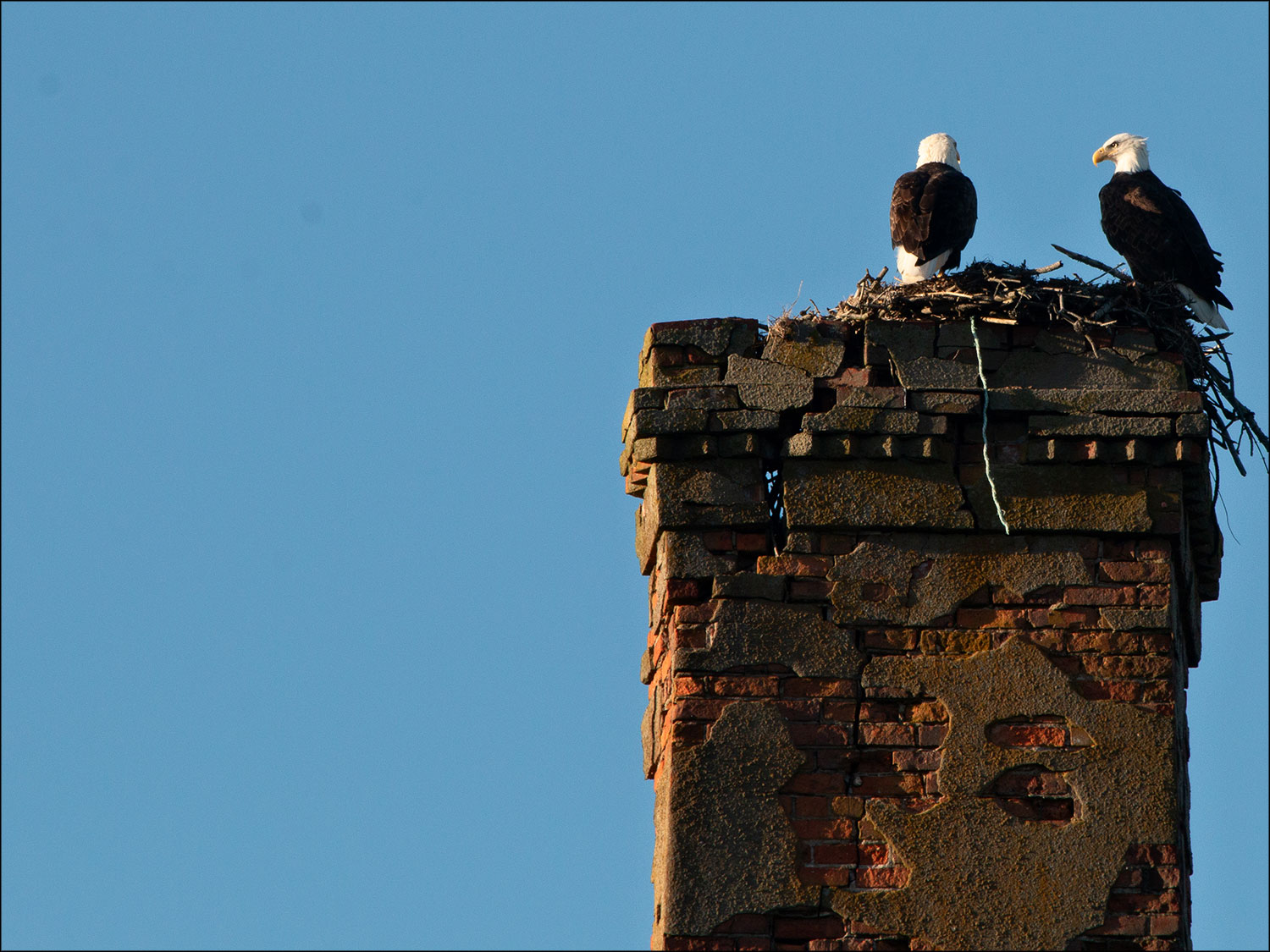
A vote that would have amended and ostensibly weakened the 53-year-old Endangered Species Act was scheduled by House Republican leadership for April 22 but was not held, after enough rank-and-file Republicans, including Representative Andrew Garbarino from Long Island’s Second District, spoke out publicly against its provisions.
“I worked directly with House leadership to ensure this vote did not reach the floor because of the concerns it raised for Long Island,” he said last week. “Protecting our environment and wildlife will always be a priority for the communities I represent. I’ll keep fighting to make sure Long Islanders’ voices are heard in Washington.”
In the fall, the Trump administration began attacking the Endangered Species Act, picking up where it left off during Donald Trump’s first term as president. Four rule changes were proposed that would affect how the law is implemented by the United States Fish and Wildlife Service and National Marine Fisheries Service.
The legislation was introduced and pushed by Bruce Westerman, an Arkansas Republican who is the chairman of the House Committee on Natural Resources. “The E.S.A. has consistently failed to achieve its intended goals and has been warped by decades of radical environmental litigation into a weapon instead of a tool,” he said in a March 2025 press release announcing the amendment bill.
The act is unique in that 84 percent of Americans support its provisions. A March 2025 letter signed by 16 attorneys general, including New York State Attorney General Letitia James, claimed that since the law was enacted, 39 species have fully recovered and that it had prevented the extinction of over 99 percent of species under its protection.
Had the amendments passed memorializing the rule changes, economic analysis — rather than just science — would have played a role in decisions about which species are listed for protections.
Further, the amendments would have made it harder to list new species as endangered or threatened, harder to designate and protect critical habitats that threatened and endangered species rely on, and easier to remove species from the list.
Ahead of the planned vote, it was unclear which way Representative Nick LaLota, who represents the East End, would have voted.
Mr. LaLota has recently shown a willingness to vote for and against environmental causes. For example, a vote he cast in December removed Endangered Species Act protections for the gray wolf, outside of Alaska.
Yet closer to home, the House recently passed an amended American Water Stewardship Act co-sponsored by the congressman that reauthorized existing federal environmental programs like the Long Island Sound Program, the National Estuary Program, and coastal water quality monitoring under the BEACH Act, through 2031.
After the vote he was also quiet, and only issued a statement days later, on Saturday, after multiple requests.
“I’ve been outspoken in my opposition when my party’s leadership has been unwilling to accommodate concerns — just as I was during my intense negotiations over SALT [the State and Local Tax deduction],” he wrote. “By contrast, now that leadership is engaging with pro-environment Republicans like Rep. Garbarino and me and considering modifications to better balance environmental protection with economic interests, I’m less inclined to be publicly critical.”
It was a murky statement, especially compared to Mr. Garbarino’s and another from Pennsylvania’s Republican Congressman Brian Fitzpatrick.
To Politico, Mr. Fitzpatrick’s spokesperson Casey-Lee Waldron said, “Congressman Fitzpatrick saw this bill for what it was: not thoughtful reform, but a direct threat to the protections that have helped prevent extinction and safeguard America’s wildlife for generations. This legislation would have moved us in exactly the wrong direction, weakening core safeguards, undercutting science-based decision-making, and putting imperiled species in greater jeopardy.”
Six Florida Republicans were also outspoken opponents of the bill. There are 217 Republicans currently serving in the House and 212 Democrats. Needing 218 votes for a majority means the Republicans cannot lose many of their own members to pass legislation.
A potential challenger to Mr. LaLota, Christopher Gallant, was clear in his support of the existing Endangered Species Act. “Protecting biodiversity and endangered species is about preserving the health of our environment and the future of our communities,” he wrote in a statement. “I will oppose any effort to weaken the Endangered Species Act because once these species are gone, they’re gone for good and Long Island deserves leaders who take safeguarding the environment seriously.”
Having the vote tabled was a big defensive win for environmentalists.
“With such a tight margin in the House, we knew it wouldn’t take many Republicans to express concerns to create a problem for the bill,” said Jewel Tomasula, a national policy director at the Endangered Species Coalition.
She said more than 58,000 emails were sent to elected officials, who also received thousands of calls in support of leaving the E.S.A. alone.
“We knew there was a contingent from New York, and that Congressman Garbarino went on the record to say that he did not think that this bill worked for Long Island. A few others also went on the record with their opposition,” she said.
“We’re glad Congress is hearing their constituents’ concerns about Rep. Westerman’s harmful bill and taking pause to listen,” she added. “We are staying vigilant and encouraging the public to keep an eye, and continuing to make their concerns heard, that way we can keep the amendment bill dead. This Congress should leave the E.S.A. alone.”