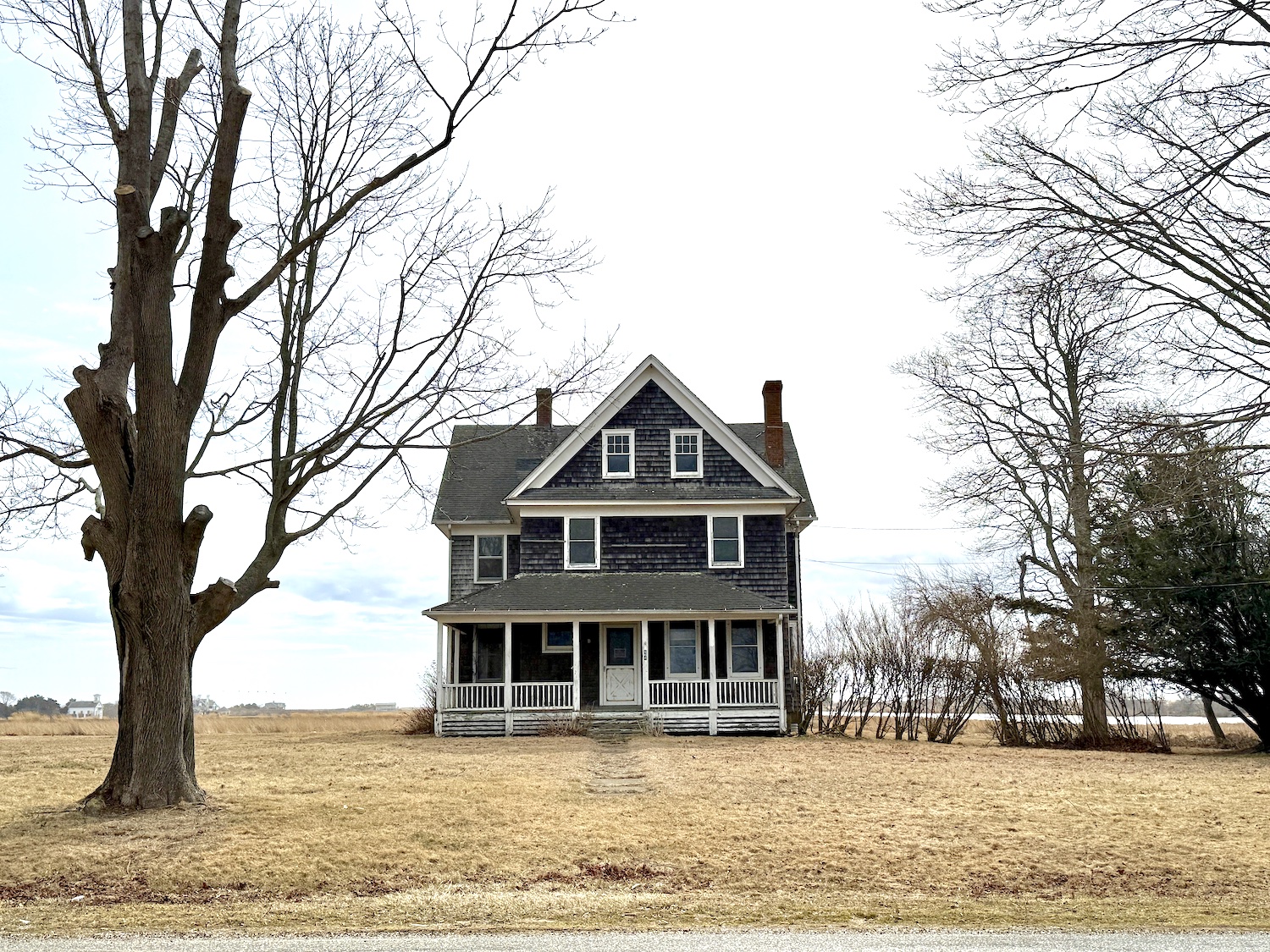
How the public will use the town’s $56 million community preservation fund purchase at 66 Main Street in Wainscott came into slightly clearer focus on Tuesday. Scott Wilson, East Hampton Town’s land acquisition director, presented final edits on a draft management plan for the property, which will now be the topic of a public hearing on March 19.
The town board acquired the 30-acre property in December 2024 but did not discuss how the parcel should be used until November. Board members seemed to agree on passive public access, a potential lessee who could farm a portion of the parcel, and plans for the historic structures, but left open their options to improve the water quality of Wainscott Pond, which is part of the lot.
Most of Mr. Wilson’s changes were minor, which proved problematic for Jaine Mehring, who called in, wearing her Wainscott Heritage Project board member hat, to push the board harder on the parcel’s preservation status.
“The biggest gap in this document is the failure, still, to put the town’s historic landmark designation over the entirety of the parcel, as was originally part of the draft resolution for the C.P.F. acquisition,” she said.
Further, she questioned whether any agriculture was feasible on land so close to the beleaguered pond. “This notion of a buffer to the pond. That’s not sufficient for potential agricultural uses,” she said. Ms. Mehring also expressed disappointment that Mr. Wilson agreed with Councilman Ian Calder-Piedmonte’s suggestion that deer fencing be allowed; in the original draft it was forbidden.
While not her biggest issue, she also disliked the idea of a multi-use path and loop around the fallow field, again suggesting a passive, mowed path, only to the pond and back.
Mr. Wilson explained that the “no deer fence” language was removed because no farmers had approached the board to use the land. “The board was uncomfortable limiting what might be proposed there,” he said. He countered that new language in the draft highlighted the importance of maintaining views across the field.
Even though he’d suggested the removal, Mr. Calder-Piedmonte commented that the management plan would not be the final arbiter of how the land is used; that it is more of a general guide.
“I think most people don’t support a deer fence and I personally don’t disagree with that. But as long as we’re open to active agriculture, I think we have to leave important tools for agriculture on the table,” he said. Eventually, when the town partners with a licensee, “the specificity and the details of those things will all be worked out.”
Regarding agriculture, Councilwoman Cate Rogers was the lone dissenting voice on the board.
“I understand the importance of agriculture,” she said. “I understand the historic nature of agriculture, but I don’t see how we could possibly buffer an adjacent shoreline. Anything that’s put on that land, whether it be organic or non-organic, you still need nitrogen. And that’s my problem with allowing agriculture.”