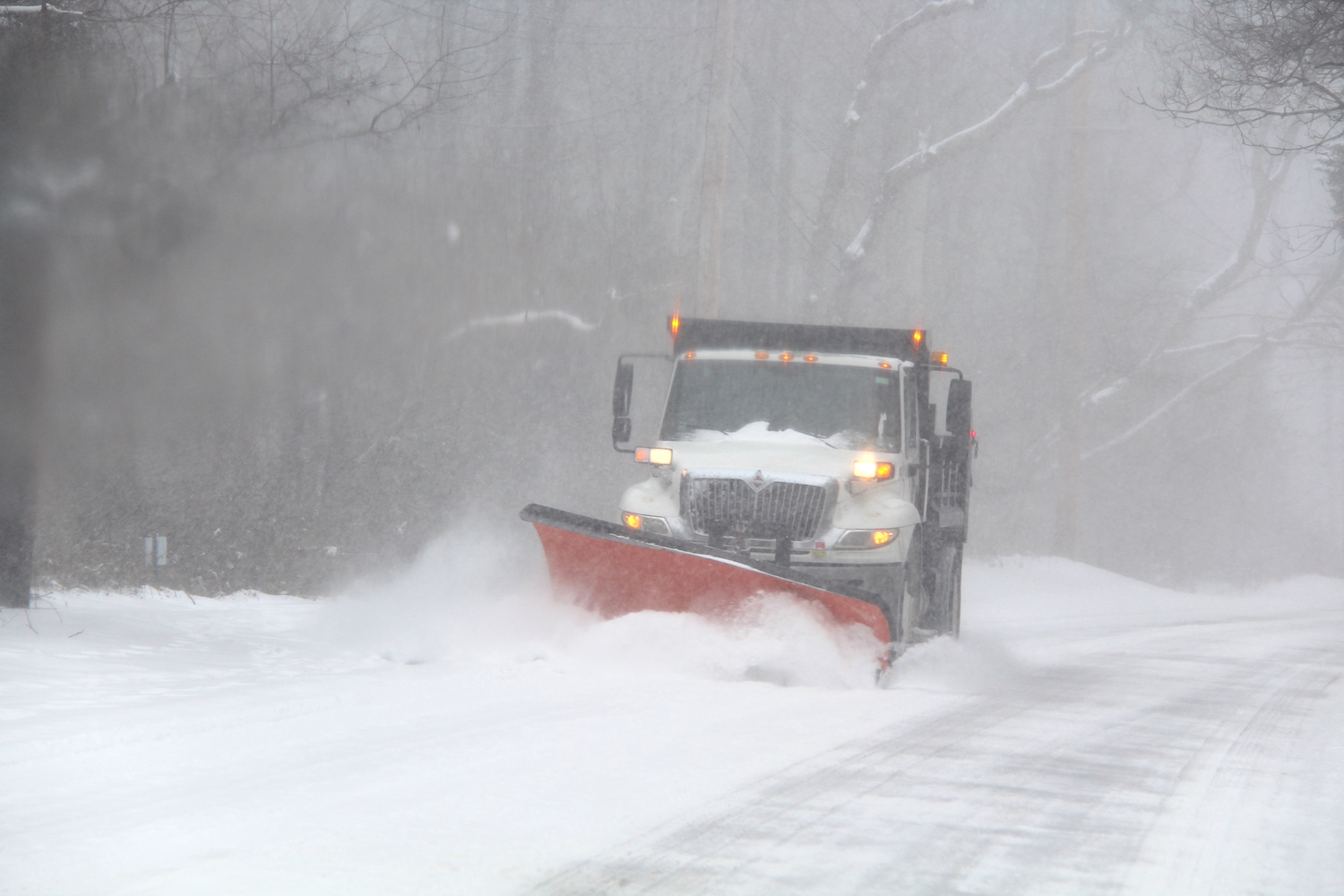
When snow piles up in the double digits, as it did Sunday into Monday, that’s when the East Hampton Town Highway Department, and its superintendent, Steve Lynch, become truly essential.
“Dispatch calls us to make sure ambulances can get to calls. We’ll plow them in and out if we have to,” Mr. Lynch said this week.
His position is an elected one with a two-year term, and Mr. Lynch has been elected for the past seven cycles. He was challenged only once, the first time he ran.
With a background in excavation, land clearing, and septic and pool installations, he is well versed in many of the day-to-day challenges the Highway Department faces. He speaks slowly and comes across as completely unfazed.
The department has 23 employees, down from 43. “There’s no workforce to hire out here. It’s too expensive to live,” he said, echoing a common refrain.
When big storms hit, Mr. Lynch oversees an operation that straddles both the public and private worlds and needs to be manned nonstop, sometimes for days. The town bolsters its 32 trucks with outside contractors and personnel to form an army of 50 plows.
“I have private contractors do all the cul-de-sacs,” he said in a phone call, “but the town oversees everything. When we hire these local guys, they’re contracting with the Highway Department. We advertise for the jobs and we hire them. They’re a big help, and we couldn’t do it without them.”
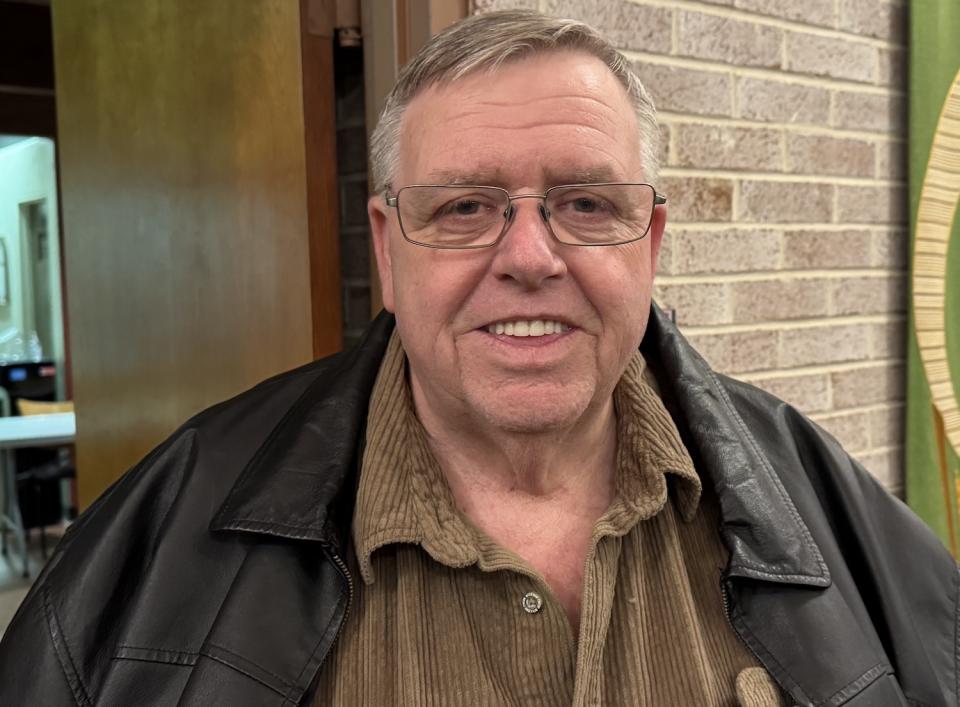
At last week’s East Hampton Town Board meeting, Mr. Lynch was there with other department heads to make a case for their funding requests to be added to the three-year capital plan.
His department budgets $195,000 a year for snow removal supplies, roughly $165,000 of which goes to road salt, which costs $100 a ton. That equates to over 3 million pounds of salt.
The town built a new building for salt storage recently. “It’s considered a tank by the county,” Mr. Lynch said. “The floor is pitched back so no water can run out of it, and it has a roof.”
New snowplows are purchased every year. “They get bent and worn,” Mr. Lynch told the town board. “We buy used trucks for the salters. I just can’t see putting salters on new trucks. They destroy the truck in four to five years.”
“Even though we don’t get a ton of snow, we get a lot of ice,” he said. Some municipalities have moved to beet juice to treat roads before storms, but Mr. Lynch said that creates stains and is very expensive.
As for sand, “We try not to use [it], because it ruins the lines in the road. We only use it when we get really low on salt.”
For the first time, he is requesting that money be added to the capital plan for road striping, so the department can catch up in certain areas and benefit from economies of scale. He plans to inventory the town’s striped roads, the superintendent added, preparatory to designing a plan to maintain the striping.
“That comes up a lot in my East Hampton [Citizens Advisory Committee], where folks are looking for the fog line as we age,” said Town Supervisor Kathee Burke-Gonzalez.
“I need them. I can’t see at night,” said Mr. Lynch. Fog lines are also becoming more important as car headlight intensity increases and drivers are forced to avert their gaze to avoid being blinded.
But line painting is expensive.
“We’re paying 10 cents a foot, which is an excellent deal,” Mr. Lynch told the board. However, on a typical road there are two fog lines and two center lines; so, 40 cents a foot. With 5,280 feet in a mile, the price to stripe a mile of roadway is $2,112. There are 300 miles of road in the township. To stripe them all at that rate would run $633,600.
And that’s with the good price. Last autumn the town paved a couple of smaller roads, and the pavers, Rosemar Construction of East Moriches, striped them when they finished paving. They charged the town 50 cents a foot.
When animals die on town roads, Mr. Lynch’s department is tasked with removing them. Last year they retrieved “hundreds” of deer, he said. And when roads deteriorate, his department is charged with regrading them.
A new regrader costs $700,000, but Mr. Lynch recently refurbished the department’s old truck. He also rebuilds its other trucks. “We try to keep rebuilding them until they’re not worth rebuilding anymore,” he told the town board. “Trucks are so expensive nowadays. A little six-wheel truck with a plow and sander is $290,000.”
Water, too, wreaks havoc on roads, and his employees replace and adds drains. “As more hard structures are put on our lands, you get more runoff, so it’s going to require more drainage,” he explained.
“We have 300 miles of road. It would take us 35 years to repave them all. So, we maintain them. We do a lot of crack-sealing. If you keep water out from getting underneath them, they last a lot longer.”
Any time a speed limit changes, Highway Department staff is responsible for installing new signs. When a tree falls on a road, they hear it and scoop it up. Mr. Lynch asked the board for money for a “wheel loader,” a type of truck that can easily handle that job.
“I love this job,” he said. “I love working with people. Most of my feedback, I’d say 98 percent, is complimentary. It’s not stressful. Stress is when you’re building a swimming pool on pilings and all of the stone has been hand-picked in Italy and you’re filling it with water and wondering if it’s going to leak.”