
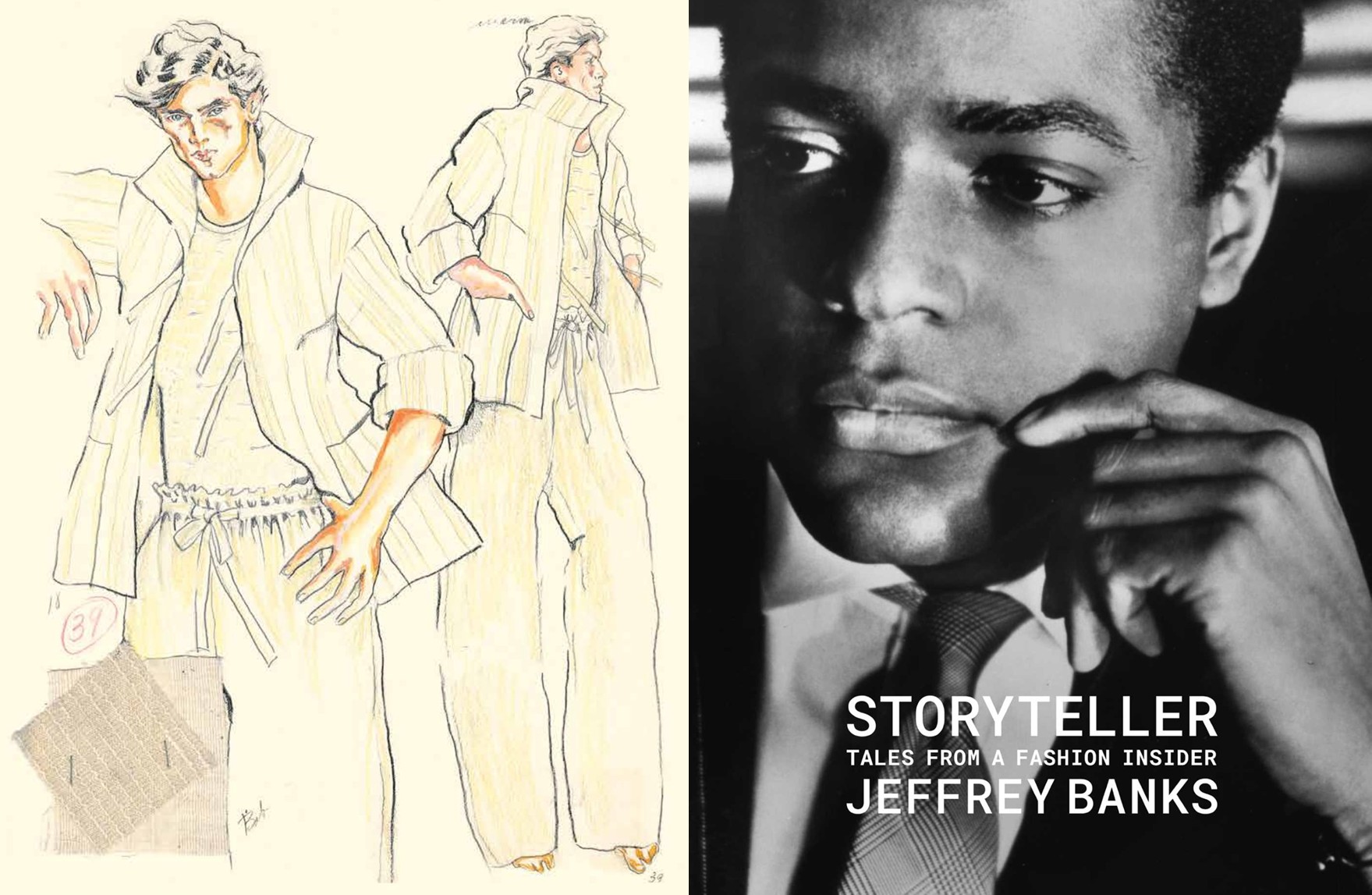
“Storyteller”
Jeffrey Banks
Pointed Leaf Press, $75
From earliest childhood, Jeffrey Banks cannot remember not drawing. “My right hand was always attached to a pencil, a pen, or a crayon. It’s as if they were appendages to my arm,” writes the multi-award-winning designer for women, men, and boys in “Storyteller: Tales From a Fashion Insider.”
His hefty, warmhearted, and profusely illustrated memoir includes numerous hails and some sad farewells to many major and minor fashion figures and others who inspired or assisted him. From the masters Ralph Lauren (“innate ability to tell stories through his clothing”) and Calvin Klein (“amazing perception of what people wanted before they even knew”) to a then-recent design school graduate, Isaac Mizrahi, now also a star. And from the New York Times street styles photographer Bill Cunningham to the globe-trotting portrait-maker Richard Avedon.
Also Hollywood’s Audrey Hepburn and her song-and-dance co-star in the film “Funny Face,” Fred Astaire, whose role was based on Avedon (who, ironically, has confessed to basing his elegant public persona on Astaire).
At the age of 5 or 6, Banks recalls being “gobsmacked” on his first visit to a museum, the National Gallery of Art in Washington, D.C., his hometown, and fascinated in particular by a Degas painting of ballet dancers. “My mother says I stood there for almost half an hour, completely transfixed.”
That led naturally to thoughts of a life in art, before the hardships and long shots involved became clear to the boy. Fashion design seemed a more practical outlet, even to one so young. “In art you could create a painting and it might take years, if ever, to be appreciated,” he perceived. “But with designing you would know within months, even weeks, if your creation was embraced or not by the buying public.”
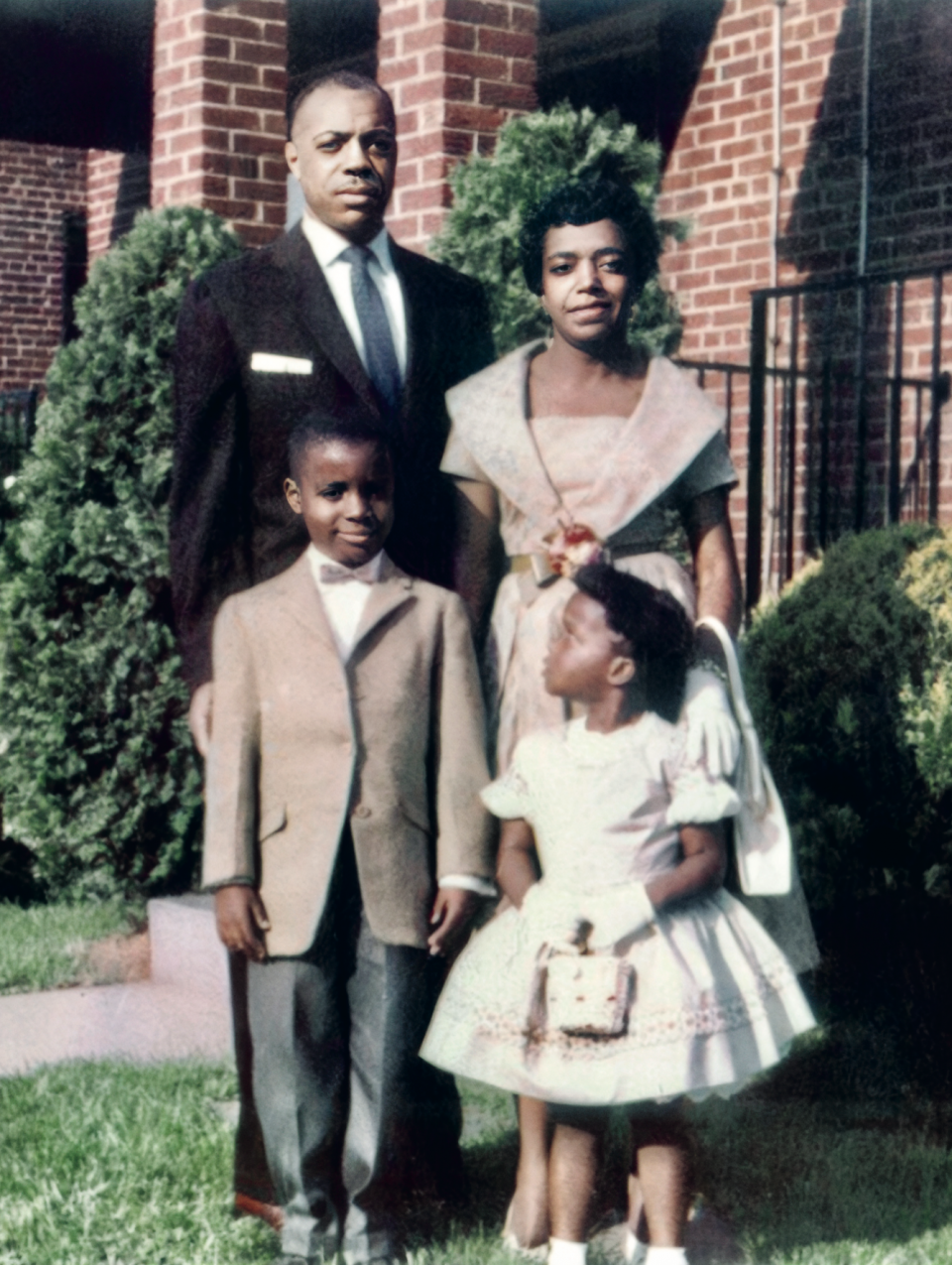
Author of more than half a dozen previous fashion-related books and biographies (plaids, preppy style, Norman Norell), Banks was clearly influenced by his mother’s expert sewing and elevated style in their Black neighborhood of the nation’s capital. Now 105, Eleanor Banks was the first female and then only Black person in the stenography pool of the U.S. Coast Guard HQ.
His dad, Clarence Banks, was a cartographer for the U.S. Naval Oceanographic Office, slow to praise but always supportive, though his admonition that “boys don’t kiss” remained “forever emblazoned” in the mind of a son now so successful in a field where that description is hardly definitive.
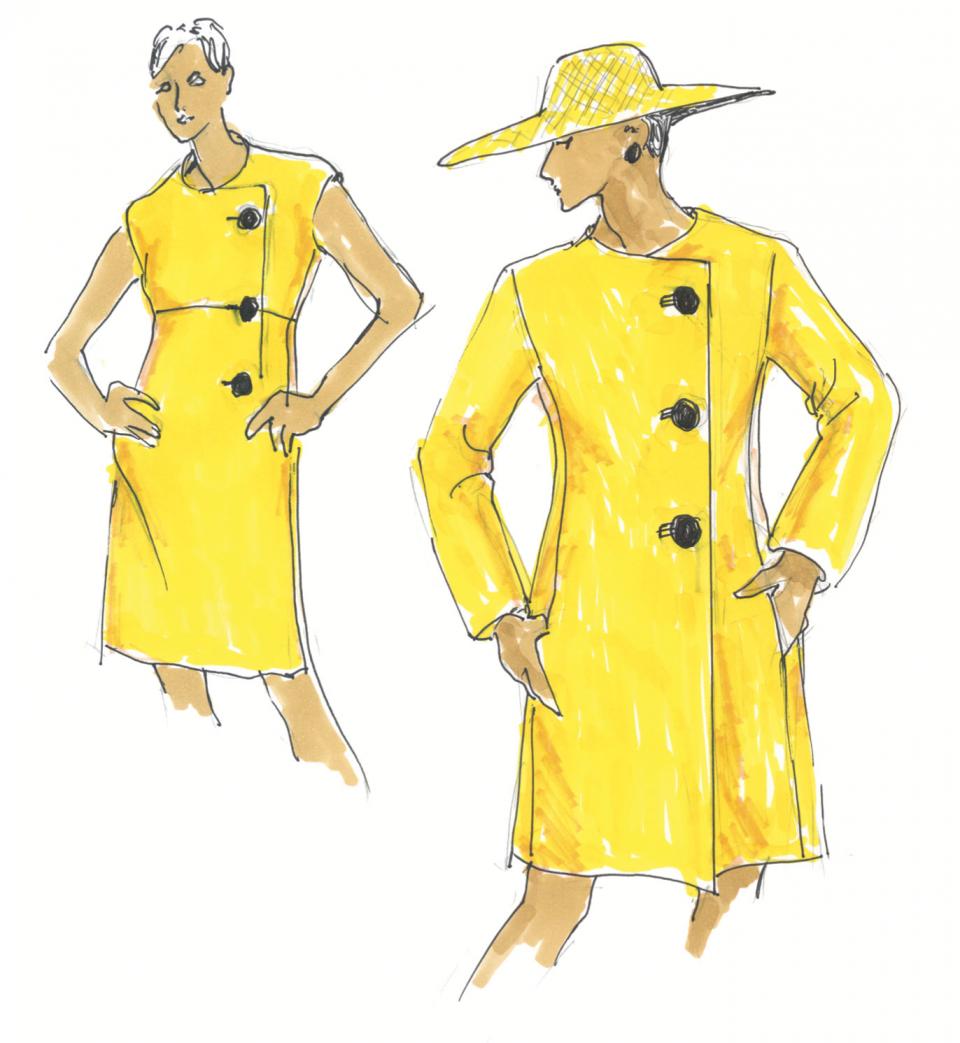
At age 10 Banks insisted on creating his mom’s annual outfit for Easter Sunday, a dress-to-the-nines ritual for Black families in the 1960s. From the book’s full-page color illustration (one of many), it was a truly sunny stunner: a “banana-colored wool jersey asymmetrically closed coat over a matching sleeveless, banana silk empire-waisted sheath dress,” and topped by a bright, broad-brimmed “cardinal’s hat” of fine Italian straw — for the “your father will kill me” price of $75 (hundreds today).
On the day she wore it, “we both basked in the acclaim,” he recalls. And “my career path, as far as I was concerned, was firmly set.”
Professionally, indeed, Banks seems to have led a charmed life. But the charm was essentially his own, no fairy godmother needed. His engaging manner was powerfully supported by obvious talent, knowledge, energy, and what he calls “no holds barred determination.”
Full disclosure: I know Banks through a fellow designer, Stan Herman of Southampton (Mr. Mort high fashion for women, loungewear, corporate uniforms), with whom I played tennis for years. (His memoir, “Uncross Your Legs,” was reviewed in The Star’s Jan. 25, 2024, issue.)
As a “fashion-starved teenager,” Jeffrey became a regular at the stylish Georgetown Slack Shoppe, his first male sartorial “nirvana,” and its eventual, expanded successor, Britches of Georgetowne. So familiar with store and stock, in fact, that at 15 he was offered an after-school sales job, assembling catchy combinations of shirts and ties and such, for which he was further rewarded when he outsold the full-timers.
“Nothing pleased me more than when a wife or girlfriend said, ‘I don’t know what you did before, but please do it again. He’s never looked so good.’ ”
It wasn’t long before Britches sent Banks, with his first driver’s license, to Washington National Airport to fetch one of his fashion idols, Ralph Lauren, for a Red Cross Valentine’s Day fashion show. Predictably, he and the papa of Polo were soon discussing Fred Astaire, Grace Kelly, the Duke of Windsor — and the high schooler’s desire to be a fashion designer.
“When you come to New York to look at schools give me a call, I might have a job for you,” Lauren encouraged.
And so the designer did, though not before lending his own tuxedo, trousers, shirt, and formal shoes to the would-be disciple — all just the right size, surprisingly — for his upcoming high school prom.
In New York, Banks first chose Pratt Institute in Brooklyn for its traditional grassy campus and dorms, but ultimately switched to the “more challenging” Parsons School of Design, then tucked tightly into floors of a Manhattan office building.
There would also be his own downtown apartment, thanks in part to the impression that Jeffrey at 17 made on another of his celebrity idols — the elegant, sophisticated Black cabaret singer-pianist Bobby Short. (“He represented all I wanted to become: a respected master of his craft.”)
Waiting for the formality of a job interview at Lauren’s offices, Banks realized he was sitting next to Short, there for a new tuxedo. Savvy chat ensued, Banks being long familiar with the Great American Songbook and musicals of Hollywood’s Golden Age. “Jeffrey, have you met Bobby?” asked Lauren when he finally appeared. But Short cut in: “Why, we are old friends.”
Not long after that, Short waved at the Cafe Carlyle table he’d reserved for Banks and his visiting parents, then sent over Champagne, and after the show tapped his mom on the shoulder to say hello. The son’s evident knack for high-level networking overcame his dad’s doubts about the monthly apartment rent he’d have to cover ($414).
Working after school as Lauren introduced his first women’s collection got Jeffrey another unlikely dream come true: taking measurements of the female singer he’d most adored — Barbra Streisand — bare save for bra and panties. “The most beautiful skin I had ever seen on a human being,” he reports, “also a gorgeous chest and shoulders, and long, long thin legs.” (Sorry, no picture.)
Interjecting a bit of Streisand trivia from Chicago years earlier won Banks her admiration (“Oh, this boy, he knows everything about me”) and a goodbye kiss on the cheek.
Lauren was not happy when Banks decided to quit work to sew up his degree. The pain at Polo became sharper still after Banks was persuaded to go back to after-school work for a competing celebrity designer, Calvin Klein, “beyond charming” with “the proverbial offer I couldn’t refuse” — fewer working hours and days for full pay.
Banks recalls encouraging Klein’s transition from a “coat and suit guy” to a rebellious re-imaginer of jeans, undies, then “full-fledged sportswear” — with audaciously sexy print and video ad campaigns. He gave his new assistant “tremendous leeway,” first licensing scarves, belts, furs, umbrellas, finally the prospect of leading a planned expansion into menswear.
It was to be a collaboration with Irving Selbst, a big man in male fashion (6-foot-4, 300 pounds) and sometime motion-picture “heavy” (“Winter Kills,” “Watermelon Man”). Selbst helped bring designers Cardin and Saint Laurent to the U.S., “the peacock revolution.”
The deal with Klein fell through but Selbst moved ahead on his own — putting Banks in charge. His own line.
“And if it doesn’t work out, you can always come back,” Klein assured him.
After only a year, his collection earned Banks a nomination for the 1977 Coty Award (fashion’s Oscar) as Best Menswear Designer, but instead he was happy to win a first-ever trophy for his wide and colorful array of hyper-masculine men’s furs. In 1982 Banks’s creative approach to fabric, texture, and design did snare the Menswear Award, and in 2022 a Special Anniversary Award by the Council of Fashion Designers of America (CFDA).
His most recent “thrilling and humbling” recognition came with a Banks ensemble featured in the 2025 Metropolitan Museum of Art gala, “Superfine: Tailoring Black Style.”
Banks sought female views in the early 1980s when considering expansion of his brand into affordable, accessible womenswear. “Prints. Women love them,” said Ellin Saltzman, then fashion director at Saks Fifth Avenue. “There is a real dearth of them in the designer collections,” agreed Anne Ball at Neiman Marcus.
Pride and joy in professional success does not blind Banks to serious problems far from showroom runways and window displays. Inside CFDA he worked with its longtime leader Stan Herman and problem-solving P.R. “dynamo” Fern Mallis, also of Southampton, to support efforts focused on AIDS and breast cancer. He also joined the board of the Hetrick-Martin Institute, advocating for L.G.B.T.Q.I.A. youth in education and housing.
“Blessed” to have a career in the fashion industry, “the thing I love most,” Banks writes, “I have always felt a certain responsibility to give back and/or pay it forward for the good fortune I have repeatedly received.” An attitude that should never go out of style.
Jeffrey Banks is a regular visitor to Southampton. He reviewed “A Man of Much Importance,” a biography of the late playwright Terrence McNally, for The Star.
David M. Alpern of Sag Harbor, a former senior editor and weekly radio host for Newsweek magazine, now presents programs for local libraries, including Southampton’s Rogers Memorial Library, where he will chat with Banks on Friday, May 15, at 6 p.m.