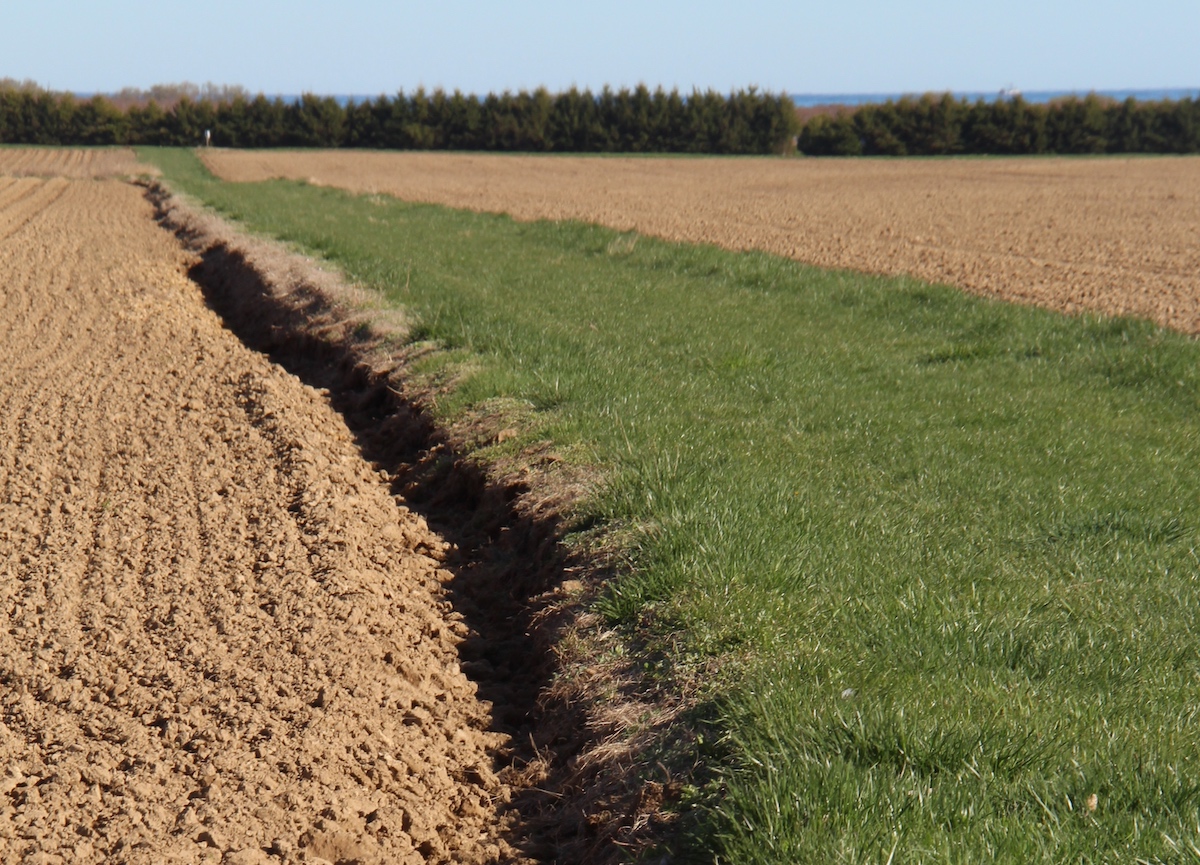
We got the May flowers, but it was not thanks to April showers this time. Long Island’s East End has officially dipped into drought status — which would normally happen in late summer — according to the most recent U.S. Drought Monitor map.
And yes, it rained this week, but we’ll need more rain, more consistently, to break it.
National Weather Service data show that the East End has received about 10 inches of rain thus far this year, which is roughly six inches below the normal level. Perhaps more concerning, the region is only about two and a half inches above the lowest level ever recorded, going back to 1985.
East Hampton Town Supervisor Kathee Burke-Gonzalez mentioned the elevated fire risk, due at least in part to the drought, at Tuesday’s town board meeting. “Suffolk County has issued an elevated risk statement due to dry and windy conditions,” she said. “The New York State burn ban remains in effect until May 14.”
The State Department of Environmental Conservation’s Fire Danger Map also places Long Island under the “high risk” category.
In fact, since 2009, a statewide annual residential brush-burning ban runs from March 16 through May 14. According to the D.E.C., open burning of debris is the number-one cause of spring wildfires. Leaves that have sat through the winter dry quickly as temperatures warm, and with the early-spring dearth of green vegetation, sparks catch.
“Many of us are looking forward to spring weather after a very cold winter, but with the warming temperatures comes increased fire risk,” said Amanda Lefton, the D.E.C. Commissioner. “The more careful you are with fire, the better we can protect our communities and natural resources as well as our forest rangers and firefighters across the state.”
The brush-burning ban does not apply to backyard fire pits or campfires less than three feet in height and four feet in length, width, or diameter.
Despite the winter’s many feet of snow, the Hamptons have been “abnormally dry” through most of the early spring.
“The heavy snow from winter has helped charge the soil with water, but that can be depleted as plants grow, temperatures rise, and we don’t get significant amounts of rain,” said Daniel Owen Gilrein, entomologist and associate agriculture program director of the Cornell Cooperative Extension of Suffolk County. “It’s not unusual to have fire-prone conditions in the spring, though it seems odd perhaps, with coolish temperatures.”
“It seems like a weird time for a drought,” agreed Bruce Stonemetz, chief of the Amagansett Fire Department.
There are, however, some positives, Mr. Gilrein said. Dry conditions not only mean farmers can prepare their fields sooner, but also reduce the risk of some early-season plant diseases associated with heavy rains. Arborists and other landscaper professionals have been able to “catch up,” he said, after the snow-packed winter.
But the dry spring, coupled with the very dry conditions of late last summer and early fall, is likely stressing many plants, he suggested, and more rain would be better for the region.
Lack of precipitation also means homeowners and farmers rely more on irrigation, although Jeffrey Szabo, chief operating officer of the Suffolk County Water Authority, said on Tuesday that the county has seen no issues thus far.
“We’re pulling drinking water from the aquifer, filling our tanks, and meeting demand,” he said. “So far, so good, from a drinking-water perspective. We haven’t seen a spike in demand yet this year.”
“When we get drought coupled with extreme heat in July, August, and September, that’s when we begin to urge people to be mindful of their use,” Mr. Szabo said, adding that “that seems like it’s almost an annual reminder now.”
Last July, even absent a drought, the water authority issued a Stage 1 water alert due to low levels in its water storage tanks. If the tanks are depleted below safe levels, pressure could drop, impacting, say, firefighters’ ability to douse a blaze.
For the last few years local fire departments have been concerned about the dead pitch pines on Napeague, on state-owned land. Efforts to clear the fallen trees continued this winter amid controlled burns of debris.
“The piece that really concerns me is the area adjacent to the railway track,” said Councilman Tom Flight. “It’s daunting to see all that dead wood there.” The state has done a good job clearing fire roads into the interior areas, he said, but “the [Metropolitan Transit Authority] and the state haven’t done as good a job of getting dead trees removed from near the tracks,” which “are relatively easy to access, should a spark from a train set off a fire.”
“The State Parks Department has the mulching machine, and trying to get them to partner with the M.T.A. is the end goal. They’re outside our jurisdiction, though,” Mr. Flight said. “We can only ask and nudge.”