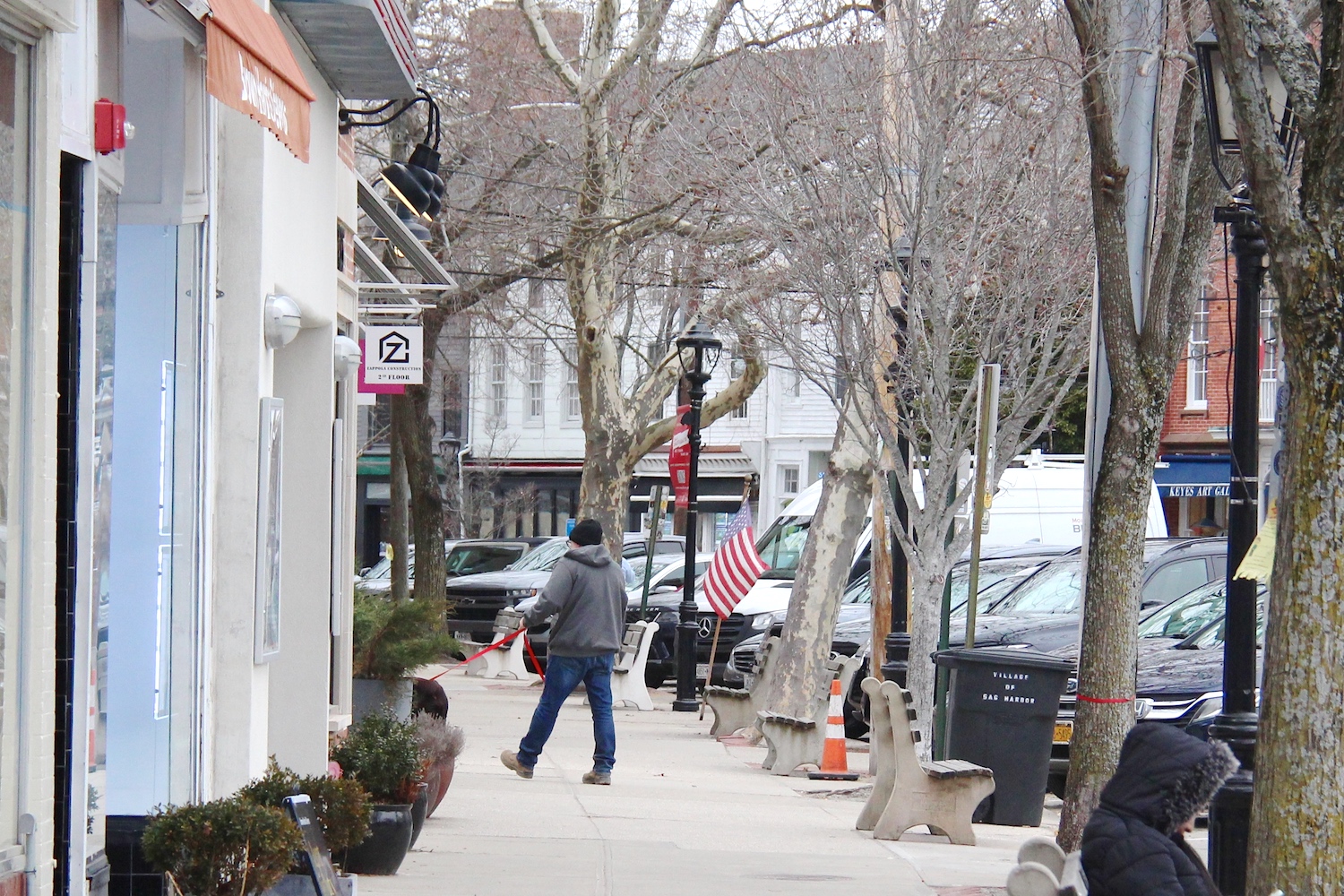
Residents of Sag Harbor have come together to denounce what some see as a troubling wave of chain stores in the village. A petition launched by Save Sag Harbor that calls for new legislation to define and limit “formula retail” or “chain establishments” in the village has been signed by over 500 people in the last week.
“The unchecked proliferation of formulaic stores and restaurants — businesses that can be found in dozens of other towns and shopping malls anywhere — poses an existential threat to Sag Harbor’s distinctive identity and economic vitality,” the petition on change.org reads.
Bob Weinstein, a co-chairman of Save Sag Harbor, said this week that the petition did not come from a perceived anger over the store Rag and Bone, a clothing retail shop with 81 stores internationally that is to open in the village, but rather frustration over a “general trend that’s been happening over the last few years.”
Save Sag Harbor itself was born out of a push to keep so-called big-box stores out of the village, Mr. Weinstein said.
A Rag and Bone store opened on Newtown Lane in East Hampton village in 2022 and a location has opened at the Tanger outlet in Riverhead.
As it stands now, officials have proposed legislation to keep commercial space in the village restricted in an effort to preserve the village’s distinct character. The proposal would reduce permitted frontage from 50 feet to 25 feet and eliminate the ability to expand gross floor area by 50 percent. At present, the code allows for expansion by up to 50 percent of gross floor area but not exceeding 3,000 square feet. The legislation in the pipeline would eliminate expansion entirely without review and approval by the board of historic preservation and architectural review.
There were no comments from the public when a hearing was held on the proposal last week.
In the past, the village has limited square footage in an attempt to fend off retail giants. But, Mr. Weinstein noted, size is less important now.
Many shops simply want the prestige of the name “Sag Harbor” in their list of locations. “The store becomes a living advertisement,” he said.
He added that, combined with online shopping and the popularity of the village, retailers don’t need the space they used to.
That sentiment seems to be backed up by numbers. In March, Rich Warren, a consultant from Interscience who prepared a report on the proposed legislation, said the average storefront on Main Street is 1,935 square feet — with 38 shops larger than 2,000 square feet; 122 smaller than 2,000 square feet, and 21 larger than 3,000 square feet.
But since an initial study in 2007, Mr. Warren said 97 businesses have changed hands — a number he called significant. Ten business have expanded in size.
Over all, Mr. Weinstein said convincing the village board to create further legislation — something he sees as the next step — won’t be an uphill battle. However, he said, it may not be possible to keep the stores from popping up entirely. He said the legislation may have to focus on Main Street alone. The group is looking toward other municipalities nationwide that have enacted similar legislation.
“Anything that is limiting . . . is helpful,” Mr. Weinstein said, and “we’re grateful that the effort was made.”
Mr. Weinstein said Save Sag Harbor is always looking for volunteers and supporters to help preserve the character of the village. More information can be found at its website, savesagharbor.com.