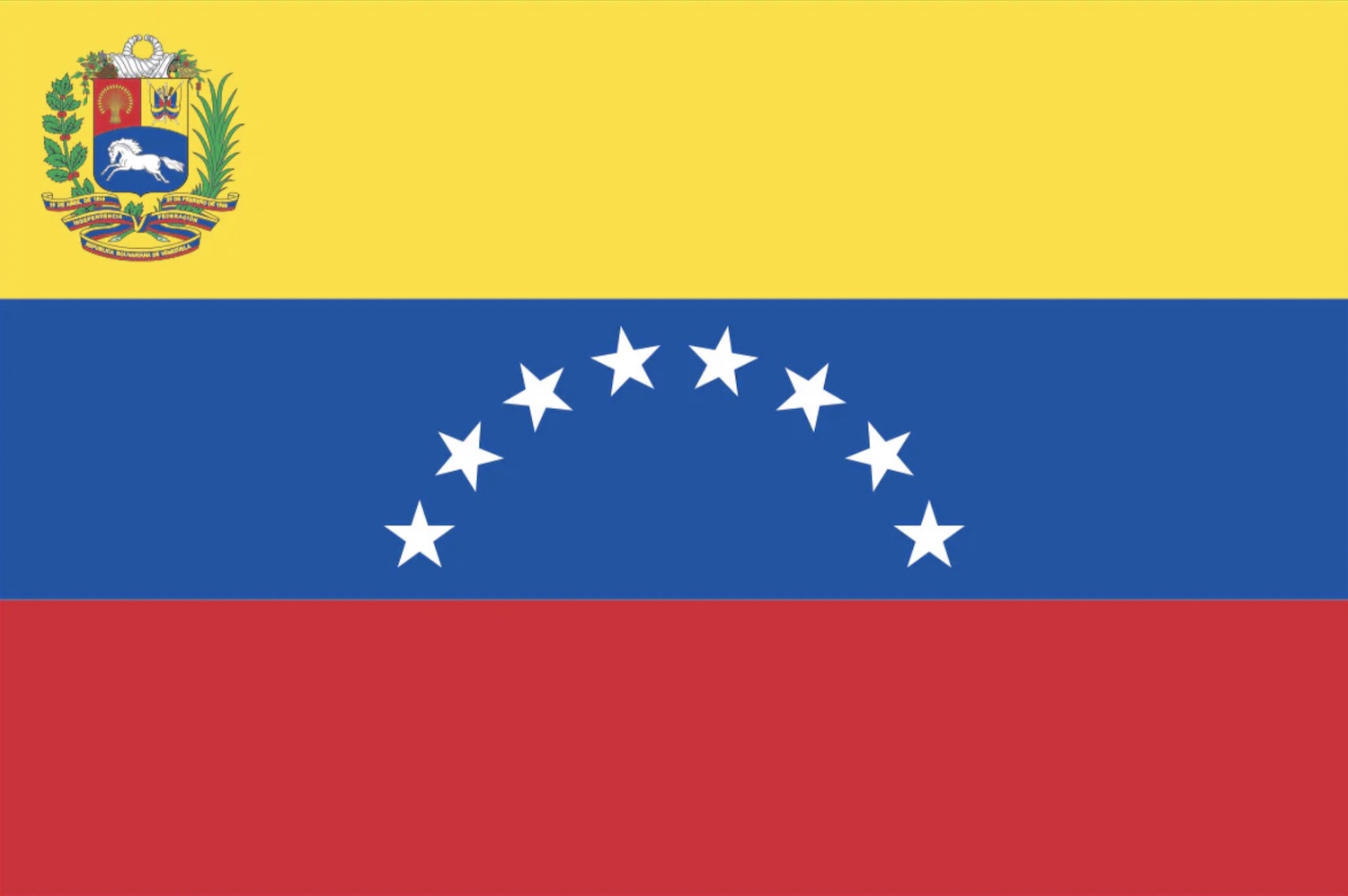
When the United States bombed Venezuela on Jan. 3 and removed Nicolas Maduro, its president, to stand trial in New York City, Americans might have taken pause.
Not because there is any love for Mr. Maduro.
Instead, because the surprise action was carried out without congressional approval, and it followed a long
The Senate, including five Republicans, planned a vote this week to censure President Trump because of the military actions. Any such move would need to pass the House as well, and gain President Trump’s signature. Not likely.
Even before the boat strikes, Maduro, who rose to the presidency after the death of Hugo Chavez in 2013, has been in the sights of the Trump administration. Back in September, the State Department listed Venezuela in its “Presidential Determination on Major Drug Transit or Major illicit Drug Producing Countries for Fiscal Year 2026.”
“In Venezuela, the criminal regime of indicted drug trafficker Nicolas Maduro leads one of the largest cocaine trafficking networks in the world, and the United States will continue to seek to bring Maduro and other members of his complicit regime to justice for their crimes,” it says. “We will also target Venezuelan foreign terrorist organizations such as Tren de Aragua and purge them from our country.”
For Venezuelans living in the United States, it’s complicated.
“I’ll give you my perspective as a Venezuelan citizen, not as a citizen of the U.S.,” said Carlos, who declined to give his full name because he fears for family still living in Venezuela. “Two things can be true at the same time: What [the U.S.] did is good for Venezuela, and it gives me a little hope that it’s possible for them to get out from under this regime. But to do so, President Trump violated the Congress.”
The Star asked Representative Nick LaLota if he thought Congress should have been consulted or asked for approval for either action. He thought not.
“Presidents of both parties have exercised Article II authority for limited, targeted actions without prior congressional approval,” wrote the Congressman, a Republican, in a statement, “including President Obama’s 2011 operation to kill Osama bin Laden and his initiation of airstrikes in Libya and against ISIS. As a former Navy officer, I understand the difference between a narrow national-security operation and a sustained war, and nothing about the action against Maduro rises to that threshold; Congress was properly notified consistent with longstanding bipartisan precedent.”
“Am I happy about what President Trump did? Absolutely,” said Luis Lipavsky, an immigration paralegal for Organizacion Latino Americana, who lived in Venezuela his entire life before escaping in 2019. Mr. Lipavsky, 56, is now seeking asylum in the United States.
“Do I think it was the perfect legalistic orthodoxic way of handling the situation? Maybe not. But remember, this revolution has mocked the international law system for 26 years. There was no other alternative.”
“It’s incredible. For my friends and family still living in Venezuela, they are afraid, obviously, but also happy. Happy that after 26 years of the Bolivarian Revolution [named after Simon Bolivar], international action has been taken, and absolutely happy about Nicolas Maduro being detained and on trial in North America.”
While the U.S. may not be engaged in a “sustained war” with Venezuela, the day after the military action, President Trump, speaking at a news conference, said, “We are going to run the country until such time that we can do a safe, proper, and judicious transition.”
That was not on any voter’s mind in November 2024.
“It will be a long process. This is chapter one of this story,” said Mr. Lipavsky, who expects any kind of safe transition to take at least a decade. He pointed to a new decree by the interim government, run by Maduro’s vice president Delcy Rodriguez, that empowers police and paramilitary forces to search for and detain any person found supporting the actions of the United States.
“If the United States starts working with people who have been part of the Maduro regime, it would make me less confident that real change will occur,” said Carlos.
Both men said their families in Venezuela have reported “colectivos,” armed men stopping cars, demanding access to residents’ phones, and performing inspections. Carlos’s sister deleted WhatsApp so inspectors wouldn’t read celebratory messages from her friends and family living abroad.
“They created a system in which you are afraid of expressing anything related to politics,” said Mr. Lipavsky. “It’s dangerous. That’s why you do not see a celebration in Venezuela about Maduro’s detention. You see the international diaspora of Venezuelans celebrating, because we can.”
“Now the process is more complicated,” he said. “Maduro was only one face of the Bolivarian Revolution. Now we are living the aftermath. The impoverishment of Venezuela and the gigantic mass migrations that have occurred in the last two decades were the result of a planned strategy to keep, in Venezuela, only those who couldn’t flee, or those who were so impoverished that they’d be slaves to the system.”
Apart from reforming the government, an entire industry, the oil industry, needs to have confidence that it can re-enter the country and that its assets and investments won’t be seized by the state.
“What guarantees do the businesses get that the government isn’t going to turn against them again?” asked Carlos. “That’s the risk.”
The timing of the military action, though, seemed right, he added.
“Russia has no capacity to help Venezuela. They don’t have the manpower or money, and they have a bigger fish to fry in Ukraine. When the U.S. seized a Russian-flagged ship leaving Venezuela recently, for Russia not to say anything, that was weird.”
Carlos said he had no problem with the United States taking control of Venezuela’s oil, a sentiment shared by Mr. Lipavsky.
“Oil in Venezuela has been a blessing and a curse,” Mr. Lipavsky said. “We haven’t seen any progress in my country from oil. If it’s true what Trump is saying, that he can get the oil, administer the money, and ensure its return to the country, then, wow, that is something that all Venezuelans will agree is a good thing. That may be hard to understand from an American perspective, but that’s only because you haven’t lived the entire process and seen what these people are capable of doing.”
What bothers Carlos most is the Trump administration’s messaging — which, he said, conflates all Venezuelans with the organized crime syndicate Tren de Aragua. “It’s insulting,” he said. “Now every Venezuelan is seen as a criminal, and that makes me cringe.”
Mr. Lipavsky described himself as “a very successful middle-class lawyer” in his country. Here in the U.S., his first job was as a delivery man. “I tell people the situation was that bad. I would rather be a delivery guy than a persecuted attorney.”
Speaking of Maduro, “You can see his surprise,” he said. “Finally, their game of playing with international rules is over. Somebody did something.”