
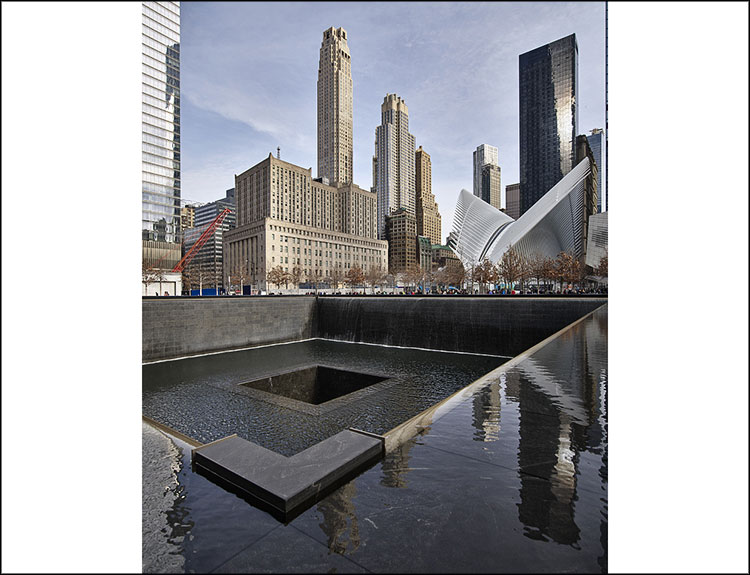
As chief economist for three New York City comptrollers, I tracked the economic damage of both terrorist attacks on the World Trade Center and contributed to official reports following both events. The two attacks still give me the shivers.
The first attack was in 1993. On Feb. 26, just after noon, roughly 1,500 pounds of explosives hidden in a rented Ryder van detonated in the underground parking garage of the World Trade Center’s North Tower. The explosion killed six people, injured more than a thousand, and forced 50,000 to evacuate. It was a massive shock to the city.
The primary structural girders absorbed the bulk of the blast, however, preventing a catastrophic collapse. The South Tower reopened within three weeks; the North Tower followed in five. In a bizarre twist, the bombers returned to the Ryder rental agency to demand a refund of their $400 deposit. Instead, federal agents promptly arrested them.
Then-Comptroller Liz Holtzman — the only New York elected official to provide an estimate of the cost — placed the total impact at more than $800 million in physical damage and cleanup. Fortunately, the structural damage was contained and repairable, with insurance covering $510 million of it. New York City breathed a sigh of relief, though building managers quickly invested heavily in new protocols that ratcheted up ID checks as visitors adapted to mandatory passes, turnstiles, and security desks.
The second attack, on Sept. 11, 2001, took 500 times more lives, and imposed 100 times the economic cost on New York City. The destruction rippled through the city’s economy for years. Approximately 13 million square feet of office space was destroyed — an area of 300 acres, half a square mile, equivalent to the entire floor area of two Pentagons. The city lost an estimated 83,000 jobs in one year, driving up local unemployment from 5.8 percent to 7.7 percent.
The largest single loss of life for any organization was to Cantor Fitzgerald, the largest market maker for U.S. Treasury bonds. It had five floors (101 to 105) in the North Tower, above the impact of American Airlines Flight 11. The company lost 658 employees, two-thirds of its local staff, and their operating systems. U.S. stock markets shut down for four days.
Among the East Hampton seasonal or year-round residents who were killed in the bombing were Neil D. Levin, the executive director of the Port Authority of New York and New Jersey; Howard Kestenbaum, a senior vice president at Aon Corporation; Thomas Swift, a vice president at Euro Brokers, and Joseph J. Zuccala, a consultant for Fuji Bank.
On Oct. 4, 2001, three weeks after the attack, N.Y.C. Comptroller Alan Hevesi issued the first comprehensive estimate of the physical, human, and economic damage, projecting a loss range of $90 billion to $105 billion. As additional data emerged, initial overestimates were revised down. Early news reports had feared up to 50,000 fatalities based on peak tower occupancy, but rapid evacuations led by the New York Fire and Police Departments and Port Authority officers kept the ultimate death toll to 2,977. By September 2002, the incoming comptroller, Bill Thompson, revised the estimated total economic impact down to a range of $83 billion to $95 billion.
The human toll, however, defies ledger entries. Human lives are priceless, regardless of the calculations economists must make to populate financial models. First responders and area residents fought for years to secure health care for 9/11-linked cancers and respiratory illnesses. Led by Representative Carolyn Maloney as chief sponsor, a bipartisan congressional effort eventually passed the James Zadroga 9/11 Health and Compensation Act.
Beyond New York, the nationwide economic impact was profound. Studies by the Brookings Institution and other nonpartisan groups estimated overall national losses at $2 trillion, driven by systemic disruptions like the multi-day grounding of commercial air traffic. Civil aviation was transformed permanently with reinforced cockpit doors, the creation of the Transportation Security Administration, and mandatory screening lists. Intelligence postmortems revealed that federal agencies had possessed disjointed warning signs prior to 9/11 but failed to share them — prompting the establishment of the Department of Homeland Security and the Office of the Director of National Intelligence.
The fiscal cost quadruples when the post-9/11 response is tallied. Brown University’s Costs of War Project has estimated that post-9/11 wars have incurred $8 trillion in direct U.S. spending and obligations. Within the U.S., families have been torn apart by heavily armed masked enforcers. Worldwide, wars have resulted in at least 4.5 million direct and indirect deaths, along with the displacement of 38 million people.
Some major costs may be the hardest to measure. Hate crimes and civil rights abuses have assaulted Muslim, Arab, and Sikh Americans. The Patriot Act expanded government surveillance at the expense of fundamental privacy rights, while domestic policing and border enforcement have become increasingly militarized. Emergency measures intended for a period of crisis have gradually hardened into standard operating procedures.
Immediately after 9/11, foreign leaders expressed their solidarity with the American people. This has fractured into political polarization at home and tragicomic chaos overseas. In striving to combat terror, we have adopted some of the very methods and mind-sets we set out after 9/11 to oppose and resist. For America and the world, that may well be the highest cost of all.
John Tepper Marlin, Ph.D., a Springs resident since 1986, served as a chief economist in the administrations of New York City Mayors David Dinkins, Rudy Giuliani, and Michael Bloomberg, and as a federal government economist in Washington under four U.S. presidents.