
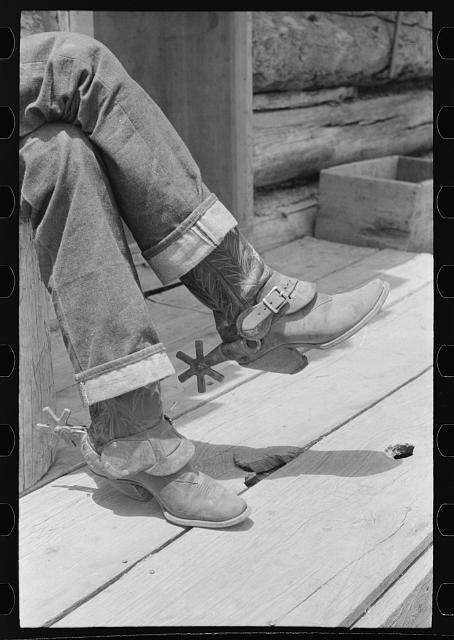
I was born and raised in Brooklyn in the late 1950s and early ’60s, when blue jeans were still a kind of experiment. They weren’t yet a fashion statement, they were work pants. The cool kids, such as they were, wore them with big rolled-up cuffs, sometimes exposing a flannel lining that made them look ready for either a construction site or a camping trip.
By the mid-’60s, everything changed. James Dean leaned against a wall, Marlon Brando straddled a motorcycle, and suddenly denim was no longer just for hauling lumber. It was dangerous, romantic, and, though we probably wouldn’t have used the word then, sexy.
In my corner of Brooklyn, there was one cavernous, warehouse-like store on Kings Highway that sold jeans. The choices were simple: blue, darker blue, and stiff as a board blue. They came baggy, with cuffs you could adjust as your legs grew and as the jeans inevitably shrank. The ritual was always the same: wash them again and again until the denim softened, the color faded just enough, and they hugged in all the right places. We were trying to shrink our jeans into the ideal version of ourselves.
Fast-forward roughly 70 years. I’m retired now, and I still have almost 20 pairs of my old blue jeans. The best survivors are the classics: Wranglers and Levi’s 501s, the dependable friends of my youth. Along the way, I dabbled in every phase of jeans fashion: designer labels, bell bottoms, odd washes, and “statement” stitching that any style-conscious person today wouldn’t be caught dead in.
These days, I’ve discovered a new and troubling property of denim. Jeans appear to shrink in the closet. They can hang there for years, and when you finally pull them on, the waistband button will seem to have developed a deep philosophical disagreement with the buttonhole. No matter how you twist, suck in, or negotiate, the two simply will not reunite.
Then one day, in my woodworking shop, I had an idea. I use bar clamps all the time to pull boards tightly together. But some of them can also be reversed — turned into spreaders instead of squeezers. What, I wondered, if I wet the waistband of an old pair of jeans, and used the clamp to stretch it just enough to bring those long-lost inches back into play?
So I tried it. I soaked the waistband of one of my oldest, tightest 501s, set the clamp, left it overnight, and gently persuaded that denim to remember a slightly more generous era.
And, as I write this, I am sitting comfortably and proudly in my “newly vintage” 34-inch-by-32-inch Levi’s 501s. After a lifetime spent shrinking jeans to fit my younger body, I have officially entered the phase of stretching jeans to fit my older one.
Naturally, I shared this breakthrough with my family. (Who wouldn’t want to be known as the Thomas Edison of waistband restoration?) When I demonstrated the trick to my 8-year-old granddaughter, she watched silently, her eyes moving from the clamp, to the jeans, to my face.
Finally, she asked, with the guileless honesty only a child can manage, “Grandpa, aren’t you too old to be wearing jeans?”
In that moment, I realized the real evolution wasn’t in the denim — it was in me.
As a kid, jeans were how I tried to look older, tougher, cooler. Now, in my 70s, they’re how I quietly insist that I’m not done yet, and that not giving up is more important now than ever.
Maybe the measure of a life isn’t whether we can still fit into our old jeans, but whether we feel comfortable in our own skin.
Bob Greenberg served as chief marketing officer for Panasonic North America for more than 10 years, developing a range of successful marketing and advertising initiatives and lecturing internationally. He lives in East Hampton.