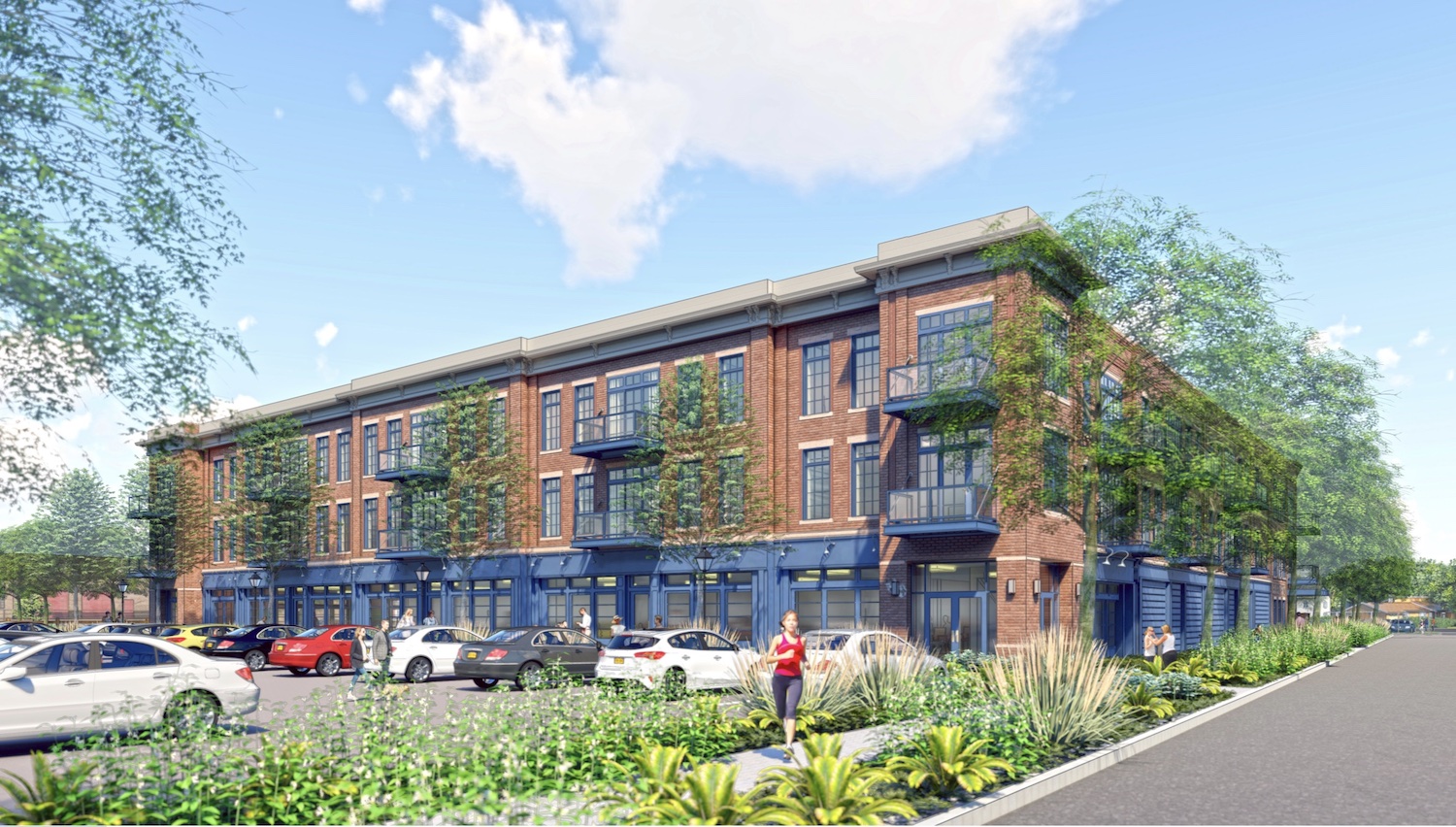
Adam Potter’s frequently derided plan to build an 81,257-square-foot mixed-use building on Bridge Street in Sag Harbor found its way to the village zoning board of appeals this week, where several residents spoke out against the proposed redevelopment of the lots.
Mr. Potter, the owner of the property at 7 and 11 Bridge Street, had presented the pared-down version of the several-years-old plan to the planning board as recently as last May, when a public hearing drew a sizable crowd of opponents.
Of the three story, 81,000-square-foot building, around 50,000 square feet would be devoted to housing. Mr. Potter is planning for 48 units he could sell at market price and 28 affordable units; 8,500 square feet on the first floor would be set aside for service-use commercial space, and 44 parking spaces are planned.
While the proposal requires several approvals from the planning board, including a special exception approval to allow apartments in the office district and to build a structure larger than 3,500 square feet in the waterfront overlay district, a laundry list of variances was on the Z.B.A. agenda Tuesday night.
Scott Baker, the chairman of the zoning board, said the scope of the project seemed large. Mr. Potter is proposing what he described as “several times larger than any other project” that he was familiar with. He even suggested that it “feels like it should be a legislative act,” and not a zoning board consideration.
A plan to split the required parking with the neighboring gas ball lot, leased by Mr. Potter from National Grid, was apparently shelved after village officials decided they would not hear the plans as a separate application late last year.
Which leads to this week, with Mr. Potter additionally seeking an appeal of the building inspector’s determination that prohibits a parking lot to be built on land without a primary structure — aimed at resurrecting the shared parking plan and mitigating the need for a 93-space parking variance.
Mr. Potter has a 99-year lease with National Grid but is allowing the village to use the lot as paid parking during a transitional time, after which it will return back to Mr. Potter’s private use. The lot has only been used for parking since the gas ball was removed in 2007 and would require a variance to remain a parking lot — even if Mr. Potter’s plan doesn’t happen, according to Tiffany Scarlato, Mr. Potter’s attorney.
Both Mr. Potter and Ms. Scarlato are presenting a case that an asterisk in the use table says the definitions therein are “for informational purposes only” and would not preclude the use of the property for stand-alone parking.
David Schiavoni, who owns property to the south of the gas ball lot, said Mr. Potter’s project “does not belong here.” He suggested that Mr. Potter was aware of the constraints on the properties before he bought them in 2021, and called any challenges he faces now “self-inflicted.”
A variance for unit density — which is capped at five; one to build a three-story structure where only two are permitted; rear-yard setback variances, and a variance from the minimum habitable floor area for eight 600-square-foot, one-bedroom apartments where 800 square feet is the minimum are all under review.
Richard O’Brien, who lives in a condominium across Bridge Street, said he and 13 other residents oppose the project — particularly the third-story variance, which he said would block views of the harbor and obscure the village skyline.
Ms. Scarlato told the board that the plan was initially brought to the village as affordable housing only but the plan has been significantly modified after legal wrangling among the village, residents, and the State Supreme Court. But, Ms. Scarlato says, the thrust of the plan remains the same.
“It is not incidental,” she said of the affordable housing component, but the focus of the project. The 20 units would have “a real and measurable impact” on the year-round community Ms. Scarlato said, adding that the East End is facing a “critical shortage of housing.”
A third party — the Long Island Housing Partnership — would set the prices on the units, but Mr. Potter guessed they would cost between $300,000 and $500,000 each.
The Federal Emergency Management Agency’s flood zone requirements would also need to be bypassed because of a plan to build some of the complex’s storage and lobby below the base flood elevation.
Muddying the waters on the lots is the mitigation of coal tar found at both 7 and 11 Bridge Street. National Grid had been tasked with the cleanup but fell short according to Mr. Potter. The “forever chemicals” are found across the entirety of 11 Bridge Street and part of 7 Bridge Street.
The process of dewatering and removing and replacing the contaminated soil can happen simultaneously with the project, Ms. Scarlato said.
But Mr. Schiavoni said Mr. Potter is making light of the dewatering process, which he said took him upward of 20 years to complete on his own property.
In the meantime, the planning board, which is lead agency on the project, is working to complete the State Environmental Quality Review. The zoning board is bound by the review and cannot make a determination on the project until that review is complete.
The zoning board will continue its review on May 19.