The waters of Sag Harbor were literally under a microscope at a Sag Harbor Village Board meeting on Tuesday night, when Stony Brook University released the latest on water quality in the village.
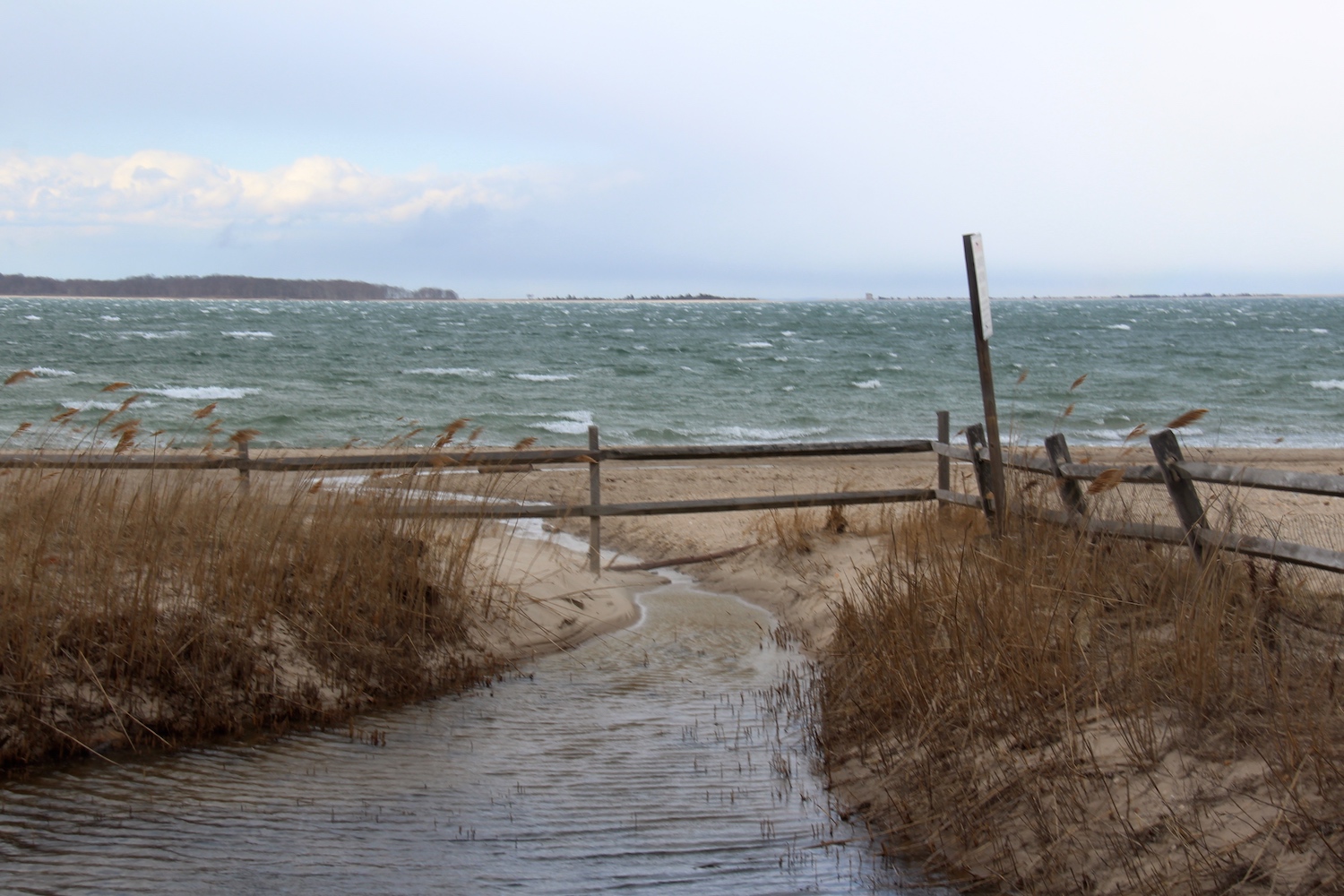
While Christopher Gobler, who performed the studies through the university’s School of Marine and Atmospheric Sciences, said the quality of water in Sag Harbor is generally good, Windmill Beach and the outflow pipe there have reached dangerous levels of some neurotoxins and coliform bacteria.
An algal bloom last June and July at Havens Beach closed it to swimming over the summer, and Dr. Gobler said nitrogen levels there are “double the standard” recommended by the Peconic Estuary Program.
Water was tested for human, deer, dog, small mammal, and muskrat fecal matter. Across the waters of the village, small mammal and bird fecal matter contributed the most. A spike in human waste coincides with the population increase in the summer months. At its highest levels, in September, fecal bacteria at Windmill Beach hit 25,000 parts per 100 milliliters.
Alexandrium, a neurotoxin that can make its way into shellfish and eventually into people, can cause numbness, paralysis, disorientation, and even death. That toxin was found in what Dr. Gobler called “moderate” amounts in Sag Harbor Cove. The good news, he said, is that the state’s Department of Environmental Conservation had closed the areas to shellfishing when these high levels were detected.
However, Dinophysis, a gastrointestinal toxin, measured at the cove at over 8,000 units per liter, which Dr. Gobler called “the highest levels we’ve ever seen,” adding that the levels are getting “more intense over time.” He has been studying the water quality in Sag Harbor for seven years.
In a resolution that was not on the agenda, the board voted to put signs up at Windmill Beach warning swimmers and waders of the high bacteria levels there. The board’s Aidan Corish said that he would start exploring grant options to revitalize the area.
The most effective method of decreasing fecal bacteria and nitrogen in the water is upgrading septic systems and connecting to the sewer treatment plant, Dr. Gobler said. There are grants available for residents who live on both the East Hampton and Southampton Town sides of the village to upgrade their private systems.
On Howard Street, Mr. Corish said, more than 60 houses will be connected to public sewerage, and those are some of the worst polluters in the village, he added, through no fault of their own.
But sewerage is not the only problem — oils, chemicals, and road runoff lead to bacteria spikes. “There’s no single solution,” Mr. Corish said.