Everything old is new again, and for a Springs artist the adage is playing out in the form of a time capsule of sorts, the reintroduction of some of his most vital work that despite being five decades old sounds exuberantly fresh and immediate.
Peter Dayton, a visual artist and commercial designer, was a student at the School of the Museum of Fine Arts in Boston when he took the train to New York City to attend a concert by the Sensational Alex Harvey Band in Central Park. The concert, though, was canceled, and Dayton and his brother, the late photographer Daniel (Chip) Dayton, noticed a flier stapled to a tree. The Ramones, a new band from Queens, were playing at CBGB, on the Lower East Side.
“My brother said, ‘That’s probably where it’s really happening,’ ” Dayton recalled. “We ended up at CBGB during a residency of the Ramones, about a year before their first album came out.”
The band’s performance left quite an impression on the art student, who recorded the show. Upon returning to Boston, Dayton played the recording for his roommate, another art student named Mark Andreasson, and Roger Tripp, another resident of the rooming house where they lived. “This is the Ramones,” Dayton told his friends. “We’re going to try to do something like this.” The others “had no idea it was music,” Dayton remembered. “But they came around quickly.”
What followed was a three-year punk rock whirlwind — rehearsals, recordings, gigs at rock-and-roll clubs and backing strippers in the city’s red-light district — into which the Cars’ frontman Ric Ocasek, the British punk pioneers the Damned, and even the Ramones would be drawn. At the cusp of the big time, however, and with all of two songs issued commercially, Dayton quit, the band soldiered on without him for a time, and he left Boston, returning to perform under his own name for several more years.
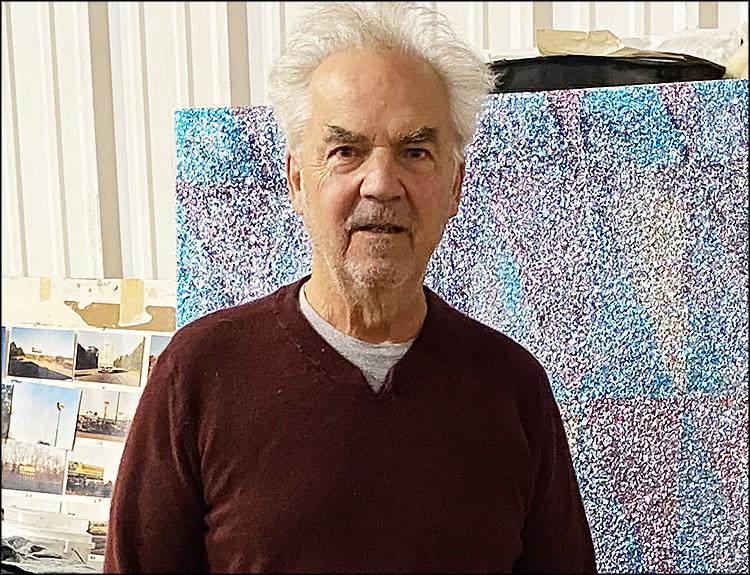
Last month, Wharf Cat Records issued “I Don’t Know Right From Wrong: Lost La Peste 1976-1979, Vol. 1,” recordings made over those years in environments from apartments and lofts to commercial recording studios. The 23-song compilation sounds as though it could have been recorded yesterday, an ultra-high-energy tour de force of adrenaline and nervous energy, or ecstasy.
“La Peste” is the French title of Albert Camus’s “The Plague.” Dayton had spent his junior year of high school in France. “That’s how the ‘existential’ thing came into my life,” he said. “It was a very unusual year for me, so difficult yet so amazing.” Back in the United States, he returned to the Berkshire School in Sheffield, Mass. By then, “I was so beyond what was happening there,” he said. He attended Franklin College in Switzerland for “a very interesting year,” traveling extensively. Returning to the States again, “my father died that summer of ’75. It was a real turning point for me. Everything changed, and I ended up at the Museum School.”
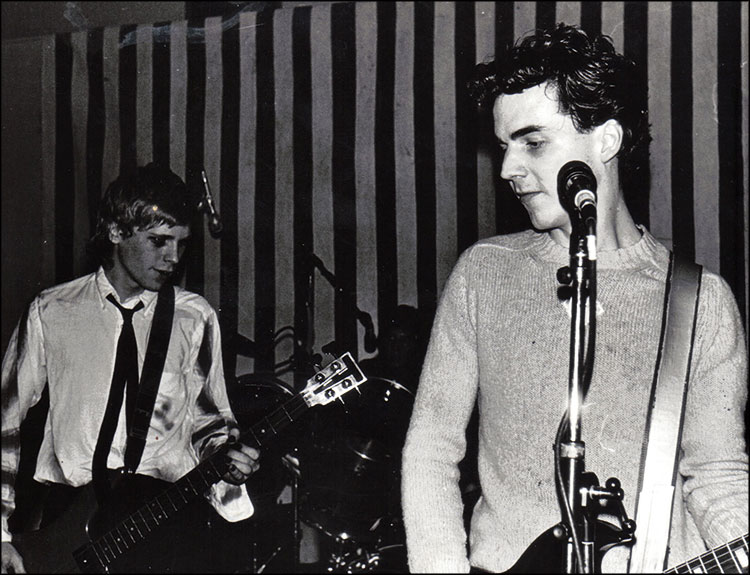
The members of La Peste did not know how to play the instruments they chose — Dayton on guitar, Andreasson on bass, Tripp on drums — but this is a secondary concern in punk rock. The new band “started from scratch in a friend’s apartment,” Dayton said. “We would rehearse there, two chords over and over, everyone learning how to tune, to play. It took a long time. Then we got a bit serious about it.”
In the fall of 1977, the young band moved into a loft in Boston’s red-light district, known as the Combat Zone. “Twenty-five hundred square feet, completely bare, $400,” he said. “It was amazing. We decided we had to start playing out, because we didn’t know about the audience thing, what it’s like when you’re standing in front of them.”
A nearby strip club agreed to let them perform — music, that is. “We’re artists, we live across the street, we do punk rock,” Dayton and Andreasson told the owner. “He said, ‘What the hell is punk rock?’ I said, ‘It’s a new kind of music, like harder rock-and-roll. We need to play in front of people, and wonder if you’d be open to letting us play.’ ”
The clientele included a biker gang. “They would have birthday parties and spike the cake with LSD,” Dayton remembered. At the end of the night, “the strippers would end up back in our loft, smoking pot and giggling. We were straight, nice, normal — they couldn’t believe their luck. It was hilarious.”
But the club, which demanded four 45-minute sets, four nights per week, provided essential training. “We’d start at, like, 2 p.m. and go to 9, and when we started had 12 or 15 of our own songs,” Dayton said. A three-minute song would stretch to 20 minutes — “we really learned how to improvise and jam,” he said. “Summer ended, we were tight as hell, we did a couple of parties in the loft, a lot of people came, and people were telling us what clubs we should play.”
A friend bankrolled La Peste’s first recordings, “Better Off Dead” with “Black” on the flip side, in a Boston studio. “I never imagined it would sound so good,” Dayton said. “Off we went.” The single was a hit on college radio stations. “We started to move up the chain.”
Ocasek, himself still on the cusp of fame and years before he became a respected producer, heard “Better Off Dead” and went to see the band. Soon, La Peste would open for the Cars at the Paradise club on Commonwealth Avenue. “The crowd was dumbfounded,” Dayton said. “They were expecting something very different. The Cars were pretty poppy.” Ocasek “befriended me, we spent a lot of time together. . . . He would latch on to the really intense artists because he couldn’t do that, once he had the Cars going. He had to be commercial.”
In 1979, Ocasek, who died in 2019, produced four recordings for La Peste. The band opened for the Ramones and the Damned, and was runner-up in a “Rock and Roll Rumble” competition at a Kenmore Square club. “We were beaten by a lesser band,” Dayton said. “I think it was political. I was so pissed off. The energy is ridiculous.”
But, Andreasson told The Boston Globe last month, “we sensed that Peter was having difficulty processing how intense it had become.”
“Something happened to me psychically,” Dayton allowed. “I made it intense, and the adrenaline alone was so overwhelming. I got a little burned out and wanted to take a break. It turned into a really long break.”
Eventually, he returned to Boston and led the Peter Dayton Band, which allowed him to open for the Cars once again — this time in front of some 16,000 people at the Boston Garden. But leaving La Peste “was kind of like suicide,” he said. “A lot of artists have done this, quit the best thing happening for them. I realized, way after the fact, how stupid that was, even though I might be dead now, or a washed-up punk guy” had he remained in the band.
Wharf Cat Records will issue a recording of that 1979 live performance, he said, but in the meantime “it’s a real treat, mentally, to be living this moment, because [the label] is having trouble restocking the thing!”
“I Don’t Know Right From Wrong: Lost La Peste 1976-1979, Vol. 1” is available in double-LP and compact disc formats, both including a 28-page booklet, at wharfcatrecords.com.