
It’s hard to talk about Valencia without comparing it to Barcelona. While the Catalan capital gets well-deserved love, the overwhelming crowds I experienced there last year were not something to love. A far more satisfying stay was two weeks in Valencia, an eastern Mediterranean port city that also features a stunning mix of Gothic and modern architecture, wide beaches, and an exciting food scene. Yet, Valencia has a vibe all its own: laid-back and less traveled, you quickly feel like a part of this vibrant city, not just a tourist.
For me, an important feature was Valencia’s terrific wheelchair accessibility. Wide sidewalks and accessible buses and trains made getting around easy. Most sites, shops, and restaurants were fully or mostly accessible. Two spots at opposite ends of the architectural spectrum not to be missed are the Silk Exchange (La Lonja de la Seda), a Unesco World Heritage Site with a breathtaking spiral-columned trading hall, and the futuristic City of Arts and Sciences building, a dazzling complex of white concrete and brilliant blue pools. So futuristic, it was unsurprisingly a location for the Star Wars series “Andor.”
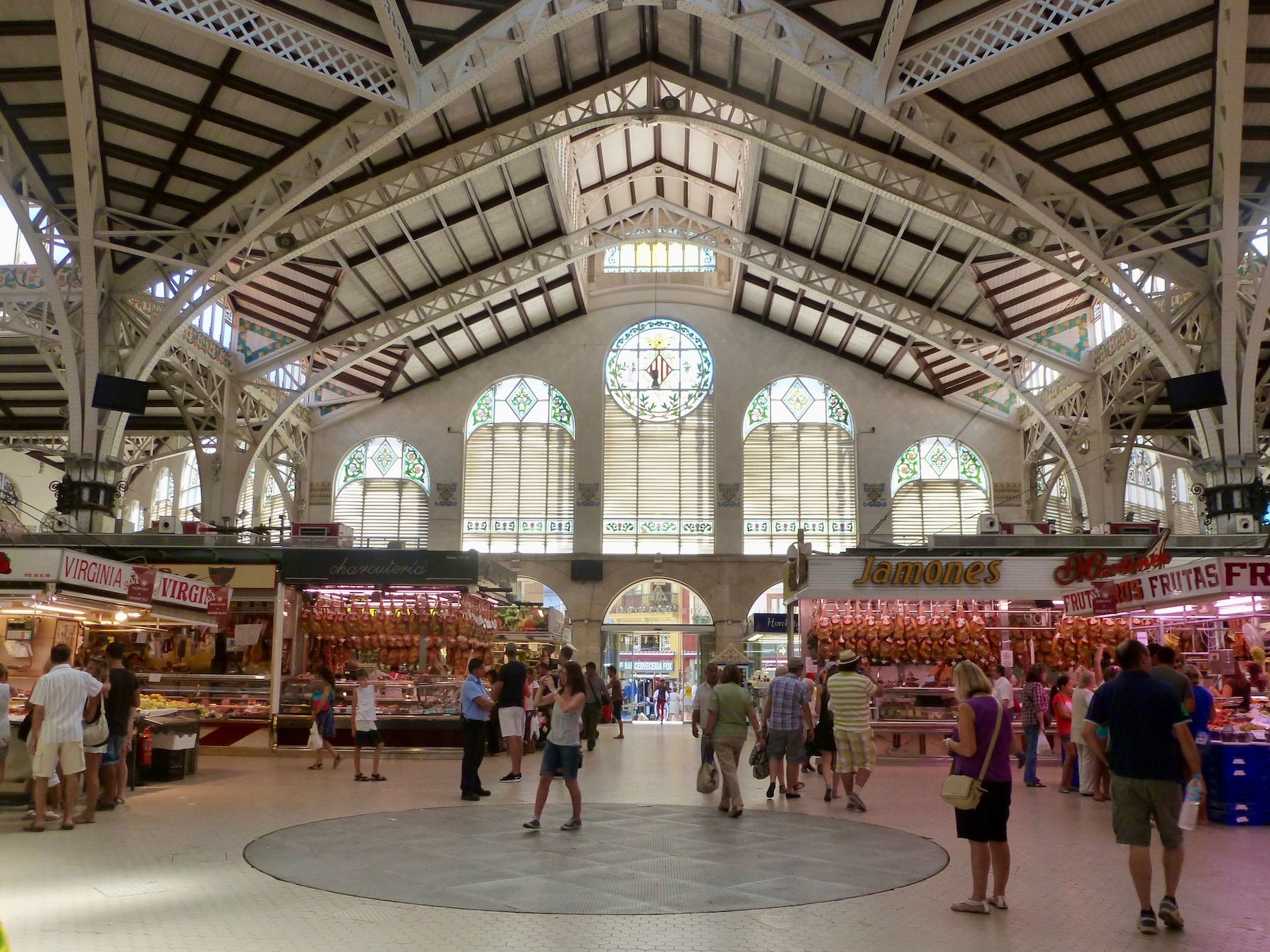
Paella is Valencia’s most famous dish, widely available and never disappointing. Chicken and rabbit are most traditional, but I preferred the seafood version. For delicious tapas, Casa Montaña in a must, established in 1836. Or, the Central Barwhich sits conveniently in the pedestrianized Central Market.
Boardwalks along the beautiful beaches extend near the water’s edge, making it easy to roll on and off. Accessible showers and amphibious wheelchairs are also available.
Valencia stands on its own as a destination, not simply an alternative to Barcelona.