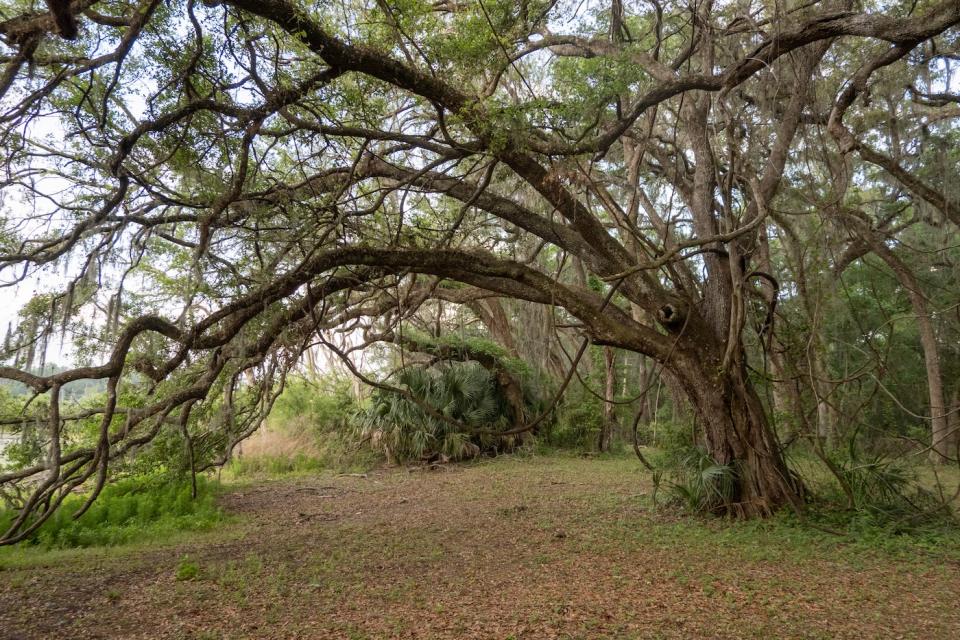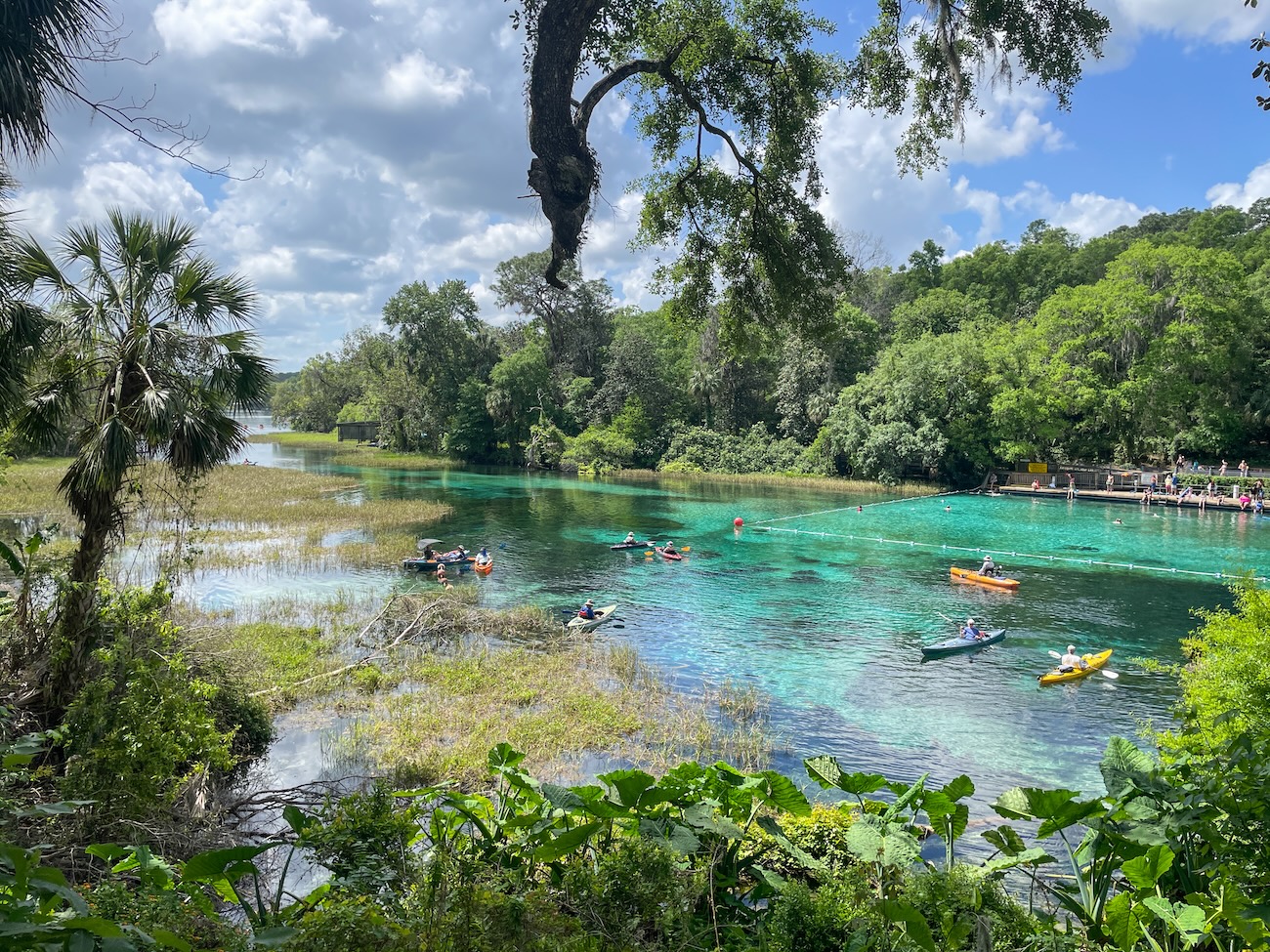
Florida’s spring-fed rivers are quiet stunners — underground aquifers surfacing to form short, crystal-clear waterways that wind through the state’s interior. The best way to experience them is slowly, standing on a paddleboard, drifting where the water tells you to go.
We flew into Tampa and eased into the trip with lunch at the Heights Public Market, an active collection of local vendors that feels like a culinary snapshot of Tampa Bay -- warm, welcoming, and full of multicultural flavors. From there, we headed north to Ocala to wander the town and antique stores, then to Archer, where we stayed the Glass House, a charming cottage built by local artist Ira Winarsky, tucked into 12.5 acres just outside Gainesville.
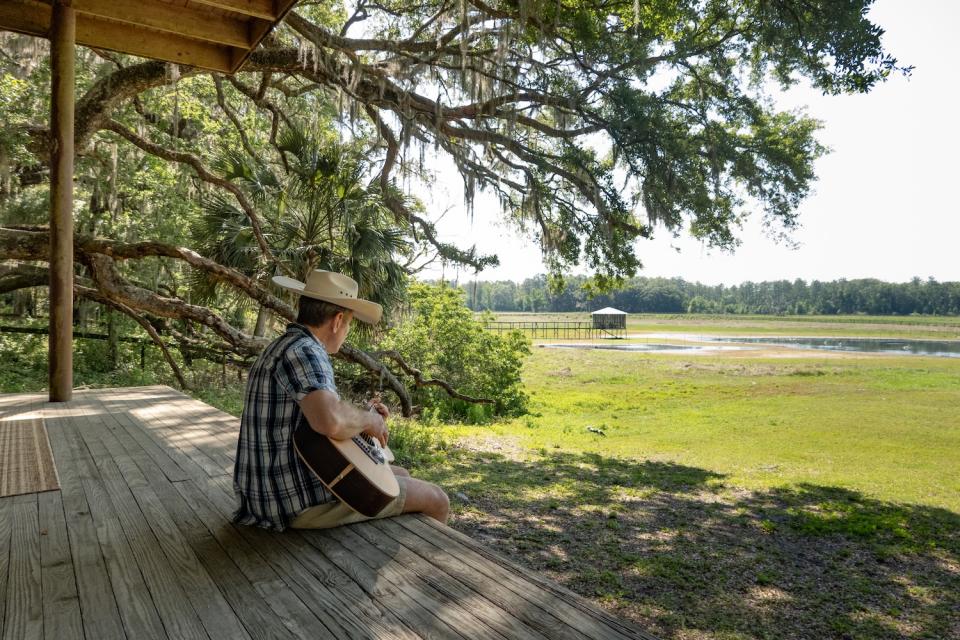
Mornings and evenings unfolded on the spacious back deck, guitars in hand, meals cooked simply, a massive and very active pond stretching out around us. The property felt like a Florida Serengeti: great blue herons stalking the grass, white egrets drifting in at dusk, ospreys circling overhead — and always the low-key thrill that a gator might wander through the yard as we abided by the warning signs to stay vigilant.
Paddling Rainbow and Silver Springs felt almost prehistoric, like slipping into “The Land Before Time.” The silence was complete, the water an impossible shade of turquoise, filtered through limestone and fed by the Floridan Aquifer, which supplies more than 700 freshwater springs across the state. The runs we explored stretched roughly five to six miles, gentle and steady, perfect for lazy exploration with the occasional lone manatee gliding beneath our boards, slow and curious.
If you can ignore the aggressive political signage, Central Florida is an unlikely but deeply welcome surprise — quiet, wild, warm, and far removed from the more familiar coastal hot spots. We rented boards daily, but next time we’ll take our own inflatables. There are too many springs left unexplored, too many clear-water paths calling us back.
-- Lindsay Morris is a photographer based in Sag Harbor