
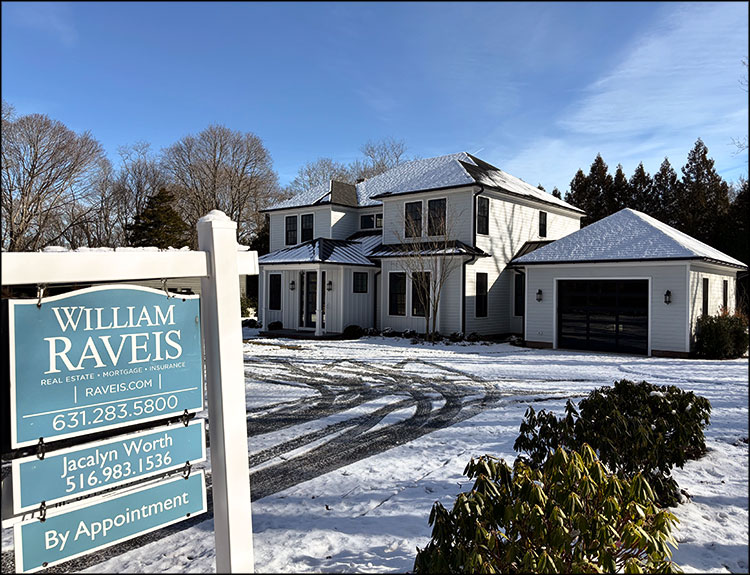
The median home price across the Hamptons real estate market now tops $2 million, for the first time in history.
In East Hampton Village, the median jumps to $5.625 million, the highest for all markets on the South Fork. The village also tied Bridgehampton for home sales greater than $20 million, with seven.
These numbers, which come from the William Raveis brokerage’s 2025 year-end home sales report, were cited by East Hampton Town Councilman Tom Flight at the Jan. 13 meeting of the town board.
“For those who own property out here, it’s a boon. You have this amazing asset,” he said in a phone call this week. Still, “while no one wants house prices to go down, we need to figure out a way to provide opportunities for new people to come live out here and work. For those with average incomes out here, it’s nigh impossible to get on the property ladder.”
It’s clear when looking at the average incomes of full-time municipal employees that home ownership for a new employee without previous savings would be difficult, maybe impossible. The average salary for a town employee is $92,517, according to Becky Hansen, the town administrator. In East Hampton Village, it’s roughly $85,000, said Marcos Baladron, the village administrator.
Judi Desiderio, the report’s author and a member of the town’s business committee, wrote that “the under million dollar price range is going to be a thing of the past very soon.” Ms. Desiderio is managing partner and senior vice president of William Raveis.
“I don’t think prices are going to go down at all,” she said this week. “We live in heaven. We’re surrounded on three sides by water. They’re not creating any more land out here.”
Sarah Minardi, a broker with Saunders and Associates, agreed. “As far as affordability goes, we live in a luxury second-home market. It’s a very unique bubble. What we’re going to see, with diminished inventory and availability in a luxury market with limited expandability, is that every value is going to continue to grow.” The market is driven by a continued increase in private wealth, she said.
While wealth and market forces undoubtedly play a role, Ms. Desiderio also cited changes to the town code, going back decades, that she blames for exacerbating the current affordability crisis.
“The real driver has been upzoning,” she said. “Municipalities wanted to reduce density to save water quality and resources. They took all the quarter and half-acre lots and kicked them up to one-and two-acre zones. One and two-acre lots went to three and five-acre zoning. Compound that with municipalities and conservationists buying bulk acreage, and anything that was subdividable disappeared. Why they didn’t have the foresight to see that would lead to an affordability crisis, I can’t answer.”
The town upzoned lots in the 1970s and again in the late ‘90s.
The 2005 comprehensive plan reported that only 10.9 percent of land in the town was vacant, down from 45 percent in 1984. Meanwhile, preserved open space had increased to 34.7 percent, up from 18 percent in 1984. Land devoted to residential homes had also increased, from 23.5 percent in 1984 to 37.66 percent in 2004.
On Tuesday, the town board again discussed the affordable multiple-residence use, which would allow for increased density on smaller lots. Should the legislation creating the use pass, it would be one more tool, along with accessory dwelling units, larger macro-style affordable housing complexes, and the relatively new community housing fund, that could lead to some less expensive housing here.
“Even if the town steps in and starts providing more housing, it’s not going to move the needle much,” said Ms. Desiderio. “Municipalities took too long to acknowledge the problem. There was no forward thinking, and now we have this whale of a problem. How do you eat a whale? One bite at a time.”
She thinks land that was previously preserved should be opened up to housing. “If you took some of that land and put little communities on it, on eighths of an acre, modular homes, that would be great. Surround the developments with reserve and put lots on cul-de-sacs. There has to be a way for young families to move here and for retirees to stay. We have to throw out the playbook.”
Back to her report: Total sales volume was up across the region, with 1,741 home sales. Most, 531, were between $1 million and $2 million. Just over half of the sales, 903, were over the $2 million mark. The highest statistical increase of real estate sales came in the $20 million-plus category, which was up 50 percent from last year.
Other highlights from the report include more movement in Sag Harbor, with an increase of 46 percent in home closings from the prior year. Bridgehampton saw over a billion dollars in home sales. The median home sale price increased by nearly 30 percent in Southampton Village, the most of any market. The East Hampton area, which includes Wainscott, closed on 317 homes, the most of any of the 12 markets monitored by the brokerage.
“There’s no affordability crisis for second-home owners,” said Ms. Minardi. “They’re perfectly fine. The real driving force behind the East End housing market is that if you own a home here, whether a primary home or a vacation home, your friends and family will come. It’s all about family and friends. People want to be here.”