
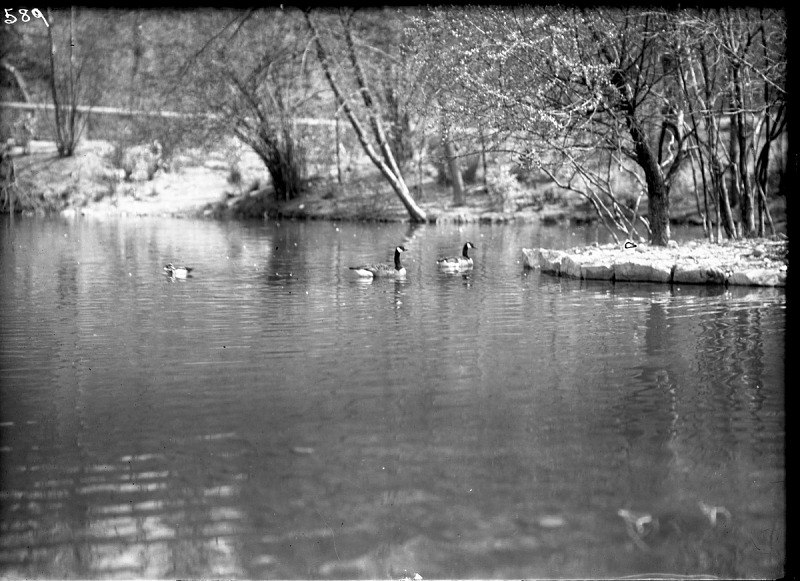
Two years ago, I stood in the East Hampton Duck Pond pulling dead geese from the water alongside a Department of Environmental Conservation official I had called to report them.
At the time, I was working at a local wildlife hospital, where we were seeing a steady stream of birds arriving sick or dying. Waterfowl, seabirds, occasionally birds of prey. Many showed severe neurological symptoms. Disorientation. Tremors. Birds that could no longer stand or fly.
Wildlife hospitals often see environmental problems long before the rest of us do. They are where the early warning signs of ecological stress first become visible. What arrives on the examination table is often only the first visible evidence of pressures building across an entire landscape.
As the cases continued, I called the mayor’s office numerous times asking for something simple. Public awareness. Signs advising people not to handle sick or dead birds. Basic guidance about hand washing for children playing near the water.
My daughter was 4 years old at the time. She loved the duck pond and spent many afternoons playing along the water’s edge. Like most children, she wandered along the shoreline where geese gathered, her boots often covered in mud and bird droppings. Once we began seeing these cases at the hospital, I kept her away. But each time I passed the pond I watched other parents standing nearby while their toddlers crouched at the edge of the water, completely unaware that a wildlife disease outbreak was already moving through the birds around them.
Nothing was ever done. No signs were put up. No one called me back.
Since 2021 highly pathogenic avian influenza H5N1 has spread widely through wild birds across North America. Wildlife scientists, veterinarians, and rehabilitation centers have been documenting the outbreak for several years.
No town can stop a global wildlife disease outbreak. But every town can decide how openly and responsibly it responds when one arrives.
Today we are seeing dead birds appearing along roadsides, in marshes, and along the edges of beaches across Long Island. The scale of mortality is deeply unsettling. Many of the most visible die-offs involve waterfowl such as geese. That is not surprising. Ducks and geese are among the natural hosts of avian influenza, and the virus spreads efficiently in water where large numbers of birds gather.
What is different today is the landscape in which those gatherings occur.
Canada geese have adapted extraordinarily well to the modern environment. Fertilized lawns mimic the grazing fields they evolved to depend on. Manicured parks offer open visibility of predators. Artificial ponds provide permanent water where seasonal wetlands once dictated their movements. The landscapes we have built for ourselves now concentrate birds in large numbers, often in the same places year after year, creating ideal conditions for disease to move through flocks.
Landscapes designed for aesthetic order often conceal ecological consequences we prefer not to see. We prefer the illusion that the natural world will quietly absorb whatever we ask of it.
For wildlife rehabilitators the progression of this virus has become painfully familiar. In birds the current strain often causes severe neurological damage and loss of coordination. Some birds circle endlessly. Others collapse entirely. Even individuals that initially survive infection may suffer irreversible neurological injury.
Scientists have also documented spillover into mammals, including foxes, raccoons, seals, and bears that scavenged infected birds. Human infections remain rare and the overall risk to the public is considered low, but public health agencies advise people to avoid contact with sick or dead birds and to keep children and pets away from them.
The larger lesson should not be difficult to understand. The health of human communities is inseparable from the health of the natural systems around them. Many emerging infectious diseases originate in animals, and in many ecosystems animals become the first visible indicators that something larger is moving through the system, revealing ecological change long before human communities notice it.
What we are witnessing in these birds is not an isolated incident. It is part of a much larger ecological process unfolding across continents. Wildlife disease outbreaks are one of the ways the natural world reveals imbalances that have been building quietly over time.
In recent weeks, officials and local agencies have begun posting warnings and responding to the growing number of carcasses appearing along beaches and wetlands. That response matters. But it also raises a deeper question. Are we prepared to recognize ecological warning signs early enough to act before the consequences become visible across the landscape?
Further, what long-term systems exist to monitor unusual wildlife mortality events in our region? How quickly are those events investigated? How are residents informed when risks are identified? And how do local agencies coordinate their response when responsibility for land, wildlife, and public safety is divided among multiple jurisdictions?
These are not abstract questions. They are basic responsibilities for any community that lives within a complex and changing natural environment.
Recently hundreds of dead birds were buried beneath sand on a public beach. A place where families walk. Where children dig their hands into the ground. It is an image that should give us pause. By the time a community is burying the bodies of wild birds beneath sand where our children play, the warning has already been sent. The question is whether we are capable of hearing it.
Nature rarely sends a single warning. It sends hundreds. The natural world rarely collapses all at once. It begins with small signals. A shift in migration. A strange illness moving through wildlife. A few dead birds in a pond. Ignore those signs long enough and they accumulate quietly until one day the evidence is scattered across the landscape and impossible to overlook.
Denial may delay the reckoning, but it does not prevent it.
The real measure of a place like East Hampton is not how well we preserve the image of natural beauty that surrounds us. It is whether we are willing to listen when that beauty begins to falter.
Nature does not negotiate. It does not forget. It keeps a careful record of the pressures we place upon it, the landscapes we reshape, the systems we strain, and the warnings we choose not to hear.
Eventually the accounting comes due.
Zara Beard is the founder of EchoWild, a conservation nonprofit based in East Hampton.