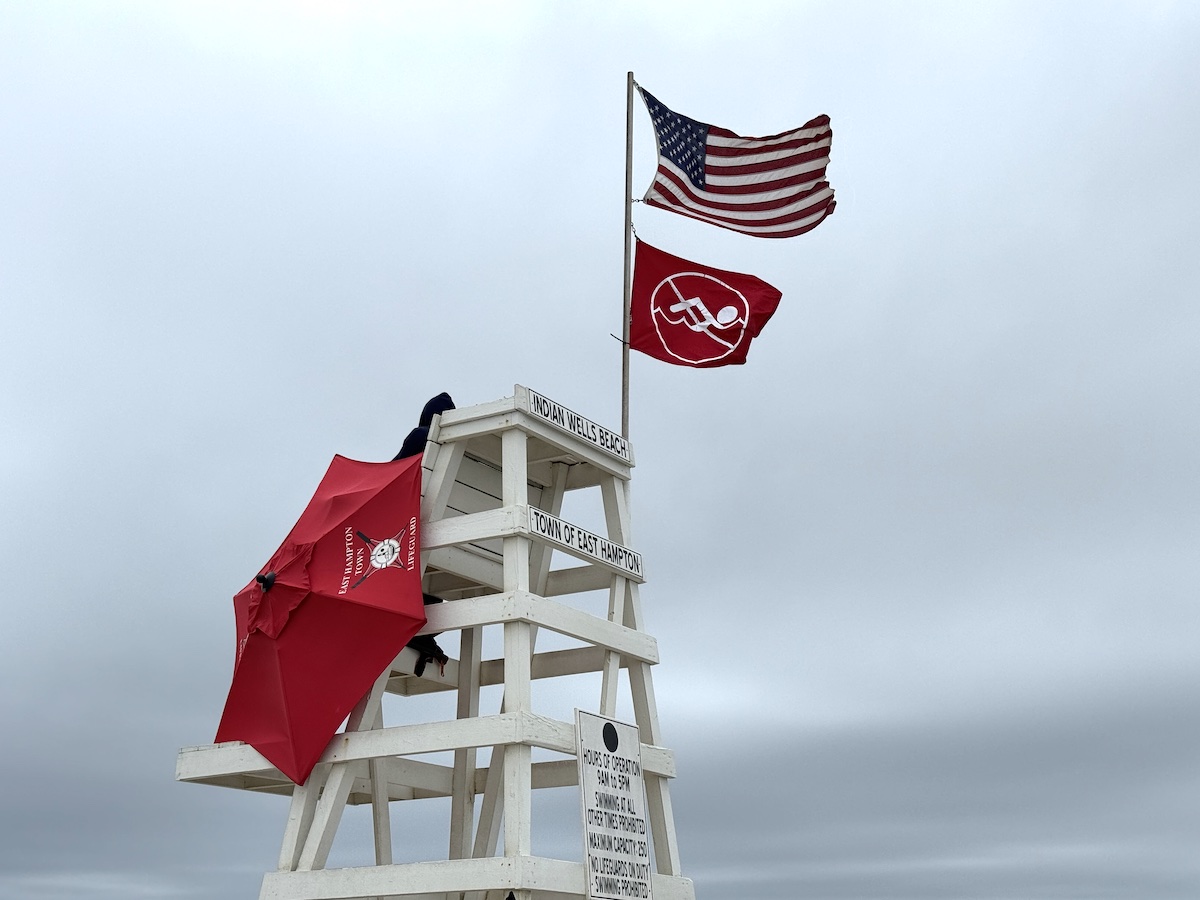
The National Weather Service, part of the National Oceanic and Atmospheric Administration, has forecast a below-normal hurricane season for the Atlantic basin. The 2026 Atlantic hurricane season started on Monday and continues through Nov. 30.
NOAA predicts a 55-percent chance of a below-normal season, a 35-percent chance of a near-normal season, and a 10-percent chance of an above-normal season. The agency forecasts a total of eight to 14 named storms, defined as having winds of 39 miles per hour or higher. Of those, three to six are forecast to become hurricanes, defined as having winds of 74 miles per hour or higher, including one to three “major” hurricanes, meaning Category 3, 4, or 5, with winds of 111 miles per hour or higher. NOAA makes these forecasts with 70-percent confidence in the ranges. An average season has 14 named storms with seven hurricanes, including three major hurricanes.
A naturally occurring climate phenomenon known as El Niño, which is characterized by warmer-than-average sea surface temperatures in the central and eastern tropical Pacific Ocean, is expected to develop and intensify during the hurricane season, while ocean temperatures in the Atlantic are expected to be slightly warmer than normal and trade winds likely weaker than average. El Niño conditions, according to the National Weather Service, tend to support fewer tropical storms and hurricanes, while warmer ocean temperatures and low winds support a more active year.
NOAA’s National Hurricane Center is to implement an improved version of the tropical cyclone forecast cone graphic that will now include tropical storm and hurricane watches and warnings for inland areas for the continental United States, Hawaii, Puerto Rico, and the U.S. Virgin Islands. It is also to begin testing an experimental version of the tropical cyclone track forecast cone, which is to capture a greater range of possibilities for the track of a storm by incorporating uncertainties for both direction of movement and timing.
NOAA is also testing an experimental high-resolution Seasonal Forecast System that uses the latest modeling technology and new methods to assess the evolution of the global ocean-atmosphere system. The system is helping forecasters better simulate tropical storms and hurricanes and more effectively predict the number of hurricanes and major hurricanes, according to the agency. Its Atlantic Oceanographic and Meteorological Laboratory is using machine learning to quality-control data collected from tail Doppler radar, a specialized radar system mounted on the back of its “Hurricane Hunter” aircraft.
The NOAA Office of Water Prediction’s Flood Inundation Mapping services provide emergency managers visualizations of streets and neighborhoods likely to go underwater. Flood Inundation Mapping covers 60 percent of the population and will expand to nearly 100 percent by late September, according to the agency. For the first time, data from small uncrewed aircraft systems will be integrated into NOAA’s hurricane forecasting model during this year's hurricane season. This is expected to improve the forecast accuracy of hurricane intensity.
The Trump administration has politicized NOAA, proposing sharp reductions and making efforts to drastically defund if not eliminate the Office of Oceanic and Atmospheric Research. Such cuts would have a severe impact on climate research, regional climate centers, and next-generation weather satellites. More than a thousand NOAA employees have been terminated or reassigned, and critical roles within the National Weather Service are vacant, reducing on-site forecasters and delaying weather balloon launches. Censorship of scientific terminology, including the phrase "climate change," has been reported, along with experts dismissed and contracts for the National Climate Assessment canceled.
Compounding the risk to hurricane response is a Federal Emergency Management Agency characterized by chaos and dysfunction under President Trump. A CNN report this week revealed infighting, inertia, favoritism, and "blatant incompetence" under former Homeland Security Secretary Kristi Noem, who was fired in March after 13 months on the job.
"With the Atlantic hurricane season starting Monday," according to CNN, "agency insiders warn that FEMA has been significantly weakened and will likely struggle to respond to a large-scale disaster this summer. . . . The agency is racing to fill vacant roles, restart halted trainings and exercises, and close gaps left by funding that was delayed or cut. But sources say it will likely take years to undo the damage that's been done."
A senior official quoted by CNN pointed to "a massive brain drain in a field where experience really matters," while sources say that the federal Department of Homeland Security "directed FEMA to withhold funds from states such as California and Colorado, whose Democratic leaders feuded with Trump. . . . But the massive logjam touched virtually all states. . . . FEMA insiders, state leaders, congressional lawmakers, and even some administration officials said they couldn't tell whether the funds were being used as leverage -- or simply trapped in dysfunction so severe that no one could tell the difference."
The website ready.gov incudes information and advice on preparing for extreme weather such as hurricanes. East Hampton Town's Emergency Preparedness Department disseminates preparedness, response, and recovery information via the town's website, LTV's Channels 20 and 22, WLNG radio, and its social media accounts.