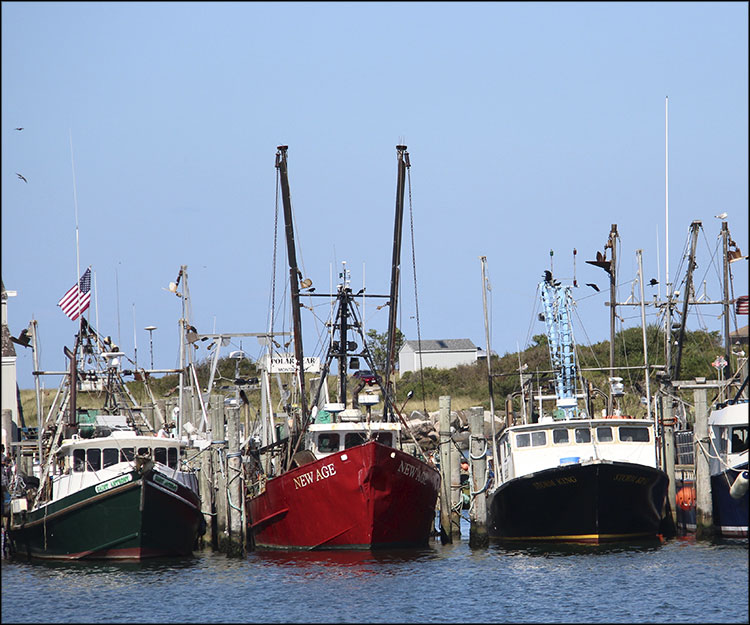
With the soaring cost of diesel fuel amid the American-Israeli war against Iran affecting multiple industries, including commercial fishing, Assemblyman Tommy John Schiavoni has introduced legislation that would provide fuel tax exemptions for operators of commercial fishing vessels.
In the days prior to the war that began on Feb. 28, the average retail price for diesel in the East Coast region was around $3.81 per gallon. The price has steadily risen since then: As of Tuesday, the average price was around $6 per gallon, higher than the national average.
Unlike farmers, under current state law commercial fishermen must pay sales tax upfront when buying fuel and supplies. To get that money back, they must file a refund claim with the Department of Taxation and Finances, which can take months to process, while farmers and commercial horse-boarding operators can seek immediate and additional relief by applying for a state tax exemption certificate. Mr. Schiavoni’s proposed legislation would bestow the same benefit on the commercial fishing industry by allowing fishermen to use a tax exemption certificate at the point of purchase.
Vessel owners may purchase 10,000 gallons of fuel annually, “forcing fishermen to pay thousands of dollars just to travel to and from the fishing grounds,” Mr. Schiavoni said in a statement announcing the proposed legislation.
In that statement, he said that he had spoken with commercial fishermen across the First Assembly District and the state. “Among many other factors, the amount of fuel tax spent by commercial fishermen in New York forces many fishermen to do business in other states where diesel and supplies cost less, ultimately taking away from Long Island’s blue economy,” he said. “The affordability crisis is hitting hard for everyone, and while the administration wages a war in the Middle East, fuel prices continue to rise, forcing fishermen to pay even more than they should just to go to work.”
The proposed legislation “is really so long overdue,” said Amanda Jones, director of operations at Inlet Seafood in Montauk. Commercial fishers “are not fishing out of New York because of the fuel tax,” she said. The present structure, in which they pay fuel taxes upfront and wait months to be reimbursed, “is simply not workable,” she said. “We’re working on such small margins that it doesn’t make sense for us, but at the end of the day commercial fishing is a billion-dollar industry from boat to plate, and when boats are burning thousands of gallons of fuel, cash flow matters.”
The sales tax, she said, is “one reason we’re already seeing fishermen fuel in neighboring states, where they can buy it tax-free at the dock.”
Bonnie Brady of Montauk noted that the New England Fishermen’s Stewardship Association, of which she is the policy director, includes members from Maine to New Jersey. “As an industry, they are all suffering from higher prices,” she said, “but in states like New York, commercial fishermen are especially under the gun because of New York State transportation taxes they are charged when purchasing fuel, when they don’t in fact use roads or highways for their business, but rivers, bays, and oceans.”
“It affects all of us,” Ms. Jones said of the cost of fuel to New York’s commercial fishermen. “When they’re going to Rhode Island or Connecticut or New Jersey to get fuel, they’re also getting ice, packing fish, changing crews, getting groceries, going to the shipyard. It takes so much money out of New York’s economy.”
“We appreciate it,” she said of Mr. Schiavoni’s proposed legislation, “but we need it to be at the forefront, or this industry won’t last in New York. It won’t last the summer, right now.”