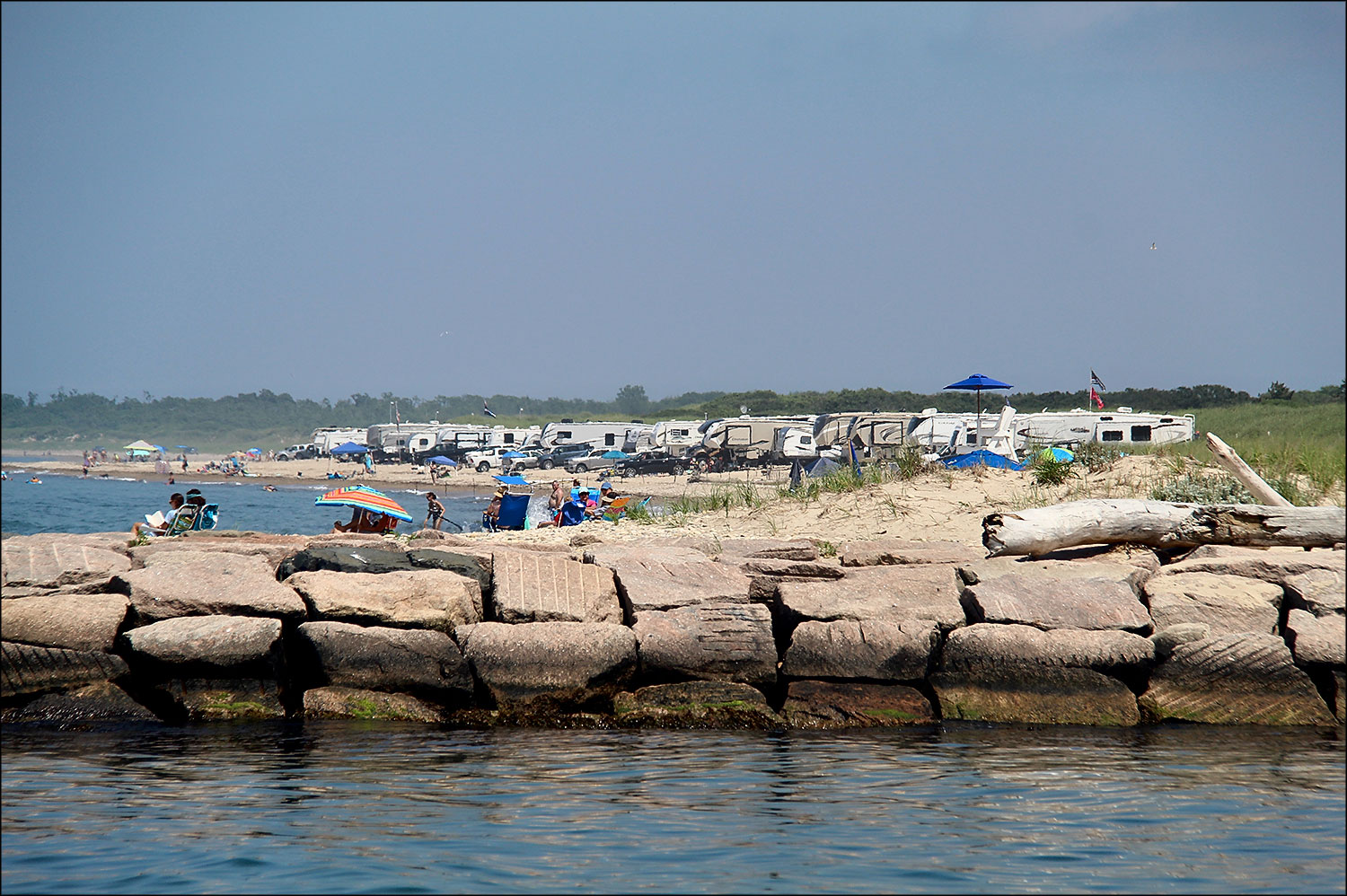
The East Hampton Town Board held an impressive 13 public hearings on April 2 but received few comments.
In fact, the only one of the 13 to draw any comments at all was on an amendment to the town code that would prohibit driving on the town-owned part of Gin Beach in Montauk, from the Thursday before Memorial Day to Sept. 15, between 10 a.m. and 6 p.m. The county portion of the beach would still be unrestricted.
Bill Jakob, secretary of the Montauk Surfcasters Association, called the amendment a “slippery slope that leads to elimination of access on the beaches.”
“Taking [driving] away for sunbathing is a mistake,” he said. “This is a fishing community. Everybody came out here loving what this community had to offer but now want to change it. Sunbathing was never part of anything that occurred in East Hampton from the beginning. Sunbathing and hanging out on the beach is a new phenomenon that started in the 1900s. It didn’t exist between the 1600s and 1700s because we believed in sea monsters. So, our sea monsters now are changes in the way we live our life.”
Thomas Pirraglia agreed. “While framed as a limited daytime restriction, an eight-hour ban effectively eliminates meaningful access during the very months the beach is most used by residents,” he said. “It functionally converts a drive-on beach into a walk-on beach for the very residents [it’s] intended to serve and undermines longstanding traditions of responsible beach access.”
The Tick Problem
Brad Brooks spoke during the public portion of the meeting, asking the board to do something about the tick problem and pushed members to allocate money for the 4-Poster program, a bait station for treating deer, which has shown great success on North Haven.
“When I’ve approached the town about this before, I’ve been told it’s too expensive, which seems a bit odd in a town with a budget of $108 million dollars,” he said. (The town budget is over $110 million for 2026.)
Councilman Tom Flight said the wildlife committee would soon hold a presentation about how the town should address the deer population to reduce tick abundance. “We probably have some of the highest deer-to-car collisions and incidence of tick-borne diseases in the country.”
After he spoke about the ticks, Mr. Brooks decided to speak about beach driving. “I wasn’t going to talk about this, but my son was almost hit six years ago on Napeague by somebody who was drunk driving on the beach in the summer. Nobody should drive on the beach in the summer.”
If the board ultimately votes to restrict driving on Gin Beach, it will come after a post-hearing discussion. There are many town beaches where driving is restricted seasonally and a few with year-round bans. A full list is available in Chapter 91 of the town code.
Springs Park Plan
Surprisingly, a public hearing to amend the management plan for Springs Park did not draw a single speaker. Usually the 42-acre park, acquired by the town in 2001, is a hot topic.
The amended management plan makes explicit that removing invasive species, such as autumn olive, black locust, mugwort, and others, is allowed by the town.
In resolutions, the town hired Vincent Gaudiello and the Raynor Group for engineering analysis related to the Wainscott Commercial Center. The work is not to cost the town more than $10,000.
The board also scheduled a number of public hearings. One, at 6 p.m. on May 7, would amend the definition of “affordable housing unit.” Another, on the same day, would lease space at East Hampton Town Airport for the placement of Federal Aviation Administration equipment.