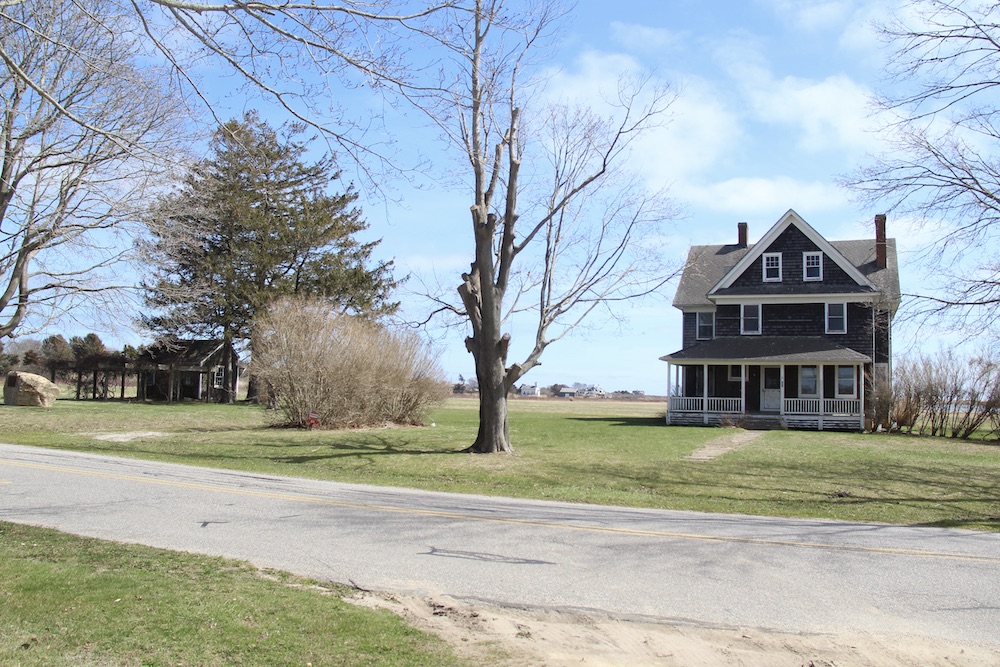
Vigorous conversation continues over the town’s management plan for the Osborn Homestead at 66 Main Street in Wainscott, purchased in 2024 for $56 million.
In fact, the discussions have probably increased since April 7, when the town board took a straw poll on proposed amendments to the draft plan, exposing a three-to-two divide among members.
Supervisor Kathee Burke-Gonzalez was seeking consensus — but did not get it — on three changes to the draft plan: to limit the kind of agriculture that can be practiced on the 28-acre fallow field, to prohibit asphalt on a proposed walking trail, and to landmark the entire parcel. Councilwoman Cate Rogers supported her proposed amendments, but Councilmen Ian Calder-Piedmonte, David Lys, and Tom Flight did not.
This week the conversation continued in front of the board, even though the topic wasn’t on its agenda, when five residents offered pointed criticism of the supporters of the draft plan, and two board members used their advisory committee-liaison reports to restate their positions.
“We find ourselves facing a wall of intransigence from several members on this board,” said Esperanza Leon, a comment which elicited a snort from Councilman Lys, and a direct reply later from Councilman Calder-Piedmonte. “Their level of stubbornness requires an explanation.”
The draft plan was also discussed at the town’s Architectural Review Board, last Thursday night, and again at the Wainscott Citizens Advisory Committee, on Saturday.
The A.R.B.’s comments were supposed to focus on the proposed preservation of the homestead’s buildings. However, two of its members jumped instead into the other conversation, commenting on the potential “multi-use” path.
“The town board is arguing whether it’s grass or whether it’s asphalt, which would be a disaster,” said Chip Rae, the A.R.B.’s chairman.
“Disaster,” agreed Dianne Benson.
“But none of that is part of this,” remarked Drew Bennett, an engineer hired by the town to work on the buildings’ preservation, laughing nervously as he edged away from the podium, clearly wanting no part of that particular debate.
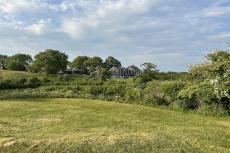
“While the preservation of all three buildings is desirable,” said Mr. Rae, “the real star here is the land. East Hampton boasts maybe half a dozen world-class vistas, and this is one of them.”
“The best advice we can offer on this project is Do No Harm,” he continued. “The property is as perfect now as it will ever be. If you were to take away the houses, barn, playhouse — the vista and the land would still be spectacular. If you were to take away the 28 acres of land, the three structures on their own would be interesting, but not very compelling.”
“The house is in pretty good shape,” Mr. Bennett said, excepting its roof. “This is really to stabilize the envelope to preserve the structure while people sort out how and when and who will be using the structures.”
The roof, currently asphalt, will be replaced with cedar shingles, as will the siding. The few original windows will be restored. Windows that had been replaced will themselves be replaced with replicas of the original windows. Exterior doors, too, will be restored.
Parking is still being discussed, but is currently proposed on the south side of the building, along with an A.D.A. ramp. Joel Snodgrass has been hired as a historic consultant for the project.
“To the degree that those modernized and necessary features can be in the back, I think that speaks to the primacy of the importance of the site, as opposed to whether you can fit it on the side or something,” said Chris Britton, vice chairman of the A.R.B. “The siting and the vista take precedence over the individual needs of some future tenant of the property.”
At Saturday’s Wainscott Citizens meeting, residents were critical of what they called an overly broad management plan. Councilwoman Rogers, the town board’s liaison to that committee, suggested that the board’s majority might believe that the licensing agreements for a potential farmer or licensee in the buildings could contain the restrictions that she and the supervisor are seeking in the management plan. Loring Bolger, who is on the town’s property management committee, called in and said that that committee was “close to unanimous” in supporting the restrictions offered by the supervisor. “It seemed to me our committee was not in favor of allowing fencing and farming, yet that’s the way it was presented. Some of us were disappointed,” she said.
“You should reach out to the folks you’re disappointed in and ask them to walk you through it, where they came to that decision,” she said.
And so, the debate continued on Tuesday.
If she is correct, her comment was directly refuted by Councilman Calder-Piedmonte later in his own liaison report, in which he described the process the draft plan went through and the committee’s role. He said the property management committee’s comments were heard and went into the original draft, which was then discussed by the town board.
“It was important to me that the draft they sponsored was what this board saw,” he said.
After that meeting, he added, changes were made “that went back to the property management committee, and they were supportive.”
That draft plan, he said, strengthened the mission statement and placed further emphasis on the importance of the viewshed and water quality. “There was a little language removed concerning farming, but the goals that everyone is most concerned about here, water quality and vista, language was actually strengthened.”
John Stoner called in to say the board should expect a report from him at tonight’s meeting with a quantified number of residents who support a stricter management plan. He added that Hilary Osborn Maleki, whose family owned the land for 341 years, was expected to speak against the draft plan.
“Who would think the East Hampton Town Board would vote against an overwhelming and united community response?” Mr. Stoner asked.
After Councilman Calder-Piedmonte’s liaison report, Supervisor Burke-Gonzalez gave hers.
“Management plans can be amended. It’s not something that once it’s decided on it’s in perpetuity. With a public hearing and a vote of a board they can be changed,” she said. She noted that the plan was a topic at Saturday’s meeting in Wainscott, but that Councilwoman Rogers, that committee’s liaison, had been unable to report back to the town board about the discussion [she was ill]. Because of that, she asked the board to hold off on voting to approve the plan.
“Let Cate give her liaison report on the 21st, and then if you want to schedule it for adoption, wait until May 7, is a request that I would make,” she said, and the board agreed.
With Reporting by Christopher Walsh