Gov. Kathy Hochul announced last week that New York State is requesting a United States Department of Agriculture Secretarial Disaster Designation for Suffolk County following severe winter weather that significantly impacted aquaculture operations in February.
With severe ice conditions affecting oyster harvesting and operations and damaging boats and aquaculture equipment, producers face an estimated combined $2.4 million loss, the governor said. A disaster declaration would allow eligible producers to apply for low-interest emergency loans and disaster assistance.
Others, commercial fishermen in particular, say not so fast.
The shellfish aquaculture industry consists largely of small and family-owned operations that contribute to regional seafood production and employment, the governor’s April 6 statement noted. But prolonged freezing temperatures, heavy snowfall, and extensive ice formation across coastal waters prevented oyster farmers from accessing shellfish growing areas and conducting normal harvesting and farm operations. Access to vessels and aquaculture sites were blocked for extended periods and ice accumulation across waterways caused damage to aquaculture gear and vessels.
Many growers are facing a more than 30-percent loss in production, according to a survey conducted by industry partners and local officials, on top of the cost of repairing damage to equipment and vessels.
“I urge the U.S.D.A. to take swift action to declare Suffolk County a disaster area and help our growers get the assistance they need to recover and move forward,” the governor said in a statement.
The announcement followed an appeal by the Long Island Oyster Growers Association for assistance from the public in locating aquaculture gear that was ripped out of commercial farming installations by ice. On behalf of the association, John (Barley) Dunne, director of the East Hampton Town Shellfish Hatchery, said last month that oyster growers were actively trying to recover gear in an effort to be good stewards of the waters, and the public could help by reporting sightings of such equipment by noting its location and sending the information to [email protected].
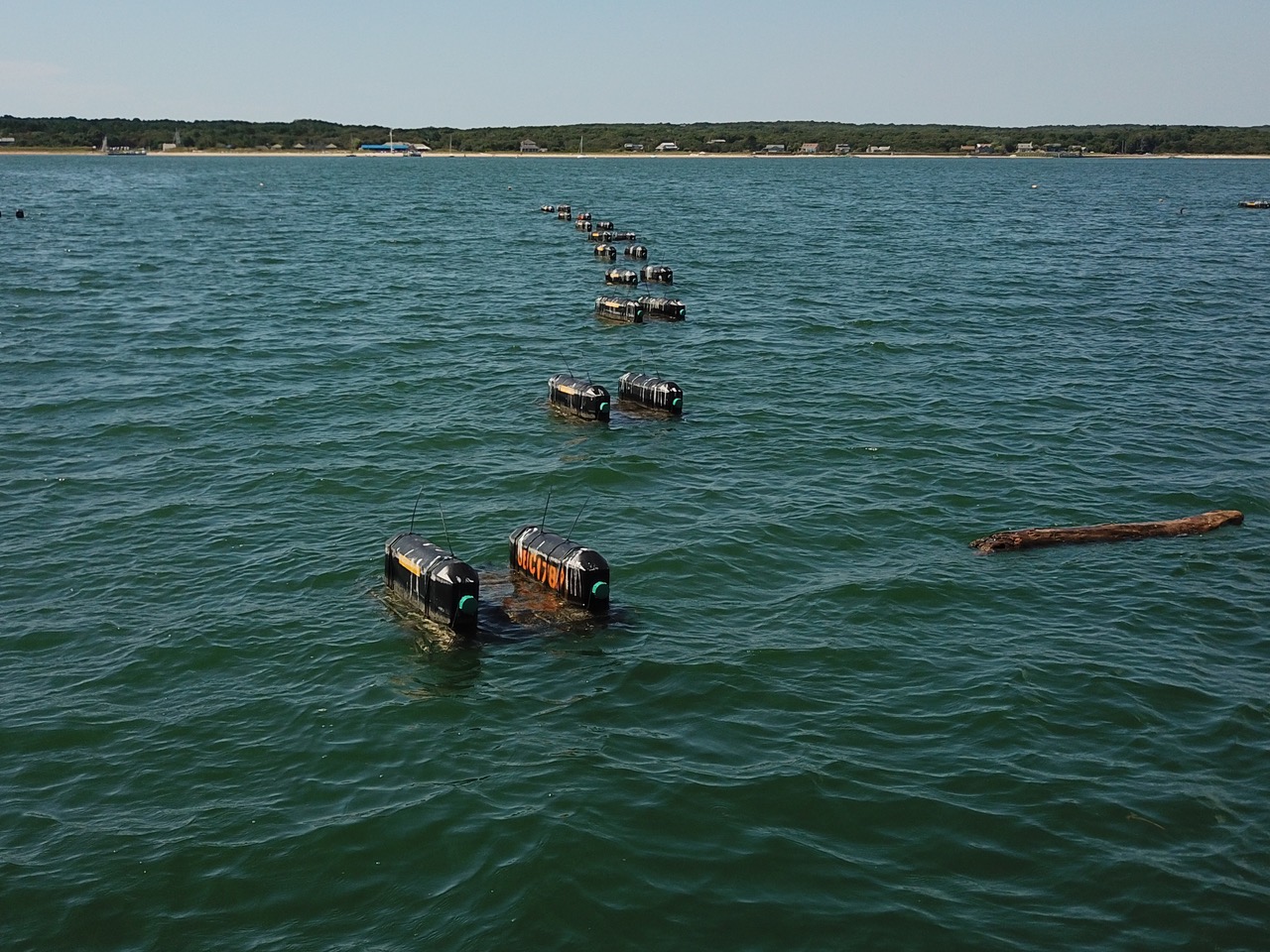
Commercial aquaculture gear could consist of a black float attached to a metal or plastic mesh cage, Mr. Dunne said. The floats could include an inscription such as “OysterGro,” “Flow N Grow,” “FlipFarm,” or the like. In addition to oyster farm equipment, he said, bulkhead, dock, and boat materials were washing up on beaches.
This debris in the nearshore environment is not just a concern of aquaculturists, however. Because oysters generally grow faster and with higher survival rates at the surface, many oyster farmers use floating cages rather than sinking them to the bottom of a waterway. Boaters and yacht clubs have complained of conflicts with aquaculturists, particularly when the Suffolk County Aquaculture Lease Program offers new 10-acre lease sites to aspiring or expanding shellfish farmers.
John Nicholas of the East Hampton Oyster Co. and East Hampton Shucker Co. said that he did not experience any losses last winter. “I didn’t think it was even possible for it to freeze over like this,” he said this week, but his oyster cages by the Sunset Cove Marina in Springs are always at the bottom, and not floated. “We were very active in protecting the crop” of some 500,000 oysters, he said.
“The oyster community is doing pickups from the shorelines of all debris,” Mr. Nicholas added. “There’s a lot more than oyster gear on the beaches. There’s a tremendous amount of dock damage, too.”
Indeed, “for two days it looked like a river of oyster gear going through the South Ferry channel,” Tom Field, a Shelter Island commercial fisherman, said he was recently told. Mr. Field is among those making their living on the water who point to the damaged aquaculture equipment as an indication that the nascent industry has grown too large and endangers other user groups.
In a letter to Representative Nick LaLota, Mr. Field wrote that “all aquaculture gear should have been winterized (sunk to the bottom). Certain aquaculturists were irresponsible and should be held responsible.”
The environmental damage caused by aquaculture equipment has been overshadowed by aquaculturists’ monetary loss, he said, referring to “the pollution that will, for years to come, be a public safety risk and a risk to vessels and property.” A beachgoer who unknowingly comes in contact with submerged gear “will end up in the hospital,” he said. “I have worked with this gear and it is sharp and dangerous. If a scallop boat gets tangled in this ghost gear, there is a real risk of capsizing or sinking.”
He is preparing a petition demanding a halt to further expansion of the aquaculture lease program and fines and revocation of leases for aquaculturists who lost gear on both leased and private sites. “We also demand regulations be imposed on all remaining aquaculture permits and sites to prevent this from happening again,” a draft of the petition states.
“We have to live together,” Mr. Field told The Star, “but at the same time, they have to stop expanding [the lease program] and rules have to be changed. There needs to be a winterization plan for each farm.” All equipment should identify its owner, he said, and sites no longer in use should be inspected to ensure gear has not been left behind.
“It’s got to be better managed,” he said.