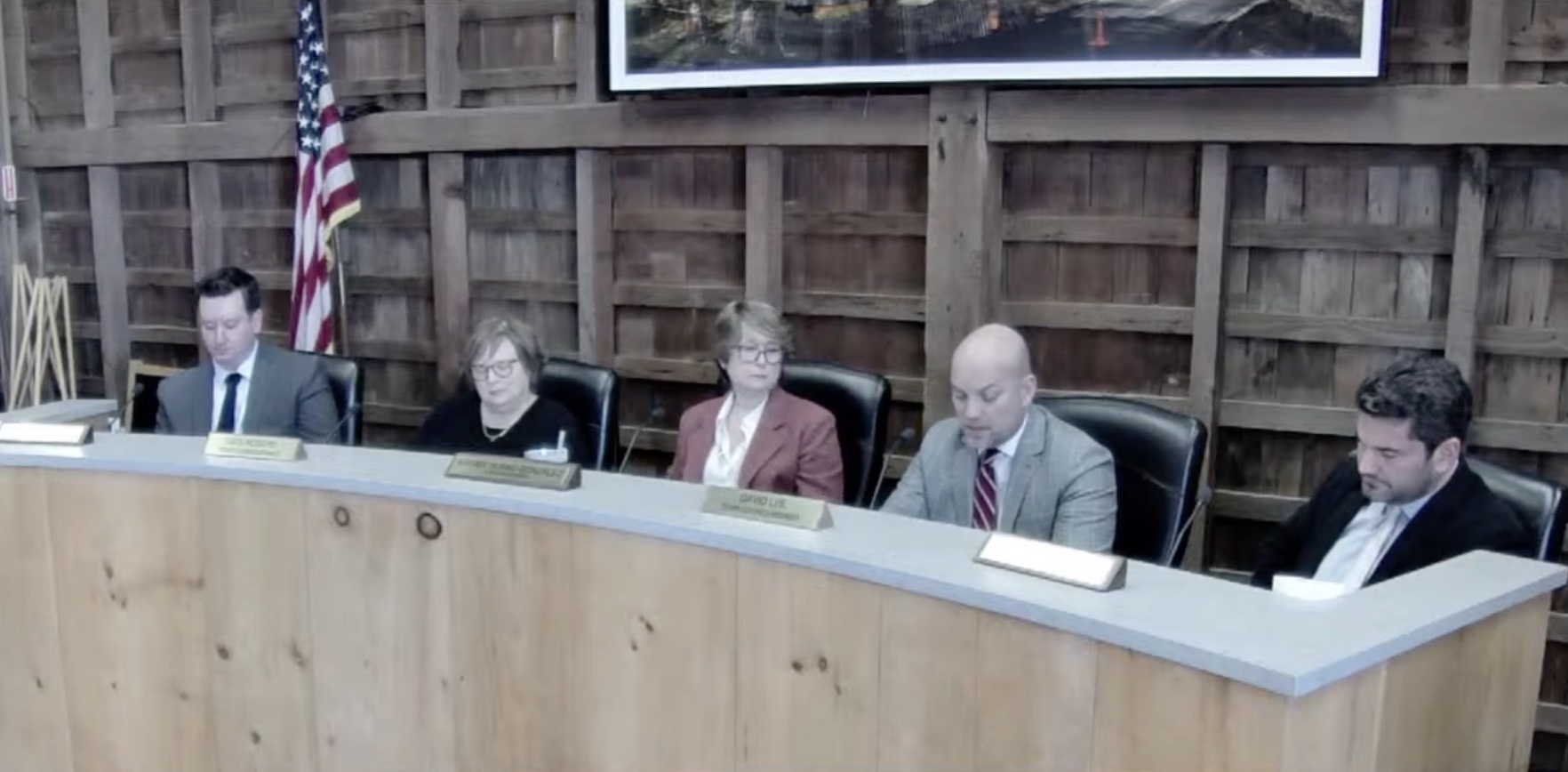
In a first step toward a major overhaul of its zoning code, the East Hampton Town Board voted to revise the “purposes” section of the town code pertaining to zoning at its meeting last Thursday.
The resolution marks the first concrete step in a process that began nine months ago with the board’s formation of the zoning code amendment work group. The work group is charged with assessing residential zoning and potentially revising the code to effect a slew of changes, many of them reflecting a movement toward downsizing: potentially, a reduction in the size of new construction and renovations, in clearing, and in total lot coverage; the group is also examining how natural grade and below-grade development is classified, and other possible changes.
The formation of the working group last year followed a persistent campaign by an Amagansett resident, Jaine Mehring, to encourage the board to take action to “restore rational restraint and inspire more modulated proportions” in development. Ms. Mehring has become a public voice for those residents who have long been critical of what is seen as rampant development and redevelopment that complies with the present code but is “unprecedented in mass, size, and scale,” as Councilwoman Cate Rogers characterized it last May. The founder of Build.In.Kind/East Hampton, Ms. Mehring led a public discussion on the topic of overdevelopment last March, which was followed by the issuance of an open letter to the board in the form of a petition. She was recently appointed to the town’s zoning board of appeals.
The work group began its review by assessing the “purposes” section and found that the wording did not fully adhere to the goals and recommendations of the town’s comprehensive plan. The section sets a legal framework for the rest of the zoning code.
A proposed draft of the “purposes” section was discussed during a town board work session in September, followed by a public hearing in October that drew more than 35 comments, nearly all of them in favor of modifications to the zoning code. A draft of the revised section was vetted with the Suffolk County Planning Commission, which responded with a letter of non-jurisdiction, allowing last Thursday’s resolution to adopt it.
Amended language in the “purposes” section of the zoning code adds clarity but also significantly rewrites and expands on goals regarding conservation of natural resources and ecosystems, climate change and coastal resilience, water quality, and affordable housing. A 37-word sentence on proper use of land, for example, has been replaced with six bullet points including promotion of “the utilization of land for the purpose and scale for which it is the most appropriate, ensuring a balance between ownership rights and the responsibility of compatibility” with the comprehensive plan. Prevention of “disorderly growth for the sake of growth” is added, as is encouraging businesses “to serve the needs of the year-round population.”
New to the section are seven bullet points on “town sustainability,” including a mission to “ensure that growth does not overwhelm the carrying capacity of human-made infrastructure or compromise the regenerative capacity of land, waters, and natural systems.” Also new are five-point sections on coastal resilience and clean water, and two points on climate change that include increased adoption of renewable energy sources, conservation of energy, reduction of consumption and waste, and making climate mitigation a guiding principle and objective of all municipal operations and aspects of town business, policy, planning, and zoning decisions “so that residents can live within the constraints of the environment and climate change.”
With respect to protecting open space, including undeveloped and uncleared lands and agricultural areas, the purposes now include preventing and limiting its “further unnecessary loss,” by “continuing preservation purchases and conservation tools, as well as through appropriate land use regulation.”
Also added to the “purposes” section are an avoidance of “the undue concentration of structures and occupancy” and prevention of “the danger of overcrowding.”
When the board held its first substantive discussion of the work group’s progress, in July, it indicated that the next zoning code sections to be reviewed by the group would be “definitions” and, concurrently, the table of dimensional regulations in residence districts. The group is then to continue working through the entire code.