
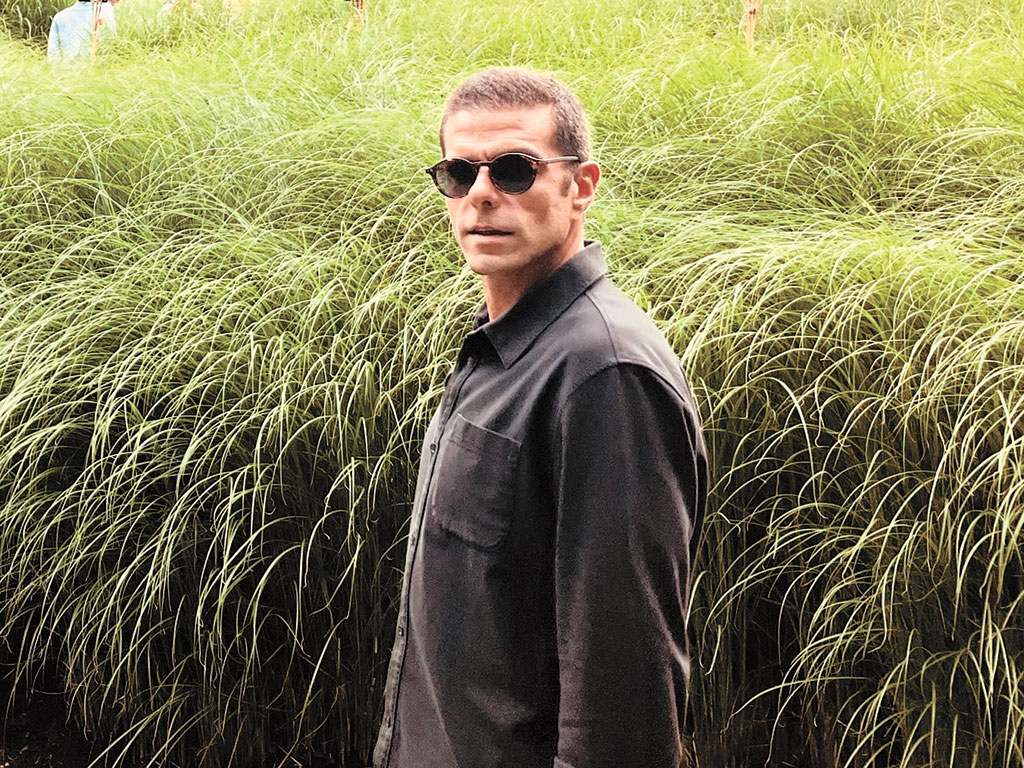
Winter of 2026 was rough on the gardens at the Madoo Conservancy in Sagaponack. Wet, heavy snow snapped branches and flattened stalks. But at ground level, unseen life was proceeding as it always does. “Gardens are supposed to do that. Now there is a little more sky,” Alejandro Saralegui, the garden’s executive director, said.
The late painter Robert Dash began work on Madoo shortly after buying the property in 1967. Over the years, he, and, later, Mr. Saralegui improved the soil bit by bit. Fallen leaves and small branches would be added to a compost heap; as the pile rotted, new things would be piled on and the rich “black gold” hauled off to replenish the soil.
The fact that the famously thick Bridgehampton loam would need help might come as a surprise to those who pay attention to these matters. The Bridgehampton Series of soil characteristics, as defined by the United States Department of Agriculture more than a century ago, describe layers of very deep, well-drained soil that is considered among the best in the continental U.S. Yet, generations of farming and compaction have taken their toll and, while the soil extended more than three feet down from the surface, it could also be improved.
It is a delicate balance. In conversations with Mr. Sarelegui and several other landscape deep thinkers, a shared takeaway was this: Leave soil to do its own thing in its own time.
“The main thing is to feed your soil just back what you took from it.
— Edwina Von Gal
The ideal, said Edwina Von Gal, the executive director of the Perfect Earth Project and a Springs resident, is a closed loop. Trying to take control of your soil is a mistake, she said. “The main thing is to feed your soil just back what you took from it.” Patience is all but essential.
“Composting takes season after season to build a soil system, as opposed to a one-size-fits-all approach,” Chris Messinger, an East Hampton landscape designer, said. This is not always practical, and sometimes additions must be made. There are situations when he will have to bring in organic products.
Mr. Messinger stressed the seasonal nature of his industry, and the occasional disconnect between the soil long game and meeting the needs of property owners looking for perfection for just a few weeks each year. There is a tension between the we-want-it-yesterday demands of second-home owners and the reality that restoring soil requires its own time. “This person wants a garden and wants it now,” Mr. Messinger said. “But at what cost to the water, to the environment?”
Beginning gardeners might worry about water and light but overlook everything else, including the state of the earth beneath their feet. Yet, obviously, it is critical factor: Without a life-filled matrix for plants to grow in, no amount of irrigation or sun can overcome the unseen deficiencies. “You can’t have the end product as a garden designer without it. You can’t avoid the health of the soil,” Mr. Messinger said.
Careful amendments based on soil samples and timing can help. Tests of Ph and minerals can guide decisions about what should be put into the ground. No matter what, however, plants must have the infrastructure to reach the nutrients. “Fertilize with intention,” he said.
—
Of course, plants won’t thrive unless they have the infrastructure to reach all the beautiful nutrients in that soil.
“The right plant for the right location,’ Ms. Von Gall advises. “Look up. Look around. Look at what is growing well there,” she said. “Pick the plant for the soil. Otherwise you are pouring money down the center of the Earth.”
“Try to be as organic as you can, leave as much as you can, and choose your plants wisely,” Mr. Saralegui said. “If you have sunny, dry soil you are not going to have ferns there.”
“Hey, this is a living thing,” he said.
Of all the factors in plant growth, soil is the most complex. Ms. von Gal described healthy soil as an urban center with unique neighborhoods at each level. Turning the soil, as in a traditional garden, inverts the city of microbes, each narrowly adapted to its own strata, hurling them into disarray.
Following on Ms. von Gal’s analogy, Mr. Messinger said, “I like to think of it as a world in which people are willingly sacrificing themselves for the benefit of the other.”
Ms. von Gal started the Perfect Earth Project in 2013 to promote toxin-free landscaping. Her approach was land care based on nature, not in opposition to it -- restoring functional ecosystems of native plants and wildlife. Core concepts included reducing lawns and rejecting a fussy and restrictive landscaping style in favor of something more comfortable, loose, and “personal,” as the organization puts it. “Leave the leaves and all organic matter, make your own compost, and grow a living mulch,” Perfect Earth says.
Chemical control of pests and weeds is discouraged. “All the things that end in ‘cide,’ all of them will kill the soil biome. If you have applied any of them, then you have compromised it,” Ms. von Gal said. She described a connected life-force that included all plants and a vast, underground fungal network. “It’s the interconnectedness of everything,” she said.
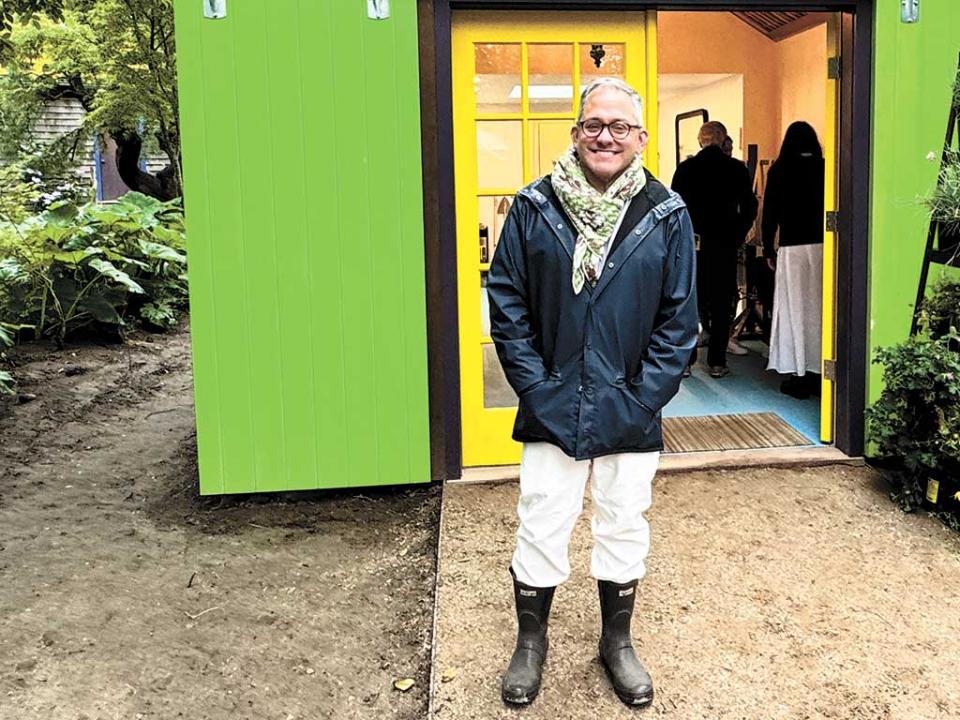
Mr. Saralegui described an essential up-and-down movement of insects and worms in healthy soil. Pesticides knock out the vertical process, he said.
Sustainable soil also means taking care of plants and insects. For example, Mr. Saralegui lets perennials remain over the winter so that small living things find shelter in their stems and seedheads. Instead of chopping tall grasses and leaving a spikey, ankle-high crown, tie them up in late fall with a bit of twine. “That makes them easy to cut down in the spring and just throw on the compost pile,” he said.
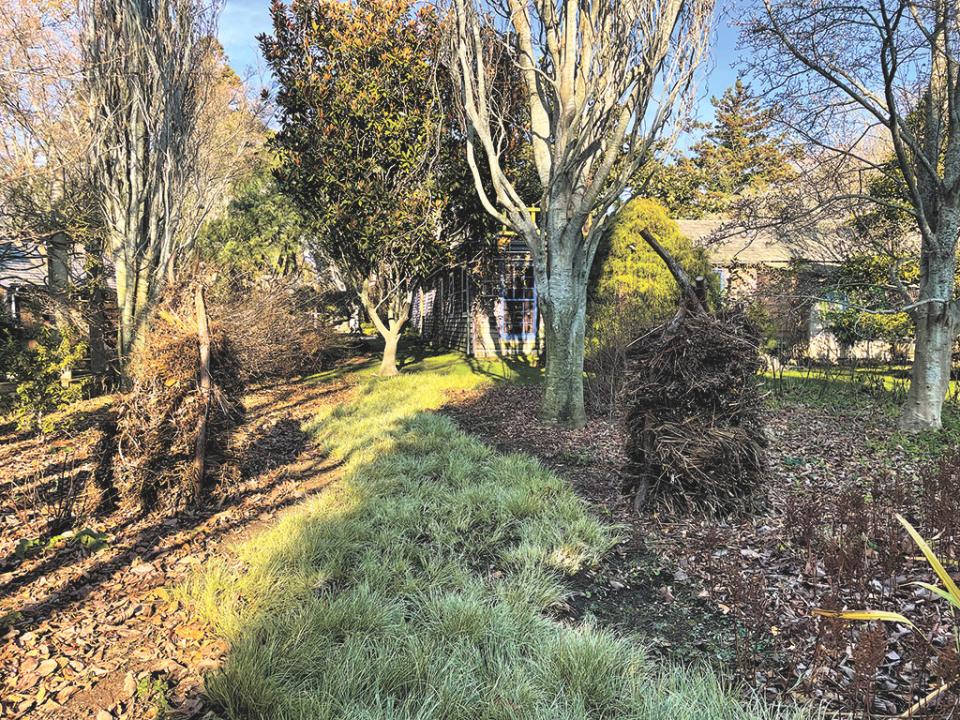
In the off-season, Mr. Saralegui also builds “bug snugs,” heaps of plant material held in place with wooden stakes. They are like a teepee of branches that he fills with garden debris and lets decay. If that is too much work, he suggests adopting a routine of at least putting fallen leaves back under trees. The goal is to return as much as possible to the soil. If that is aesthetically unpleasing, buy or borrow a small shredder to make a finer mulch, he suggested.
Ms. von Gal advised leaving the roots of seasonal plants in the soil instead of ripping them out. She said she often has to resist the urge to pull them out, instead reminding herself to clip the stems at soil level. She said that we could think of ourselves as one of the multitude of organisms that work with the soil rather than against it. Dragging a pile of seaweed onto a garden bed can work magic, for example, she said.
Each of the people we spoke with saw leaf-blowers as the antithesis of healthy soil practices. (A renewed movement to ban gas-powered ones is gaining converts in East Hampton Town.)
“Don’t blow soil bare,” Ms. von Gal cautioned. Leaf blowers expose billions of life forms in the critical top layer of soil and decomposing matter, she explained.
“Soil doesn’t have a voice, but it wants to be covered up,” she said. “Because, to me, so much of the relationship between humans and nature is based on love. Blowers are just the reverse of that.”
On his own property, Mr. Messinger uses an electric blower very sparingly and only around the house’s foundation. About half of the site is turned over to taller grasses and leaves. “Any forest, any woodland space, leave that be,” he said.
Paradoxically, a boom in outdoor robotics can have a beneficial effect on the soil. Self-propelled “smart” mowers represent a giant leap for lawncare. Typically, they cut just an eighth of an inch with each pass; these tiny clippings then fall and nestle among the grass shoots to quickly decompose. “It is amazing how it improves your lawn health,” Ms. von Gal said. Madoo leases its robomowers to offset the high initial sticker prices of the good ones, Mr. Saralegui said.
—
Letting things do what they are going to do is at the center of the healthy soil movement.
“There is great energy behind this idea of ‘Let’s actually care for our natural environment again,’ “ Mr. Messinger said.
“These practices don’t mean ugly, they don’t mean untamed. They don’t mean wild, as in overrun,” he said. “You can achieve both beautiful landscapes and healthy ones.”
“As a garden designer you can’t avoid the health of the soil,” he said. “Let things rot — but again, those are hard pitches to make in the Hamptons.”
“Organic matter. Those are the two most important words,” Mr. Messinger said. “Soil, it is literally everything.”