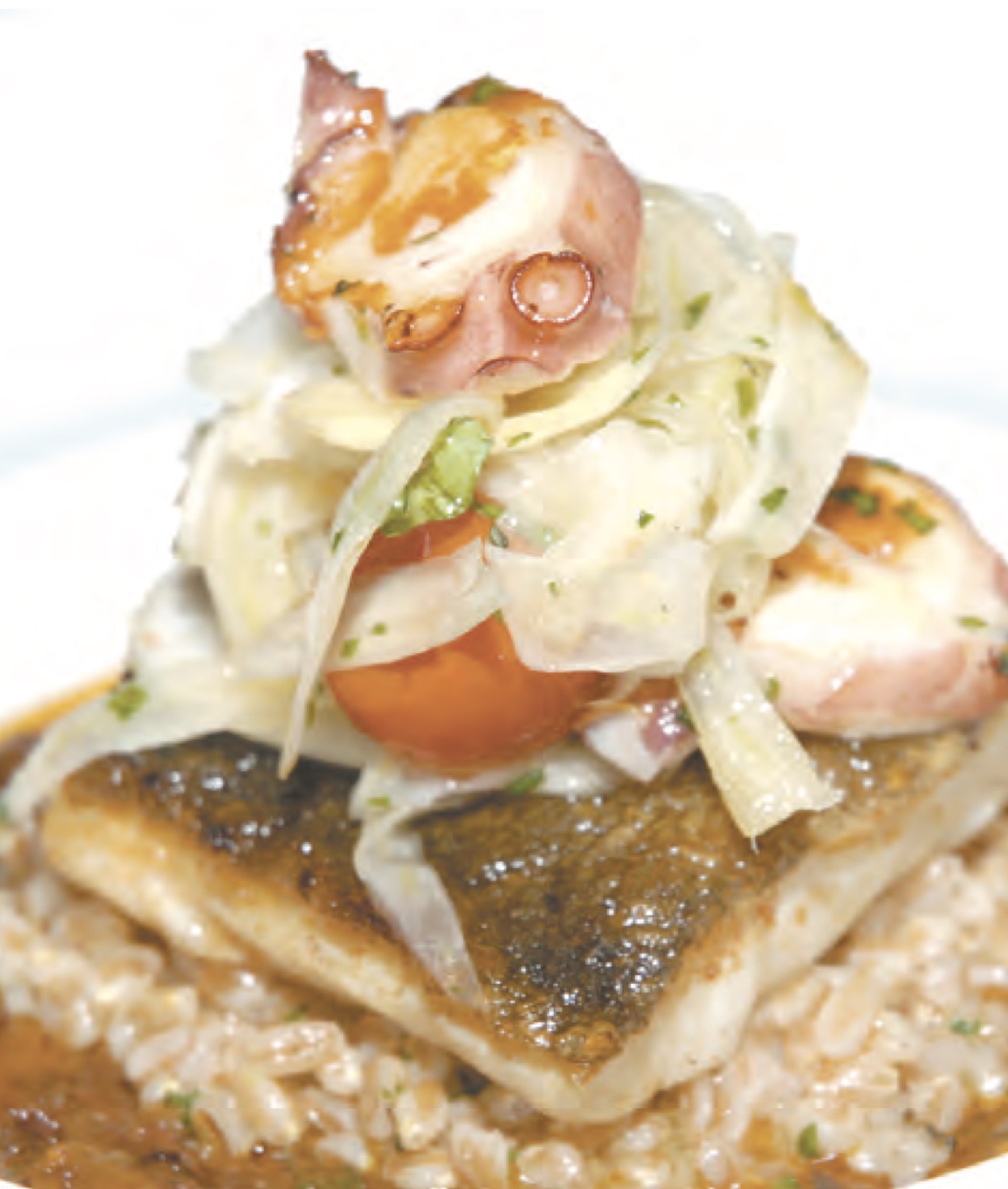
Cod is like the cotton of the seafood world. It is bland, it is white, and it is everywhere. The Japanese processed “crab legs” known as surimi are made from cod. Most of our frozen fish sticks, fillets, and fish cakes are produced from it. Just as cotton is a vitally important material in our lives, cod is one of the most historically significant fish in the world.
Cod has been an important international commodity since around 800 B.C. Norwegians are credited with starting the dried-cod market in Southern Europe. The Basques discovered the Canadian fishing banks before Columbus discovered America.
Most of the North American East Coast developed as a result of the cod-fishing industry. When American settlers were enjoying a nice contraband arrangement with the French Caribbean, trading cod for rum-producing molasses, Britain attempted to impose a tax, making it less profitable. This resulted in a little event you may have heard of, the Boston Tea Party.
Although they have long been in danger of being overfished, Pacific and Atlantic cod are still plentiful enough to be reasonably priced. Cod is a healthy, lean, and mild, sweet-tasting fish. The liver, which is processed to make cod liver oil, is a valuable source of vitamins A, D, E, and omega-3 fatty acids.
Although it is not a terribly attractive fish, it has the honor of being on a postage stamp in Newfoundland, and a model of a codfish hangs in a place of honor in the State House of Massachusetts.
The Atlantic cod, Gadus morhua, could once be found as large as 200 pounds and six feet long. Nowadays, the average cod is around 10 pounds. They are easily recognizable by the barbel (whisker) that juts out of their chin and by a clear white lateral line that curves up toward the head. Their coloration varies from greenish gray to reddish brown, dappled with lighter spots and patches.
Salt cod and dried cod (known as stockfish) are still hugely popular in Europe and Scandinavian countries. Once upon a time, the codfish was preserved in this way for survival. Now it is considered a gourmet treat, in the form of the French dish brandade de morue and the Spanish bacalao. The Portuguese adore it so much they refer to it as fiel amigo or “faithful friend.” The flavor and texture of salt cod are completely different from those of fresh cod, much stronger and firmer.
When cooking cod it is best to keep the skin on to prevent it from falling apart. But don’t eat the skin, for this is where some nasty little parasites reside. For a chowder or stew, removing the skin beforehand is okay. One of the beauties of cod’s mildly sweet taste is how it marries so well with stronger, more assertive flavors like garlic, mustard, capers, and bacon.
While researching salt cod recipes, I found some wildly varying directions for the presoaking process. One recipe insisted that the salt cod be soaked for 36 hours, with the water being changed every four hours. Well, for heaven’s sake, that’s like having to nurse a newborn baby!
It is generally believed that soaking for about 18 hours is sufficient to remove the salt, and the water need only be changed about four times. Keep in mind, however, that once the preservative (salt) is removed, the fish becomes as perishable as fresh fish, so use it immediately or freeze the leftover mixture for another time.
One recipe that I tried (from “The Balthazar Cookbook”) sounded pretty crazy, and some people think any cheese with fish is sacrilege. But the recipe for cod mitonnée, which includes a melted Gruyere crouton under the fish, is absolutely divine! Try some of these cooking methods for cod. Some are ancient, some brand-new.
Cod Mitonnée
Here is the recipe for cod mitonnée from “The Balthazar Cookbook.” I took a number of liberties with it, cooking the broth down to more of a sauce, adding a few slices of fresh jalapeno, and using little grape tomatoes in place of large, wintery, bland ones.
Serves six.
1/2 cup olive oil
2 large yellow onions, peeled and sliced 1/4-inch thick
3 garlic cloves, sliced
5 sprigs thyme
3/4 cup white wine
5 cups chicken stock
6 slices of country bread
6 oz. Gruyere cheese, grated
6 cod fillets
1/2 tsp. salt (or more to taste)
1/4 tsp. white pepper
2 cups loosely packed Swiss chard leaves, torn into bite-size pieces 3 cups cooked white beans (optional)
1 Tbsp. fines herbes
3 tomatoes, peeled, seeded, and diced
Preheat oven to 350. Heat one-quarter cup olive oil over medium-high in Dutch oven. Add the onions, garlic, and thyme and sauté for about 30 minutes or until golden brown. Add the white wine and chicken stock, and turn the heat down and simmer for about 30 minutes.
Toast the bread in the oven on a baking sheet, then top with Gruyere. Run under the broiler until melted. Set aside and return the oven temperature to 350.
In a separate, nonstick pan, heat the remaining olive oil to almost smoking. Season the cod fillets with salt and pepper and sear them in the pan for about three minutes on each side. Then put them on a baking sheet in the oven for about five to seven minutes or until opaque and beginning to flake.
Meanwhile, add the Swiss chard to the chicken stock, along with the white beans, fines herbes, and diced tomatoes. Season with more salt and pepper if desired.
Ladle the broth and bean mixture into six shallow bowls. Set a toast in each bowl, then top with the cod fillets.
Venetian Creamed Salt Cod
This recipe is a combination of James Peterson’s and Giuliano Bugialli’s. Makes about 16 servings of hors d’oeuvres.
1 lb. salt cod (which has been soaked for 18 hours, water changed 4 times)
1 qt. milk
3 garlic cloves, finely chopped
11/2 cups good olive oil (you may not need to use all of it)
Leaves from 1 large bunch of flat-leaf parsley, chopped at the last minute Salt crackers or toasted slices of baguette
Gently simmer the salt cod in milk for 15 minutes. Remove from the milk, but don’t discard the milk. Pull off and discard any pieces of skin or bone.
Purée the cod in a food processor until it forms a stiff paste, about 30 seconds. Transfer to a mixing bowl and add the garlic. Using a wooden spoon, slowly incorporate the olive oil until the mixture is light and fluffy. If it is still stiff, add a bit of the reserved milk. You want the consistency to be like that of fluffy mashed potatoes.
Stir in parsley and salt to taste. Serve warm. Leftover mixture can be frozen or formed into little pancakes for another meal.
Poached Cod Fillets in Cream Sauce
This retro recipe is adapted from “The Seafood Cookbook” by Pierre Franey and Bryan Miller. Serve it with boiled potatoes and dilled cucumbers.
Serves six. 2 boneless, skinless cod fillets, cut into 6 portions (about 21/2 lbs. total)
21/2 cups milk
Salt to taste
6 whole black peppercorns 1 cup thinly sliced onion
2 thyme sprigs
1 bay leaf
2 whole cloves
4 sprigs parsley
1/4 tsp. Tabasco sauce
2 Tbsp. butter
3 Tbsp. corn starch
1/2 cup heavy cream
1/4 tsp. nutmeg
Put the fish in two skillets large enough to hold them in one layer. Add enough water to barely cover the fish. Add the milk, salt, peppercorns, onion slices, thyme, bay leaf, cloves, parsley, and Tabasco sauce. Bring to a simmer and cook for about two minutes. Set aside.
Melt the butter in a saucepan over medium heat and add the corn starch, stirring with a wire whisk. Blend well. Add two cups of the poaching liquid and cook until thickened and smooth, whisking the whole time. Add the cream and nutmeg and stir. Simmer for five minutes.
Remove the fish from the poaching liquid and drain well. Transfer to warm serving plates and pour sauce over each.