
Wish I coulda been there. Earlier this month an old friend, like, kindergarten old, floated the idea of attending a ceremony renaming the corner of Delancey and Essex Streets on the Lower East Side as Jack Kirby Way, for the King of Comics, the stogie-chomping war vet son of immigrants with the salt-and-pepper brush cut who pretty much invented the Marvel Universe.
What about Stan Lee, you ask? Not to pile on at this late date, vis-a-vis his abuse of artists and theft of credit, but for the most part it’s true what they say — those endless panels of “senses-shattering” storytelling that made the Silver Age of comics so life-altering for so many of us were created and plotted and penciled by Kirby, with Lee coming along afterward to fill in the word balloons.
Aside from his innate knack for promotion, the best of Lee’s influence amounted to “your friendly neighborhood” Spider-Man’s wisecracks and some of the incantatory weirdness (the Eye of Agamotto, the Rings of Raggadorr) in Steve Ditko’s surrealist Dr. Strange title.
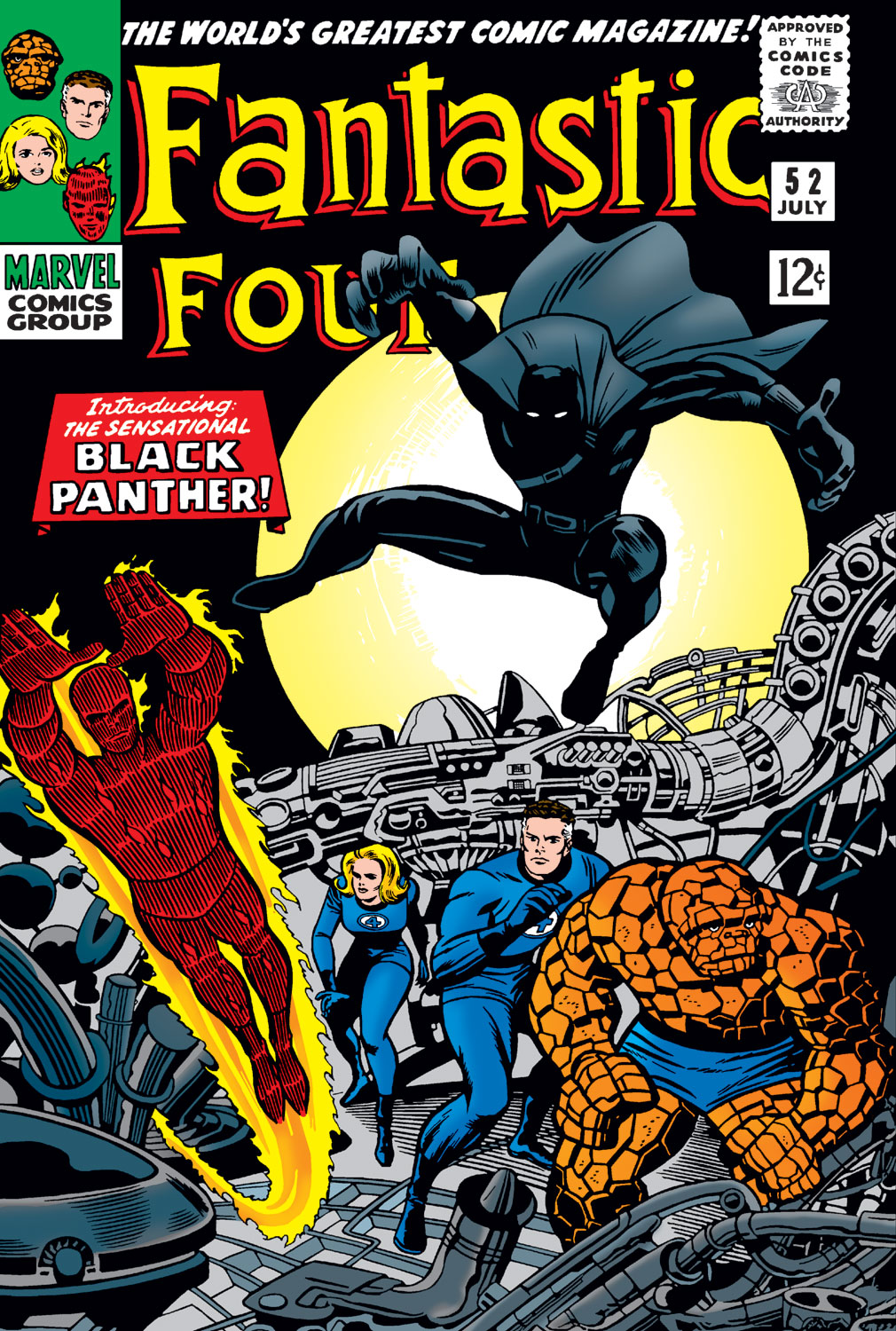
And yet, for reasons I can’t recall, there I was, only a few years ago, flipping through a reprint of Fantastic Four #52, which introduces Marvel’s first Black superhero, the Black Panther, and finding myself surprised and disappointed by the shabbiness of Lee’s work, the tossed-off nature of his writing.
It was Kirby’s conception, just one among untold hundreds, that had the staying power. T’Challa, of course, was chieftain of Wakanda, a technologically advanced society hidden somewhere in East Africa. This comic book came out in April of 1966, about six months before Bobby Seale and Huey Newton formed the Black Panther Party. The naming was apparently sheer coincidence, but you can imagine their appreciation.
In fact, should you have read the profile of Hakeem Jeffries, the man who would be speaker of the House, in the latest issue of The New Yorker, you may have taken an interest in the comments of his uncle, Leonard Jeffries, a former City College professor who taught of the “sun people” of Africa who were “generous and humanistic” (in contrast to the coldheartedness and greed of the Northern peoples) and thanks to melanin blessed with an “intellectual and physical superiority.”
Trying to picture American culture without the contributions of Black Americans, I for one am not particularly inclined to argue the point.
Though it is worth wondering how a working-class kid like the former Jacob Kurtzberg, born in 1917 into a tenement on the Lower East Side of Manhattan, became so forward-thinking.
Maybe my friend and I can find the time to stand beneath the Jack Kirby Way sign and pay our respects, knowing full well we won’t see his like again.