
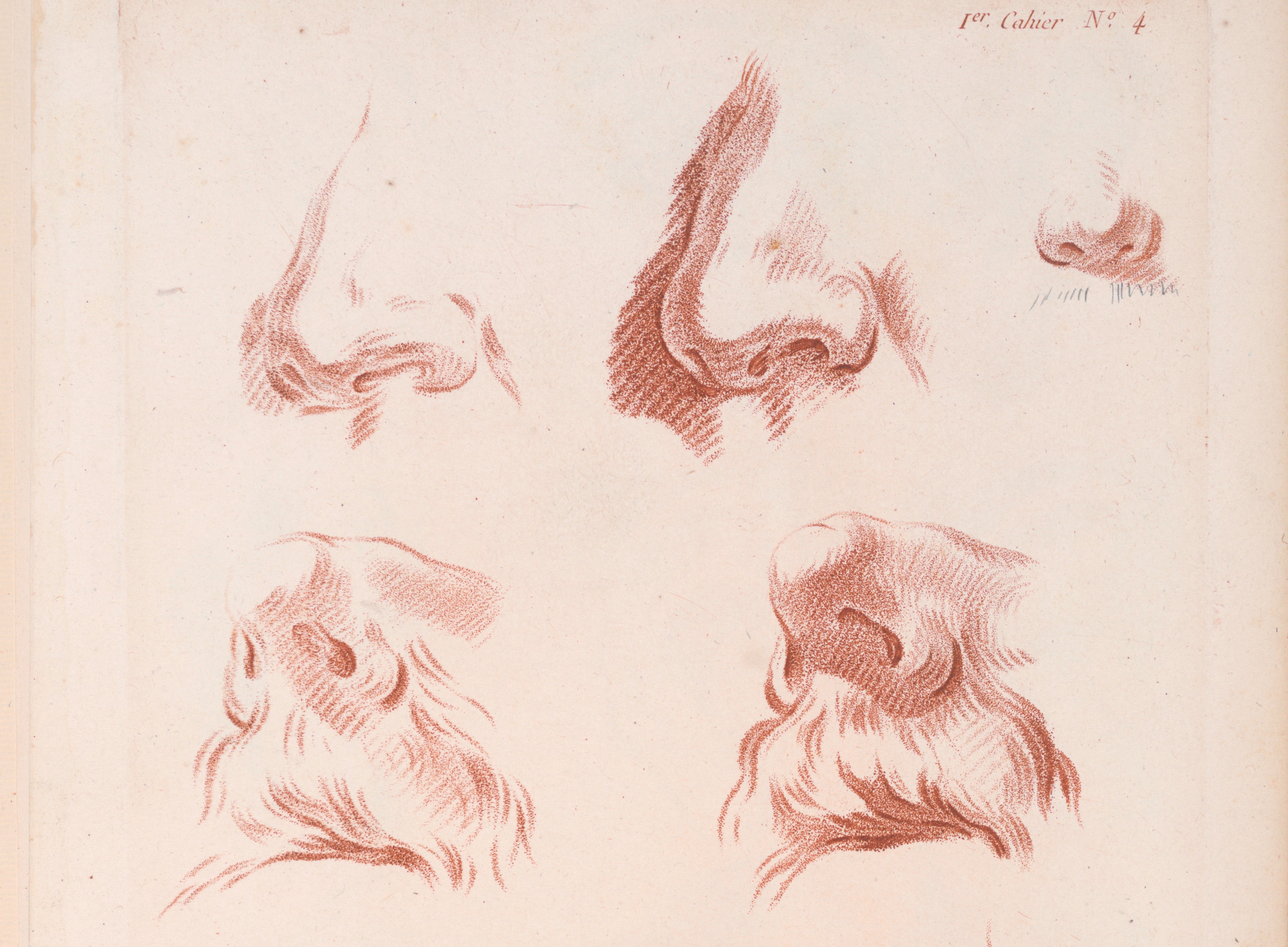
Which is also, it goes without saying, a turnoff.
In my experience, say, in an otherwise harmless office encounter, in the lobby of a bank, the sawing finger didn’t seem to be given maliciously, to make me feel bad or self-conscious, and yet at the same time neither did it seem to be done to subtly usher the grooming offender before a bathroom mirror. It was automatic, unthinking, like a nervous tic.
There once was a brief notice in one of the supermarket tabloids formerly so adept at bringing the famous low, probably The National Enquirer, telling a tale of how Matt (“Friends”) LeBlanc pulled into an L.A. garage asking for help in diagnosing a buzzing sound coming from his sportscar’s dashboard. Turns out it was his electric nose hair trimmer going off in the glove box.
Lacking a proper gadget? When I was visiting my father in South Florida in the 1980s, before entering a nightclub he used thumb and forefinger like pincers to rip hairs from his nostrils, first one and then the other. (With the infections these days, this is not advisable.)
Similarly unnerving is employing small scissors. Cold steel inserted into such a sensitive area — is that the male equivalent of the speculum treatment? If so, tit for tat.
The only thing worse than straggling hairs protruding from this particular orifice, of course, is when they are gray.
One of the best and funniest live albums of the 1990s, Loudon Wainwright III’s “Career Moves,” in which he’s recorded at the Bottom Line in the city, has a “scatological” exchange between songs as Wainwright introduces Chaim Tannenbaum, a banjo player and accompanying singer who can hit the high notes like no one since Ira Louvin.
Aging was the subject. Tannenbaum mentions balding. Wainwright counters by noting his own Michael Bolton hairdo: “Slightly thinning in front, but nice in the back.”
“My hair grows out of my ears,” Tannenbaum says.
“They don’t tell you about that one,” Wainwright answers. “You go to the barbershop and say, ‘Take a little off the top, and do the ears!’ ”
Next time, barber of mine: “Do the nose!”