Talk about timing! When Ken Burns’s 12-hour, six-part documentary “The American Revolution” premiered on PBS on Nov. 16, just over a year to the day after the election of Donald Trump, the critic Brian Tallerico, writing for rogerebert.com, said, “It’s also impossible to avoid the fact that ‘The American Revolution’ comes in the shadow of No Kings protests, which give it a different flavor than it might have had a decade ago.”
Now, four months later, as the Sag Harbor Cinema prepares to show the six episodes sequentially on Sundays, starting Sunday morning at 11, with even starker evidence that democracy is under attack, revisiting the events that led to the overthrow of the British and the establishment of a republic without a king is even more timely. Held in collaboration with the Sag Harbor Historical Museum, the free screenings are the first of a series of programs leading to the 250th anniversary of the signing of the Declaration of Independence.
Yale University Art Gallery, Courtesy of Sag Harbor Cinema
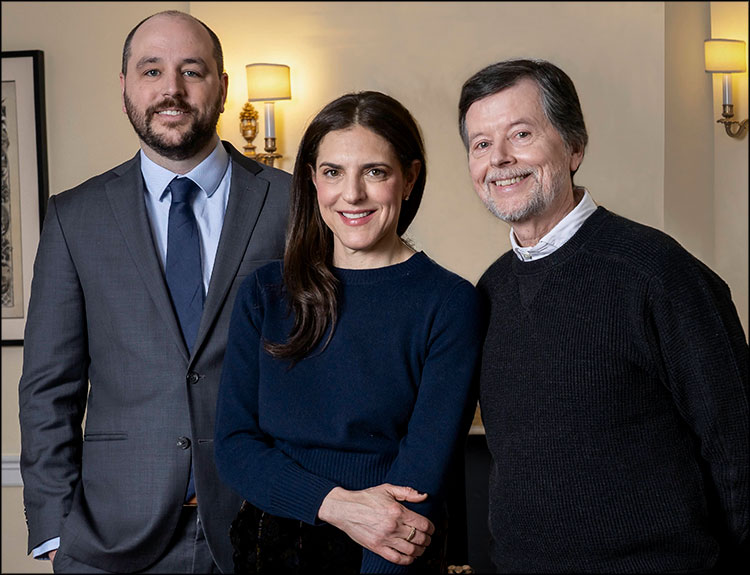
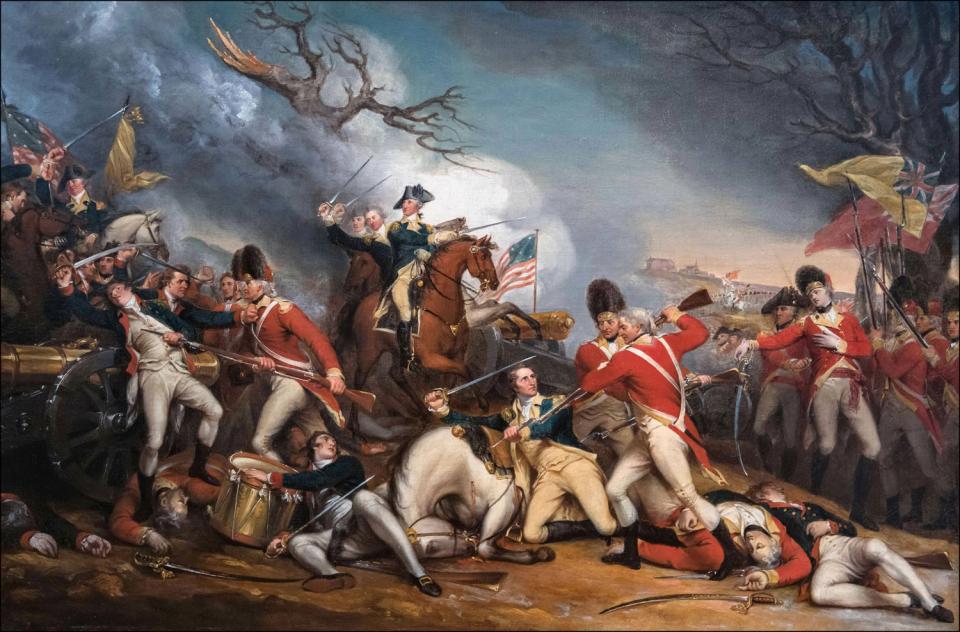
Nearly a decade in the works, “The American Revolution,” which is directed by Mr. Burns, Sarah Botstein, and David Schmidt, traces the ideals of freedom and democracy that led to the founding of the United States, while acknowledging its complexities and contradictions. The filmmakers use a mix of period art, animated maps, dramatic reconstructions, voice-over narration, and drone shots to explore the country’s early history and to suggest how the founders’ aspirations, met and unmet, continue to shape it.
Peter Coyote provides the main narration. Among the other actors whose voices are featured in the project are Kenneth Branagh, Hugh Dancy, Claire Danes, Jeff Daniels, Morgan Freeman, Paul Giamatti, Tom Hanks, Ethan Hawke, Maya Hawke, Samuel L. Jackson, Michael Keaton, Tracy Letts, Laura Linney, David Oyelowo, Mandy Patinkin, Liev Schreiber, and Meryl Streep.
“The choice to have legendary voices read the correspondence of both famous and lesser-known historical figures gives them such dramatic heft that they wouldn’t otherwise have,” said Mr. Tallerico.
The film follows dozens of figures from a wide variety of backgrounds, among them the Continental soldiers and American militiamen, British Army officers, American loyalists, native soldiers and civilians, enslaved and free African-Americans, German soldiers in the British service, French and Spanish allies, and various civilians living in North America.
Metropolitan Museum of Art, Gift of John Stewart Kennedy, 1897, Courtesy of Sag Harbor Cinema
In a review of the film for The New York Times, James Poniewozik quoted Alan Taylor, a historian, who says in the second episode, “The greatest misconception about the American Revolution is that it was something that unified Americans. It leaves out the reality that it was a civil war among Americans.”
Mr. Poniewozik goes on to say “As ‘The American Revolution’ emphasizes, the war was also often a struggle between American colonizers and Native Americans, between enslavers and the enslaved. Some Americans won their sovereignty and freedom. Others — particularly non-European Americans — lost it.”
He cites the film’s two parallel tracks: “. . . the stories of white leaders who would eventually appear on dollar bills and in portrait galleries, and those of Americans of color, who were often used as pawns or had to choose which side of the war offered them the best chance at autonomy.”
In Episode 1, “In Order to be Free (May 1754-May 1775),” American colonists oppose efforts by the British Crown and Parliament to seize greater control in North America, escalating tensions over land, taxes, and sovereignty into violent confrontation. After protesters dump tea in Boston Harbor, the British government declares martial law in Massachusetts. Fighting at Lexington and Concord starts a war that will last eight years.
“An Asylum for Mankind (May 1775-July 1776)” shows Americans sharply divided. After the Battle of Bunker Hill, George Washington arrives to command the newly created Continental Army. In July 1776, the Continental Congress issues the Declaration of Independence, insisting on the people’s right to resist tyranny and govern themselves.
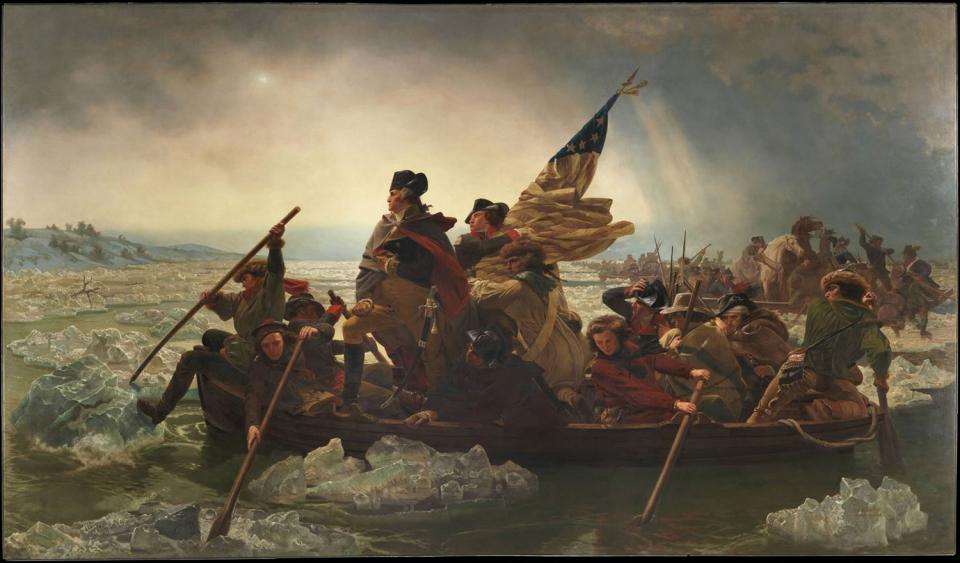
In the third episode, “The Times That Try Men’s Souls (July 1776-January 1777),” the revolution faces its toughest challenge as General Washington tries to defend New York City from invasion by sea. The resulting Battle of Long Island is a huge defeat for the Americans, who narrowly escape and spend the next several months on the run. In late December, Washington’s army regroups and prepares to attack an outpost in Trenton.
“Conquer by a Drawn Game (January 1777-February 1778)” finds the country bracing for a third year of war, while British commanders launch campaigns to take Albany and Philadelphia. General Howe beats General Washington at Brandywine and Germantown, while the Continental Congress flees Philadelphia. But the Americans’ surprising victory over General Burgoyne at Saratoga opens the door for France to officially support the United States.
In “The Soul of All America (December 1777-May 1780),” the fifth episode, Washington’s Continental Army emerges from the harsh winter at Valley Forge to fight the British Army in the inconclusive Battle of Monmouth. But the alliance with France changes the war and moves it to other theaters. Navies battle off England’s coast and in the Caribbean, while armies advance into areas occupied by Native Americans and the Southern states. Together, the British Army and Navy capture Charleston.
The series concludes with “The Most Sacred Thing (May 1780-Onward),” as the British Army under General Cornwallis struggles to pacify the South. Meanwhile, one of the most respected American generals betrays the cause and defects to the British. Supported by the French Army and Navy, Washington’s Continental Army wins the decisive victory at Yorktown. Peace is restored, independence is won, and Americans aspire to a more perfect union.
Mr. Burns’s filmography includes two Oscar-nominated features, “Brooklyn Bridge” (1982) and “The Statue of Liberty” (1985), the series “The Civil War” (1990), the Emmy Award-winning “Baseball” (1994) and “The National Parks: America’s Best Idea” (2009), and “The Vietnam War” (2017). In September 2008, at the News and Documentary Emmy Awards, he was honored by the Academy of Television Arts and Sciences with its Lifetime Achievement Award.
As a producer, Ms. Botstein worked with Mr. Burns and Lynn Novick on “Jazz” (2001), “The War” (2007), “Prohibition” (2011), “The Vietnam War” (2017), “College Behind Bars” (2019), and “Hemingway” (2021). She co-directed “The U.S. and the Holocaust” (2022) with Mr. Burns and Ms. Novick, and she is working on a series about Lyndon Johnson’s presidency.
In addition to co-directing “The American Revolution,” Mr. Schmidt worked on “The Roosevelts” (2014), and his research on “The Vietnam War” earned him the Jane Mercer Footage Researcher of the Year award. With Mr. Burns he produced the two-part biography “Benjamin Franklin” (2022) for PBS.
The screenings are free on a first-come-first-served basis. Registration is strongly recommended and can be accomplished at the box office or the cinema’s website.