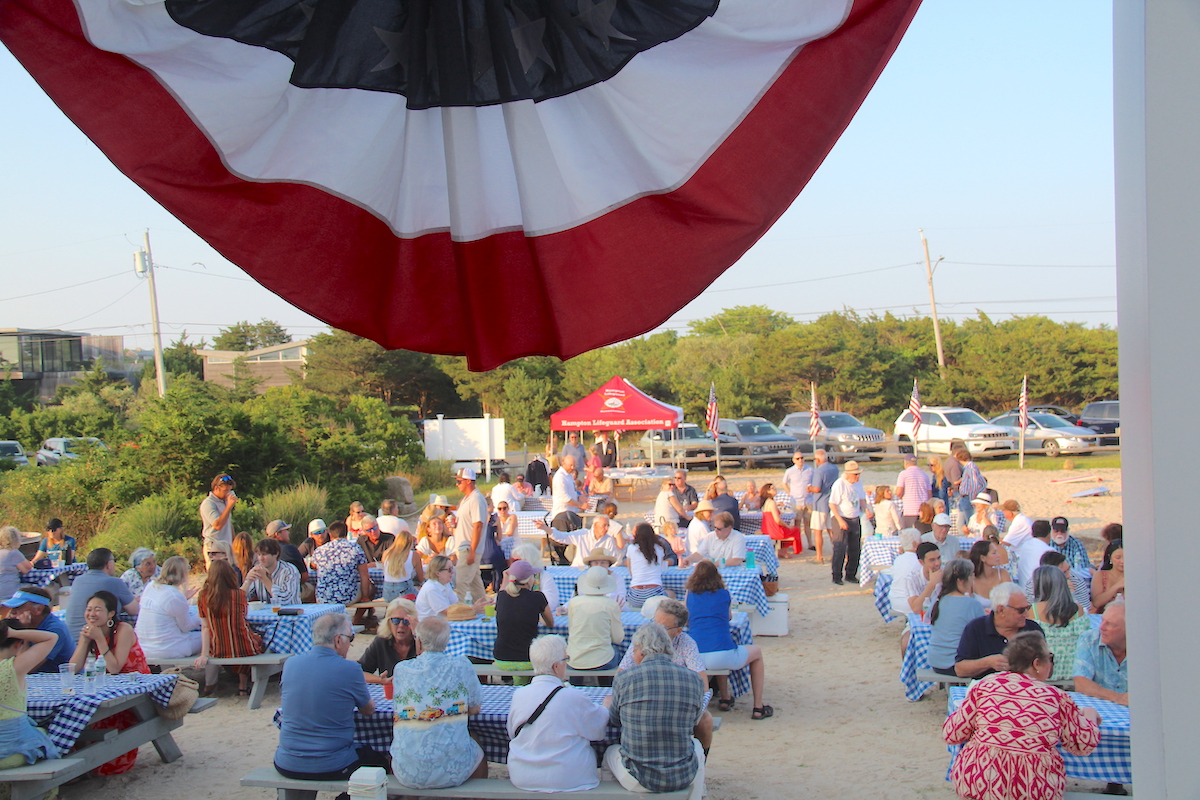
The Amagansett Life-Saving and Coast Guard Station Museum’s 10th annual lobster bake fund-raiser happens on Saturday from 6 to 8:30 p.m. The evening will feature a full-course lobster bake including mussels, clams, corn on the cob, roast chicken, and dessert. Tickets are $175 and available at Amagansett Wine and Spirits via cash or check payable to “Amagansett Life-Saving Station.” They can also be bought at amagansettlss.org, the museum’s website.
The lobster bake, for which the rain date is Sunday, also from 6 to 8:30, is “our only major fund-raiser of the year,” said Michael Cinque, the museum’s co-president, “which is really important, because we’re becoming a real museum.”
Last year, the museum christened a new surfboat, a smaller, seaworthy, and more refined version of the museum’s 1908 Beebe surfboat, the last surviving vessel of the type used at the station. Frederick Chase Beebe, who was born on Shelter Island, designed and developed the 27-foot Beebe surfboat in Greenport. After surf testing in Bridgehampton, he won a federal contract. Hundreds of the surfboats were put to lifesaving use along the east coasts of the United States and Canada.
The museum recently procured hand tools that were part of the Beebe surfboat collection, Mr. Cinque said, and that acquisition and the Beebe-McLellan replica — “so we could get a boat that is seaworthy” — were financed by money raised from the lobster bake. “It starts with buying a ticket,” he said. “Then, we build the collection.”
“We need the funds like any other 501(c)(3)” nonprofit organization, Mr. Cinque said. The museum “is a special part of the history of Amagansett. People have really come out and supported it.” Of those who attend a lobster bake, a large majority return the following year, he added.
The Amagansett station, built in 1902 and opened as a museum in 2017 after a comprehensive exterior restoration, is recognized by the National Register of Historic Places. It was operated by the U.S. Life-Saving Service until 1915. The Coast Guard then took over its operation, and it continued to be used until 1944.
Once part of a network of 30 lifesaving stations across the South Shore of Long Island, the crew kept watch from the lookout tower and by patrolling the beach. Discovering a ship in distress, they would perform a rescue by launching a surfboat or firing a line to the ship and taking people off on a sort of zip line with a breeches buoy life ring. From 1902 to 1937, the crew of the Amagansett station, most of them experienced fishermen and shore whalers, kept watch over the beach and rescued goods, passengers, and sailors from dozens of shipwrecks.
The museum is now in need of docents and is seeking volunteers. “It’s not a museum unless the doors are open,” Mr. Cinque said.