Aidan Perkins was on a deer trail in Montauk looking for owls. The vegetation was thick. So thick, in fact, that he couldn’t stand, so he was crawling. It was daytime, December, and cold. He’d scuttle to a tree, look up to inspect it, and then push himself to the next tree.
Such a habit, crawling along a deer trail in search of roosting owls, had already landed him two separate tick-borne diseases, although he wouldn’t be officially diagnosed for a month.
By then he would have broken the Suffolk County Big Year record of 304, set in 2018 by Taylor Sturm. In fact, Mr. Perkins smashed it, ending 2025 with 319 bird species.
“I think his record will stay for a very long time,” Mr. Sturm said in a phone call, “319 is crazy.”
“I was about to give up,” Mr. Perkins said of the owl crawl, “but there was one more tree. I got to the base of it on my hands and knees and looked up.”
Staring down from 15 feet above was a barn owl. The eighth species of owl he had seen in the month of December alone and species number 316 on the year. Three days earlier he had traveled over to Fishers Island (yes, it’s in Suffolk County) for owl number seven, a barred owl.
“I got the owl-fecta,” he said.
A big year involves identifying as many bird species as possible, by sight or call, in one calendar year, within a specific geographic area. Some people may choose to do an area code, others may choose to do a town or even the entire country. Suffolk County is one of the better counties to choose for a big year as it is one of the most biodiverse and benefits from a very active and close birding community.
To dedicated bird watchers and listers, a big year is a big deal.
For Mr. Perkins to accomplish his goal, many factors lined up. Most importantly, he’s an excellent birder. However, it also helped that in 2025, he was generally unemployed.
“My dad was pushing for me to get a job,” he said. “But in the fall I was like, ‘If I get a job, I can’t go looking for vagrants and rarities.’ ”
In the summer he worked as a park ranger at Wildwood State Park in Wading River (Mr. Perkins lives in nearby Miller Place) but that didn’t slow his big year efforts. He was able to use his ears even if he was technically on the clock.
Anyway, the summer is the worst time for birds. He added only eight new species in July and August.
The East End played a big role in his success.
“Montauk was a huge part of my year,” said Mr. Perkins, who now works part-time at the South Fork Natural History Museum in Bridgehampton. He “chased” the obliging Cassin’s sparrow near the Lighthouse (though he admitted he hates chasing birds found by others and is proud that he found 93 percent of his big year birds on his own) and the purple gallinule that spent time making cameo appearances near reeds on Industrial Road.
A black-headed gull that popped into the Lake Montauk inlet was another highlight. On the last day of the year he saw his last species, bird 319, a thick-billed murre that flew around the point just after sunrise.
“I was the easternmost person in Suffolk County for the last sunrise of the year. There were other people there, but I made sure I walked in front of them,” he said. “Shortly after the sun rose, the murre passed by.”
East Hampton was also home to one of the more peculiar finds of the year: a white ibis eating worms in a Springs backyard.
“Nothing in that yard should have called to that white ibis,” said Mr. Perkins, who said the small fenced-in yard was a mile away from the nearest salt marsh. The bird was not widely reported outside of a neighborhood app but was found happily sucking down earthworms. Mr. Perkins was lucky to intersect its sojourn. It left the area shortly after he viewed it.
Birding, it would seem, is a perfect antidote to screen time. Mr. Perkins offered some suggestions for getting the younger generation interested.
For him, it was a fortuitous viewing of the movie “The Big Year,” when he was 11. The movie, released in 2011 stars Steve Martin, Owen Wilson, and Jack Black. It changed his life, providing him not only with the hobby that has occupied much of his free time since, but a career path (he is a naturalist). He’s also a fan of the movie “Listers: A Glimpse Into Extreme Birdwatching,” released for free on YouTube last summer.
But another way is to let the kids venture outside on their own. “The Merlin app does help people get into the hobby, but for younger people, it makes the game a little too easy,” he said. “What I always say to younger people, make it your own. Go out on your own, with a parent who is not going to be doing anything for you. See what you notice and can find yourself. Going out and noticing the world around you is always the first steppingstone. Finding a different or rare bird on your own is such a great feeling. When I found my first rare bird I was hooked.”
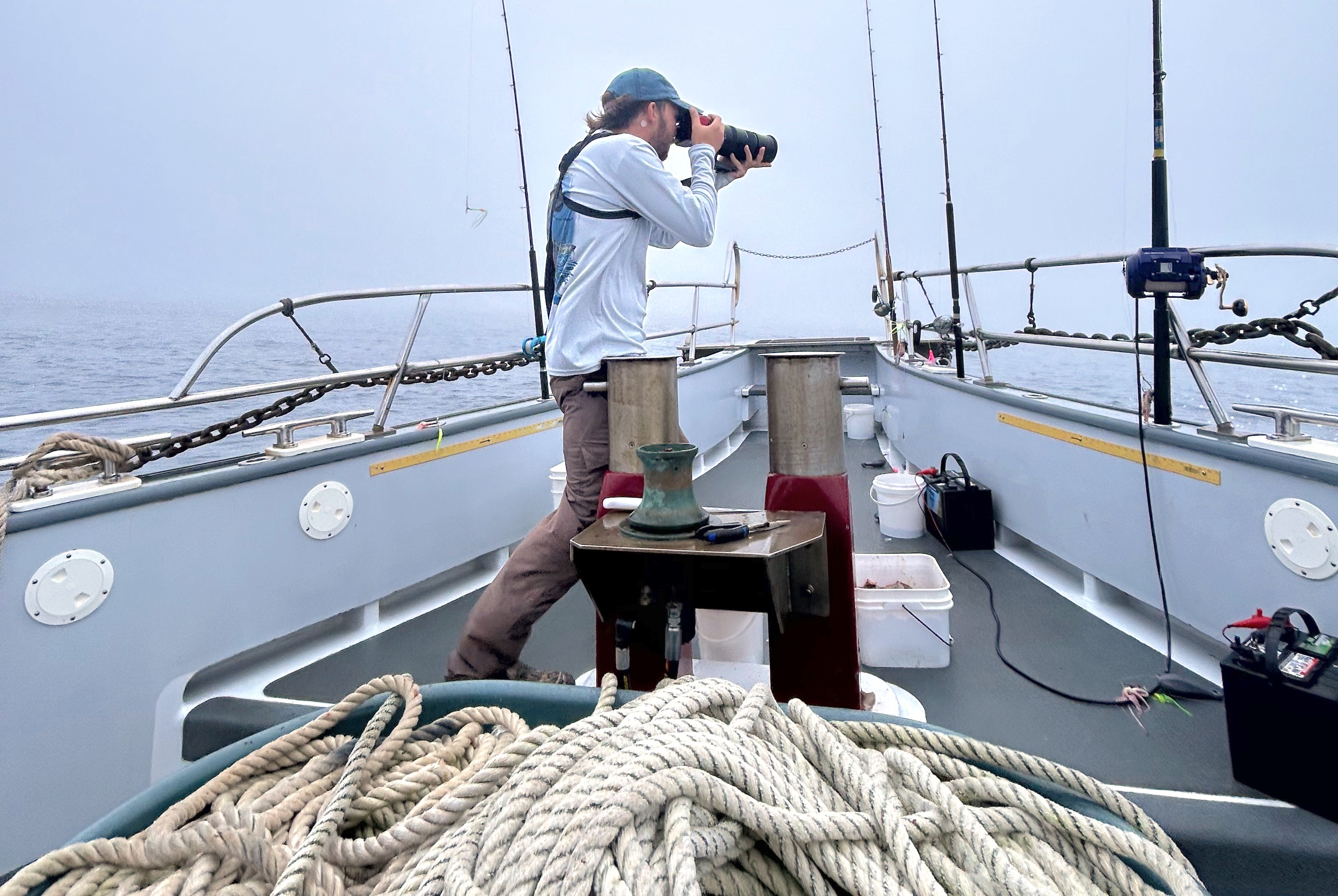
Despite his big number, he’s not “super confident” his record will hold. “One huge downside last year was the pelagic trips, only one went out and it was poor” — Suffolk County includes the offshore waters. Pelagic birding trips go far enough offshore to view birds that rarely appear in sight of land. “I think if someone did a big year in Suffolk and had a few successful pelagic trips, that could add another 15 birds.”
He’s also still singing over a few birds he felt he should have found: pine siskin, worm-eating warbler, and prothonotary warbler.
He’s left the door open, ever so slightly.
So, share this article with your favorite tween. You never know. In 13 years, they might beat Mr. Perkins’s record. Or take them to his May 4 talk at 7 p.m. in front of the Eastern Long Island Audubon Society at the Community Center in Center Moriches, where he will be discussing his accomplishment.