
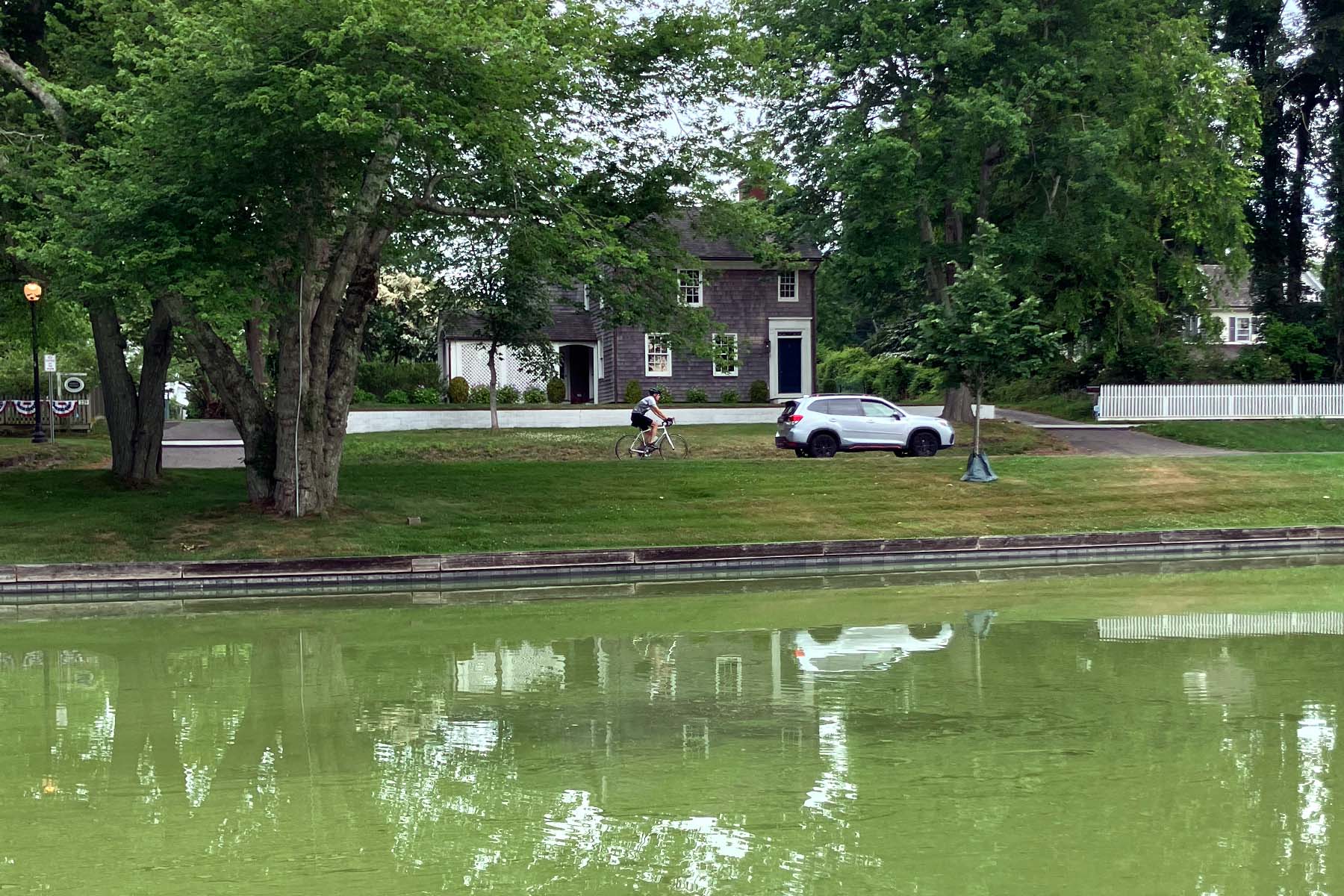
On Friday, the Suffolk County Department of Health Services issued a warning that a new bloom of cyanobacteria, also known as blue-green algae, has been detected in Town Pond in East Hampton Village. “Due to these findings, health officials ask residents not to use these waters and to keep children and pets away from the area,” a press release on Friday afternoon said.
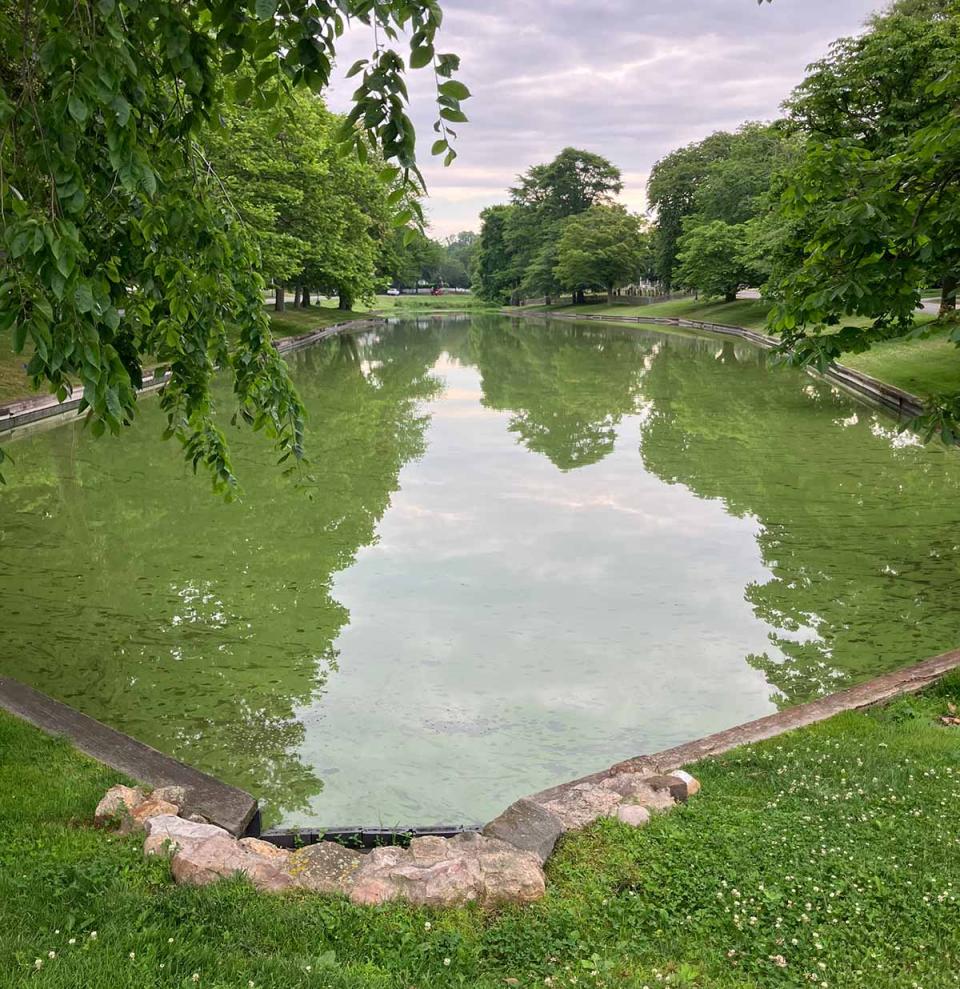
On Saturday morning, Town Pond — which has been known to turn various shades of green, on and off, since at least the mid-19th century, to the consternation of its civic caretakers — was again notably emerald-colored and murky. The color of the water is not, in and of itself, an indicator of cyanobacteria. Various natural inhabitants, from turtles to waterfowl, were seen moving on the water, apparently unperturbed.
Blue-green algae should also not be confused with another harmful bacteria in the headlines this summer, Vibrio vulnificus, the so-called “flesh-eating bacterium” that can kill a person within 24 hours of infection and that indeed killed two swimmers on Long Island in 2025.
Still, Christopher Gobler, of Stony Brook University’s School of Marine and Atmospheric Sciences and the New York State Center for Clean Water Technology, told The Star in April that blue-green algae does pose a danger to humans and animals. “If contact does occur,” the county warned, “rinse off with clean water immediately. Seek medical attention if any of the following symptoms occur after contact: nausea, vomiting, diarrhea; skin, eye or throat irritation; allergic reactions or breathing difficulties.”
“We noticed the pond had algae and requested Dr. Gobler test it,” said Mayor Jerry Larsen in a phone call. “He forwarded his results to the county and we notified the town. The Natural Resources Department will be posting the area so people and pets stay away from the water until it’s resolved.”
There have been hundreds of documented cases of dogs poisoned by cyanobacteria in freshwater bodies, including an incident at Georgica Pond in 2012. “More recent evidence is demonstrating that these particular toxins can be aerosolized and then be put in the air — that’s yet another human exposure route,” Dr. Gobler told The Star this spring.
The 252 cyanobacteria blooms in New York State last year set a record, with Suffolk County far ahead in 2025’s unpleasant tally, with 27 blooms. Scientists and environmentalists attribute the rise in harmful algae blooms (HABs) to overdependence on nutrient-rich products used in landscape fertilizer — for lawns, gardens, and golf courses — primarily nitrogen and phosphorus. Dr. Gobler told The Star in 2025 that, “To my knowledge, there was no record of freshwater HABs prior to” 2005. Broken or outdated septic tanks are another source of excess nitrogen.
Blue-green algae was also detected earlier in June in Wainscott Pond in Wainscott; Kellis Pond and Long Pond in Bridgehampton; and Mill Pond in Water Mill.
The Star has reached out to the Village of East Hampton and the Town of East Hampton for comment and will update this story as it develops.