
In 793 A.D., a phenomenon occurred that would shape Western civilization forever. Warriors and fearless explorers ventured out into the dark green and turbulent waters of the North Atlantic. Their goal was to reach new shores and dominate everything they found. This was not brutality for its own sake. It was conquest for survival and expansion of their society.
They ventured out into a sea that beckoned in longships. In reality, they were anything but “long ships.” They were 45-foot wooden vessels, with no crew quarters down below save a small four-foot platform in which to store extra sails and oars and other necessaries. That’s right, oars. They rowed across the forbidding North Atlantic. After wreaking havoc on England and France, they set across the ocean by way of Iceland, Greenland, and eventually to North America. They were visionaries. They called them Vikings.
In 1936, there was a second Viking invasion on North America. A captain named Carl Forsberg laid the keel for the Viking Star, a party boat, or “open boat,” in which excited and expectant anglers would arrive, tackle and coolers in tow, for a day of fishing for codfish, mackerel, and other bottom fish, at the dock in Freeport in Nassau County.
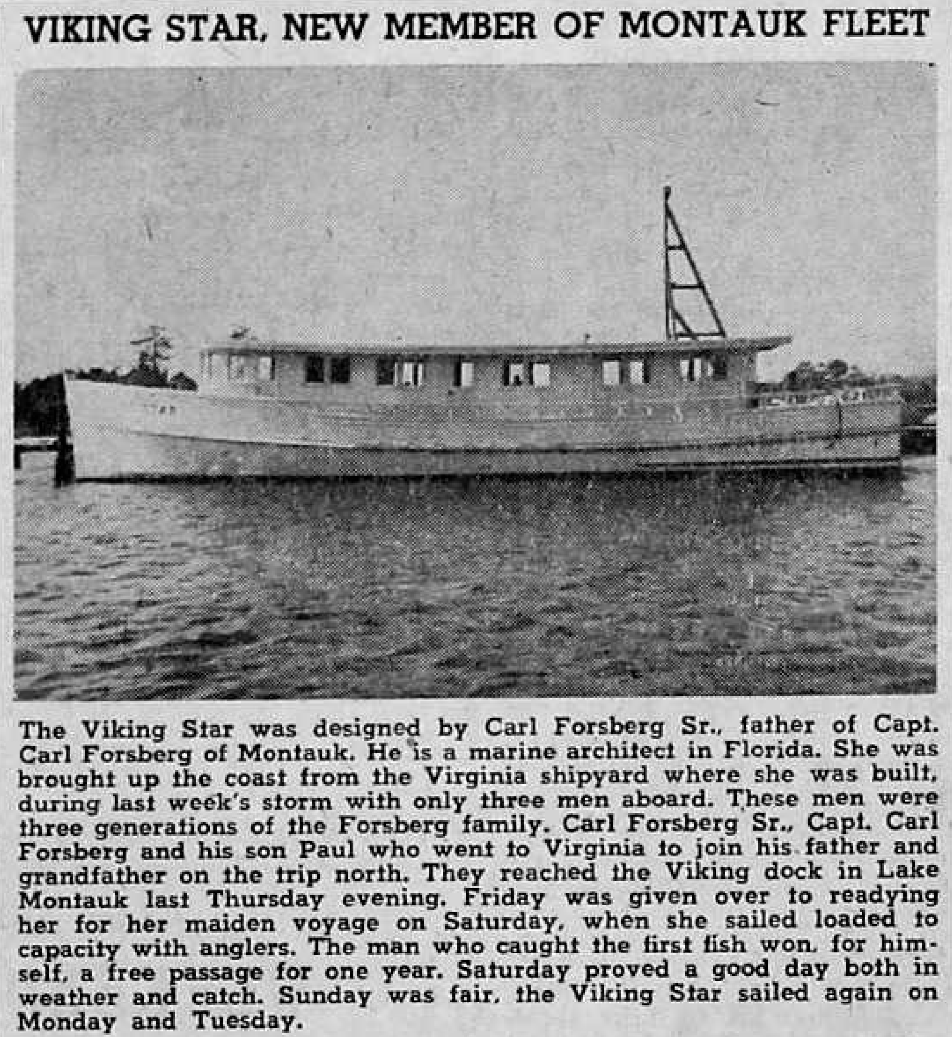
March 28, 1957
The operation moved to Montauk in 1951. The same eager flock of anglers arrived, many of them taking the Long Island Rail Road from Manhattan. They would board the boat and get ready to fish our abundant Montauk and Block Island waters. They didn’t have to travel far in those days. One of Captain Forsberg’s sons, Paul Forsberg, later took the wheel after he earned his Coast Guard 100-ton master’s license in the late 1950s. A generational phenomenon occurred again, and began another more friendly but nonetheless powerful and determined invasion. It was the genesis of what became and is to this day the iconic Viking Fleet. The broad bows, high freeboard, and white and turquoise paint on these oceanic battlewagons made these warships easily identifiable, even on the horizon from a distance.
In February 1966, at 13, I was standing on the deck of the Viking Star, having ventured out to Montauk Point, a fisherman’s nirvana. The then-three-hour drive from Manhattan always had the expectation of a safari. The resounding sound of steel being pounded, as coolers and tackle bags were thrown with a sort of swagger by the fares, echoed through the harbor, as the deep drone and vibration on the deck set a tempo for the day to come as the engines were warming up. Burly men in foul weather gear were busy loading the last bushel bags of skimmer clams to make sure there was enough bait for the day.
I walked into the cabin, and my senses were immediately assailed by the acrid smell of cigars being smoked in the cabins, making me immediately recoil back outside. I figured that puking before we left the dock would show bad form for an eager youngster. It was about 28 degrees that morning. Bitter cold, but my father was a savvy fisherman and taught me the first precept of fishing: You can always take a piece of clothing off, but when you need it, you can’t don what you didn’t bring along. One of the young mates closed the side hatch for boarding, and the engine revved slightly. Three blasts on the horn sounded what I would come to know as signal astern leaving the dock.
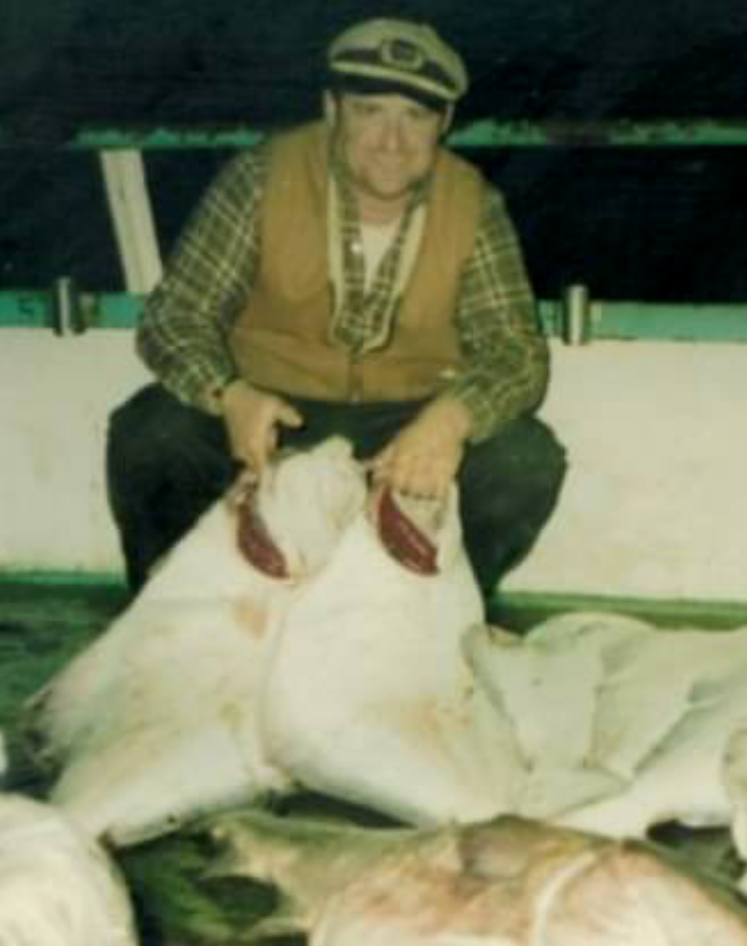
The mate was securing or fiddling with something. Suddenly from above thundered a deep, growling voice from the bridge. “Hey, get that (expletive deleted) bow line off now! We have fish to catch.” To say that the hapless mate was motivated to move swiftly would be an understatement. I looked up to the bridge and looking back at me was a man who, in my boyish imagination, may as well have been Captain Ahab himself. There were wrinkles around his eyes from years of squinting into the sun, even though he was a young man.
It was Capt. Carl Forsberg. He looked down on me and winked. A wry smile punctuated that wink. He disappeared and the Viking Star backed out of the slip. I looked at my father and said one thing: “Pops, I want to be like that one day. I want to be a fisherman.” I didn’t nearly accomplish what anyone named Forsberg did, but I sure as hell became a fisherman. Better still, I became a proud Viking.
In 1975, when I moved to Montauk, it was like a Wild West town. Tourists would stare at the fishermen like they were the Hells Angels. The bars were buckets of blood. You’d get into a brawl in Christman’s or Salivar’s down “killer’s row,” usually with competing crews that pissed each other off. Occasionally, things would get pretty rowdy when the scallopers docked in Montauk. The Viking crew victims of choice were usually the crew of the competing party boat, the Peconic Queen III, skippered by the mercurial and volatile Capt. Jimmy Behan. He was a decorated Vietnam veteran and seemed to come back generally pissed off, rest his soul.
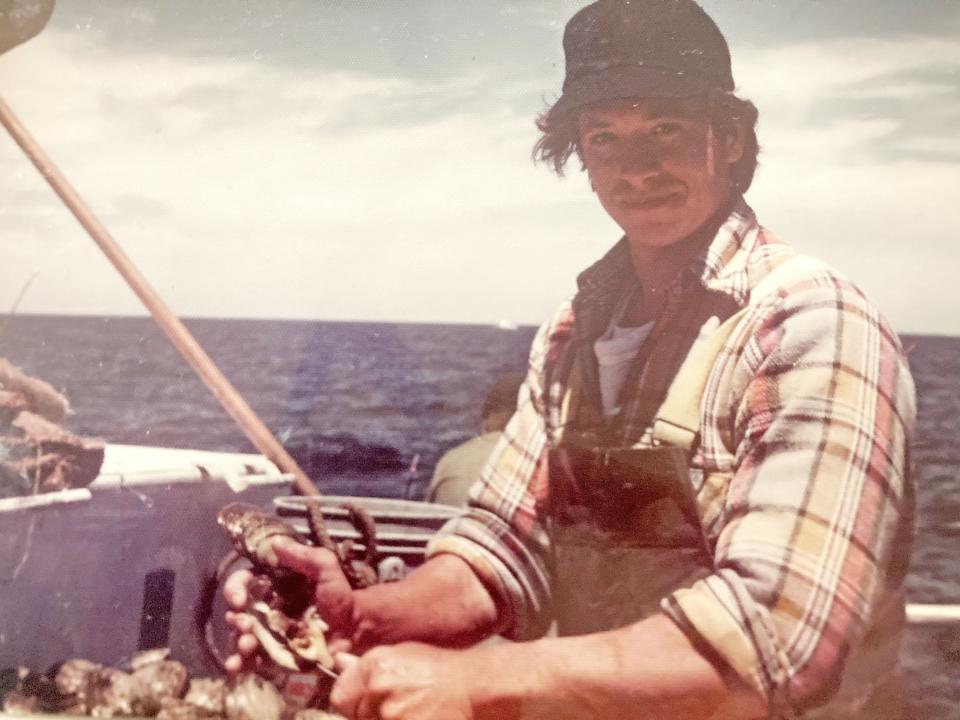
He and Paul Forsberg harbored a deep resentment for each other, just because Vikings like to dominate anywhere they go. Behan would often make the mistake of throwing a roundhouse punch at Paul Forsberg. What followed was pure chaos. After a few minutes of brawling, we would pick up any teeth we lost, crack our busted noses back into place, swagger up to the bar, and be drinking with the same guy you were just fighting with. Having Forsberg in the lead always ended well for us Vikings. Besides, we had a man named Mike Dext on our crew who was impervious to pain. We used to refer to this as a corollary to the Golden Age of Montauk. We all toasted our days of “wooden ships and iron men.” We were young, strong, and tough as nails. We were pirates.
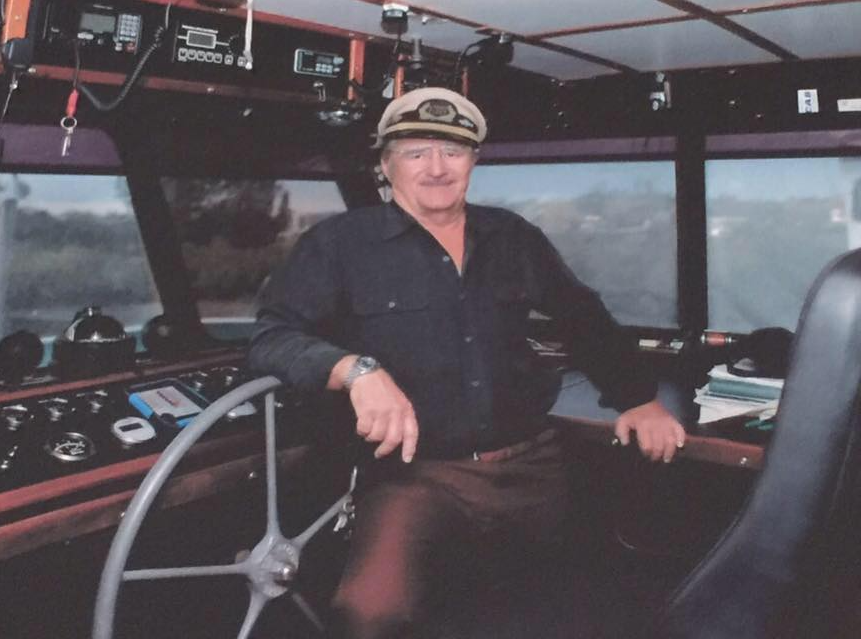
My first job on a party boat was on the Viking Starship. Capt. Paul Forsberg was running the boat by then. Whenever I would go up to the bridge to enter the wheelhouse because he summoned us or we were reporting that the deck was ready, the bait cut and ready to roll, I formed a habit borne of respect for the rank of captain, and would peek my head in the wheelhouse door, saying, “Permission, Cap?” meaning permission to enter, to which the Old Man, as we came to call him, would growl, “Sure, Chopper. Come on in.”
The wheelhouse is the sacred place, the sanctum sanctorum of any fishing vessel. It’s where the skipper makes his plan of attack for the day, dependent on the prevailing wind, tide, and current. Serious skippers usually keep a big bottle of Tums or Rolaids in the wheelhouse because you feel it in the gut when the fish are being picky. So, discipline on a non-military vessel seems to go a bit beyond military discipline. It’s a self-imposed discipline with undertones of maritime law. There is no off-time while fishing.
It is further axiomatic within the Viking Fleet that you really aren’t a true and seasoned Viking unless the Old Man fired you at least once. Yours truly has the singular distinction of having Paul Sr. fire me three times, once in Key West and twice in Montauk. I suppose I can be as cranky as the Old Man, but each time I was back on deck in the morning. That’s just the way it was.
Paul was the most enthusiastic captain I’ve ever had the privilege to fish with. He would pace up and down the bridge, regaling passengers with exclamations like “Atta boy, lady” to women passengers, and “I saw that, buddy,” when a fare would take a swing and a miss at a tricky fish. The guy was animated, excited, and never seemed to rest. On the way back to the dock, we would gussy up the boat with “hangers,” big Coxes Ledge codfish, pollock, and hake. We would literally festoon the bridge with them so people would be drawn to the boats to see our catch, and so we could compete with the Peconic Queen III. The spectators always gathered around us.
In 1985, I joined the crew of the Viking I, a steel monster of a tilefish longliner, skippered by Paul Sr.’s son Paul Forsberg Jr., or Frosty, as we affectionately called him, for his full head of blondish white hair. Frosty grew into a chip off the old block of the Old Man, but he wasn’t a troublemaker like some of his crew. He always used to tell me: “Chopper, I’m a lover, not a fighter.” I should have heeded that sage advice. That’s one of the reasons I have dentures today.
Our crew was made up of an eclectic band of brothers, with our requisite nicknames around the docks, such as Capt. Greg (Klondike) Beihl, Bill (Swill) Modica, Gary “Fugazy,” Capt. Mike (Daddy Bear) Bock Sr., Mike (Baby Bear) Bock Jr., Walter (Peanuts) Galcik, and others. I became known as Chopper, no doubt arising from my nefarious past as a city kid.
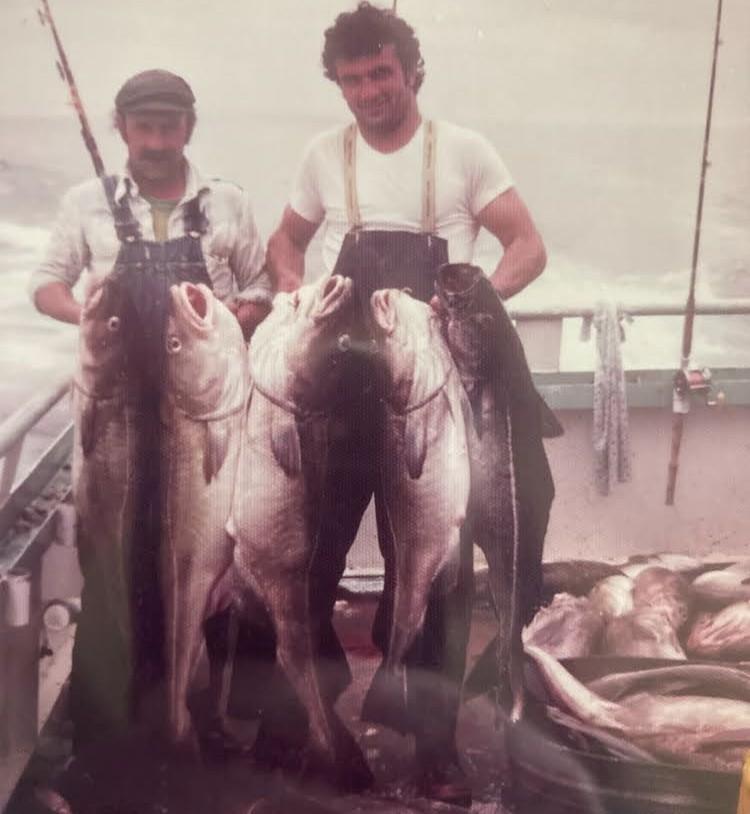
Together we prowled the far eastern canyons of the East Coast, ranging as far as Lydonia Canyon, right on the “Canadian Fence.” There was no such thing as a small or medium fish up there. They were giants, and we always filled the hold. But always hovering over us was the Old Man, guiding his son and our errant crew to where he figured there was a place that needed exploring or “prospecting” for new and fertile grounds. His deductions and guidance always resulted in success.
No matter where I have fished throughout my career as a fisherman, I’ve kept my ears open and my mouth shut in a new port. But the minute you mention that you are a Viking alum, jaws drop and instant credibility and respect follow. We’re a brand name and everyone knows that if you boast some type of Viking gene, you’re right up there in the pecking order.
There is a bit of stolen valor too. I’ve met guys I’ve never heard of before boast, “I was crew back in the old days.” Or better yet, “I ran the boat.” But those of us who really are the real deal Vikings know the history and lineage of captains and mates, so fraudulent Vikings are soon put in their place.
The style that we all emulated and adopted, even if only in the back of our minds, was the energy that the Old Man instilled in each of us. The Forsbergs still dominate the waters of the North Atlantic. Now the third Viking invasion is occurring as we speak, as Capt. Paul Forsberg and his new venture, GulfStar charters, has arrived in Tarpon Springs, Fla. The rich and abundant waters of the Gulf of America is the new Viking range. Paul’s brother, Steven Forsberg, is holding the wheel of the Viking Star, prowling the far reaches of the canyons for tuna, swordfish, and tilefish. They never come back without a full load of big fish. Paul’s son Carl has his hand in the business as well. On the Viking Fivestar, a sleek canyon-rigged vessel, Capt. Steven Forsberg Jr. puts a hurting on the fish in the canyons as well. Sometimes he lets a musty old Viking salt like me tag along.
Paul Forsberg Sr. extended what his father, Carl, had started. He instilled in all of us who became hard-core Vikings a fishing ethic that will be carried on by new generations of Vikings. I did a rough calculation of how many times in his long and illustrious career Capt. Paul Forsberg Sr. passed the bell buoy outside the inlet, with allowances for inclement weather, downtime, and yard maintenance. By my conservative estimate, he passed by that bell buoy on the way to Coxes Ledge or the offshore wrecks approximately 80,000 times.
He was the Commander in Chief. He was the Founder of the Feast. None of us will ever forget this man. Godspeed, Captain.
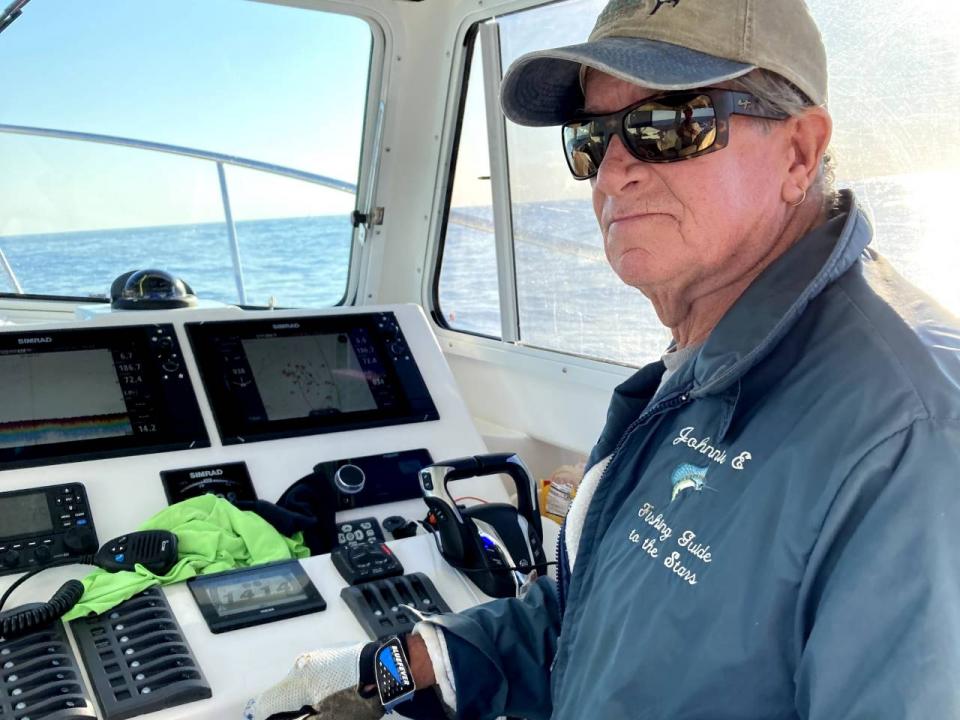
John Ebel lives in East Hampton. Capt. Paul Forsberg died in Tarpon Springs, Fla., on March 20 at age 86.