
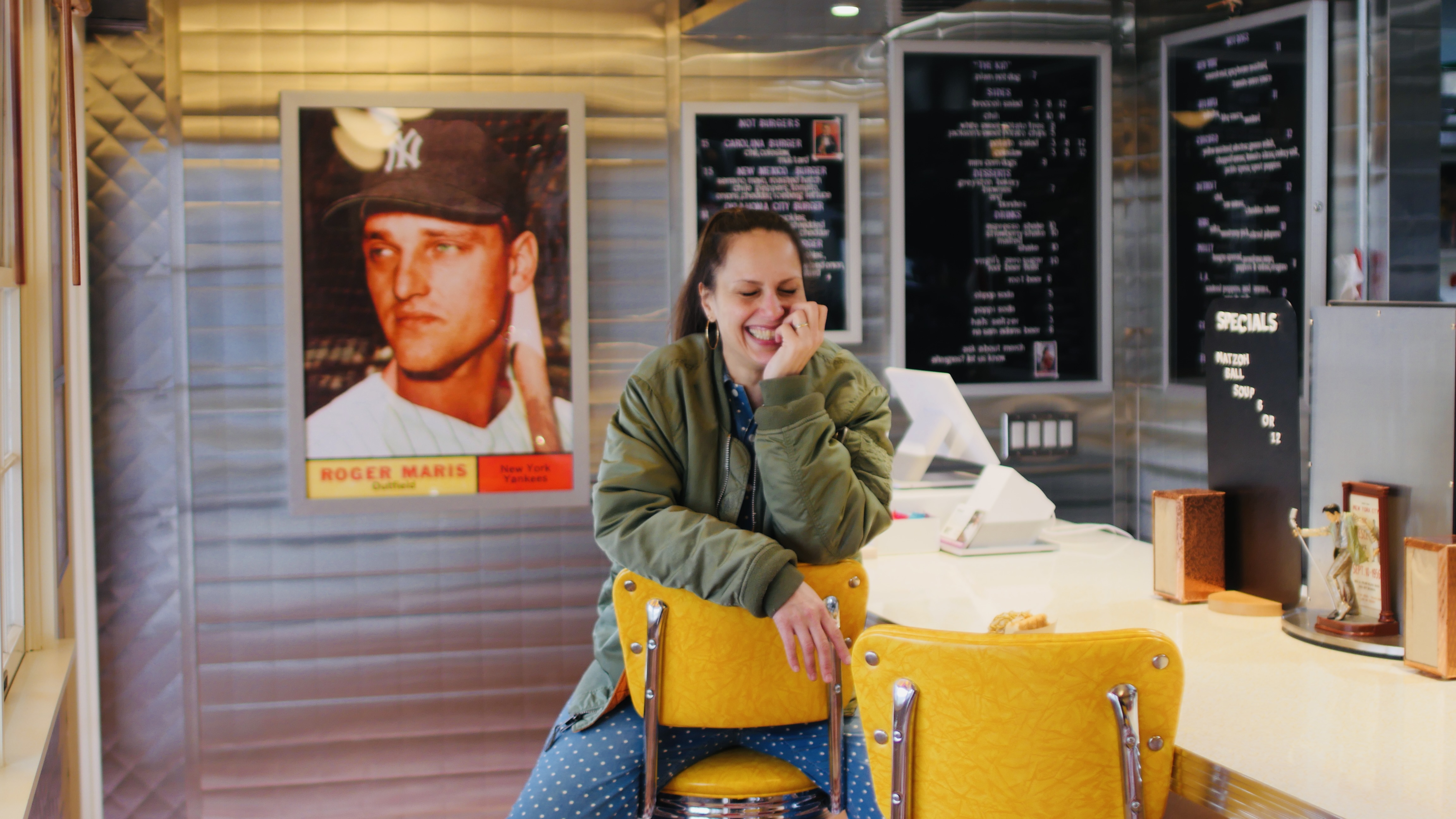
What have I learned from opening (and closing) the first and only all-vegan place in the Hamptons? As we lasted just a couple of years, much of what I absorbed came through failure. I was a naive rookie, simple-minded in my thinking that vegan food, done in a classic 1950s diner style with a baseball theme, might transcend this exceedingly politicized moment.
It didn’t, not consistently anyway. Even so, I don’t leave Nikki’s Not Dog Stand feeling wholly cynical. A small business trying to do a new concept was always a long shot, that much I knew, if only from watching “Ratatouille.” As Anton Ego, the critic, declares, “The world is often unkind to new creations . . . the new needs friends.” And somehow, against the odds, these new friends did show up at our Formica counter. Not enough to keep the stand open, but enough to keep the brand alive.
I picked the wrong time, just as the vegan movement was fading (even DiCaprio and Kevin Hart’s plant-based joints were closing). I was puerile enough to think I could donate 10 percent of the profits to local food banks, not realizing that with the rising rent and slow foot traffic I would struggle just to pay my tiny staff. I spent our rapidly dwindling budget on P.R. that didn’t really impact business.
I signed a contract that allowed the landlord to keep our beautiful interior diner; it is about to be used to sell hamburgers, which is no surprise since we heard over and over that we had a very cool place if only we served real meat like all the other nostalgic hipster luncheonettes. We had chosen a huge blow-up of a Roger Maris baseball card for our wall art, not because he was a classic Yankee, but because he was an underdog. He wasn’t Mickey Mantle. Or Babe Ruth. He was misunderstood and misrepresented, much like plant-based food. Maris, actually, was never comfortable being a Yankee. He preferred being a Cardinal, or an Athletic.
Occasionally, our Roger Maris art and Sarah Vaughan singing from the speakers united the left and right. Like when an old carnivore in a MAGA hat wandered in, didn’t grok that the menu was all plant-based, and went to town on our New York Dog. When I informed him that it was a meatless dog, he smiled and said, “Surprisingly delicious.” There were also many wide-eyed kids at the stand; the diner was built with them in mind, decorated with toys and stickers. Lots of apolitical alpha-gals too.
But I must admit, a lot of the days we served mostly liberal vegans, and like our algorithms, the Not Dog Stand became a place for like-minded people to get together and validate each other’s righteousness.
The renowned chef Daniel Humm spoke at Alice Tully Hall a couple of years ago. At the time, his Eleven Madison Park was fully vegan. Humm promised he would stay the tough course, because as a planet, we really had no other option. He was very convincing. About a year later he announced that Eleven Mad would return to serving meat. Vegans, of course, were furious. But there are a lot of plant-based people who think that liking an Instagram post is supporting a food place. If there are simply not enough customers showing up for vegan food, the corporations can take the space back. Even from Daniel Humm.
In the sense that we were a vegan ’50s diner adorned with images of bygone ballplayers and Patsy Cline playing, Nikki’s was unique. But we are just one in a long line of small businesses that didn’t last in Sag Harbor. There is a pattern of churn. The village is currently commencing work on a comprehensive planning study to address the long-term health, or lack thereof, of Sag Harbor businesses. Everyone seems to agree that commercial turnover negatively impacts the character of Sag Harbor. And yet it is happening more than ever, up and down the block, from street to street. This is one of the things I have perhaps become a little less naive about. Turnover can actually be more lucrative for the machine than retaining a long-term tenant. Especially in a town with rising market rates.
We sold a lot of vegan brownies and blondies from Greyston Bakery, a benefit organization in Yonkers that pioneered what is now known as “open hiring.” Yet mostly I forgot about my initial goal of trying to help feed the hungry. There is so much surface stuff that goes on with a restaurant in the internet age. Hours spent on the phone with DoorDash, Grubhub, and Postmates, trying to get the online menus right, asking where the delivery person is, being directed to Clover . . . it all becomes sort of unreal.
The cooking is grounding, the interactions with customers as well. But at night, it’s easy to drift into the digital ether, worrying about the quality of an Instagram story, or if a blog blurb quoted you correctly. It was only after I got out of the lease, and I could forget about my profile and all the outer stuff, that the notion to work with food pantries returned. I remembered my first summer at the stand, when I met Meredith Arm, the executive director at Share the Harvest Farm. A committed nonprofit organization, Share the Harvest works with all of the food pantries on the East End. This summer I’ll be collaborating with them, filling their fridges with plant-based dips and salads and such.
The beauty of the Not Dog Stand was that I met people who are trying to change the system, and I also directly encountered the large energies and forces that keep the system as it is. At the end of the day, perhaps I have to meet both if I want to be a cook worth my salt. Standing behind a Formica counter all day, I kind of thought I could impose my vision on the customers. But maybe I just had to listen and watch. And then cook.
Nikki Glick was previously in the antique jewelry business. She now lives in Springs year round.