
I don’t smoke or drink anymore, but I relish the memory of a pack of Marlboros shooting out of a cigarette machine — as much as I do the Marlboro Man and the iconic two-story animated Camel billboard on the Hotel Claridge, at 44th Street and Broadway, which blew smoke rings from a soldier or sailor’s mouth every four seconds from 1941 to 1966.
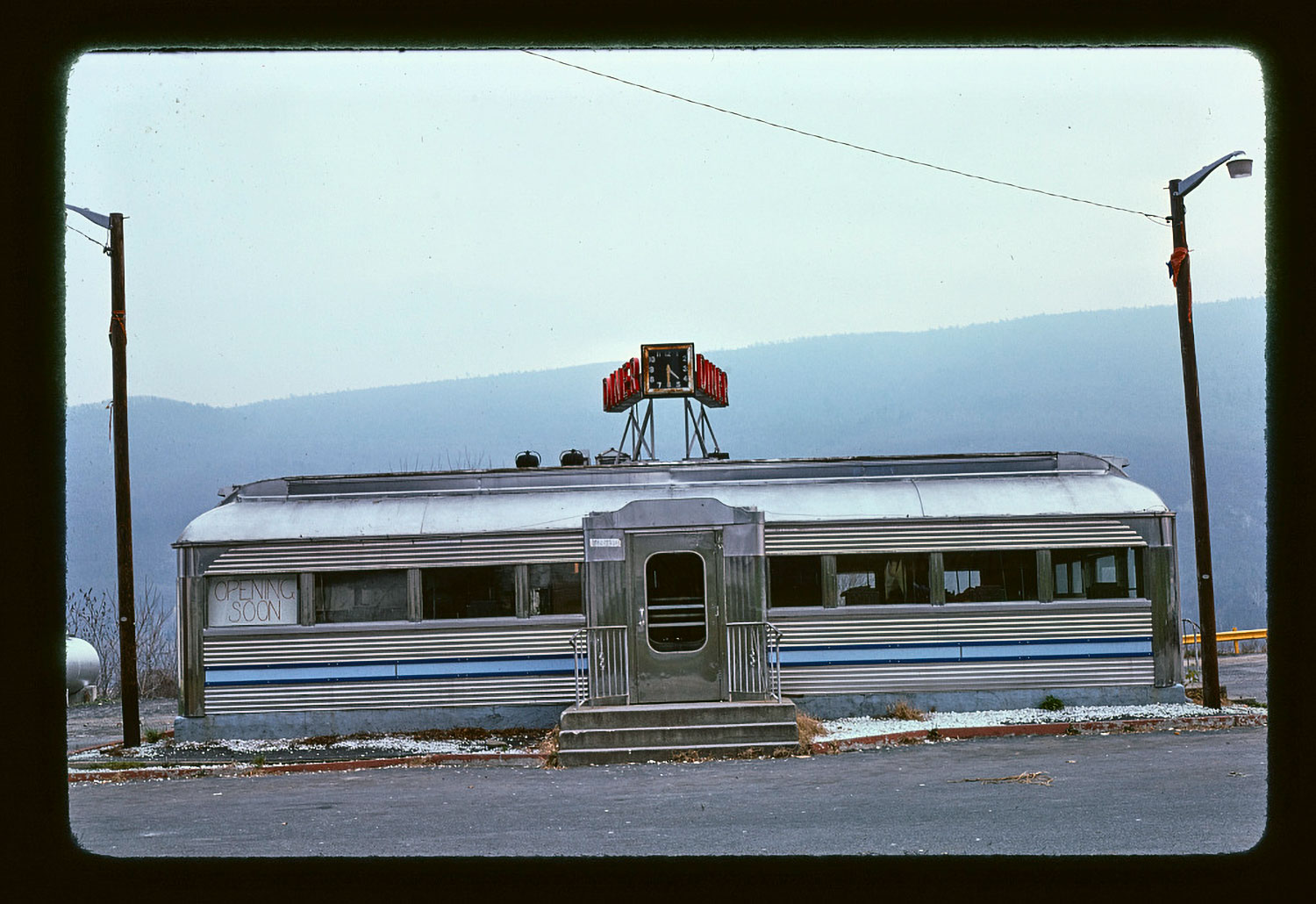
I have a nostalgia for longneck Schaefers and those counter juke boxes in diners, where you flipped the pages of songs, getting, say, “Walk on By,” “My Girl,” and “Sittin’ on the Dock of the Bay” — all three for a quarter. And remember those iconic tin-plated structures that had once been boxcars?
I still have the pipe rack I inherited from my namesake, who died in the invasion of Normandy, and a blue packet of Gauloises from my Paris days, which themselves have become a state of mind.
Recollections are my paleontology. Freud equated understanding the mind (whatever that means) with an archeological dig.
The sites are sometimes real places, like the old Albert’s on University (once a restaurant and now a co-op), which had a faux Eiffel Tower like the one atop the Paris Suites you may be lucky enough to fix your gaze upon, should you be nearing the apparition of Gotham, on the L.I.E. — and the ghosts of the old manned tollbooths in front of the Midtown Tunnel. There was an enormously sweet young lady who worked the lane for those who didn’t have exact change. She always looked like she recognized you. She was your guardian angel, your Tiresias.
Is that new branch of Lunch in Southampton really a diner? Better to call it Dinner?
If you’re caught in a riptide, don’t fight it, reads the sign on the men’s room wall at Main Beach in East Hampton, a memory machine with its iconic concession staffed by cheery young people out of the “A Stop at Willoughby” episode of “The Twilight Zone.” They look right through an old man lost in his memories, the sound of waves crashing in the distance, a metronomic ode to the perpetual.
Where do waves fit into Stephen Hawking’s “A Brief History of Time” — maybe more than are dreamt of in his philosophy?
“Goodnight, ladies, goodnight!” Earnest conversations are proliferating all over town. You spot the dyads and triads in their pods at John Papas. You make fun of self-absorption but thank God for this survival mechanism. Thank God for much-maligned interiority.
“What Is to Be Done!” asked Lenin. Sometimes nothing. The stars were Alfred Bester’s destination. You come. You go. Certain routes will never change until they do, like Route 17 up near Roscoe threatening to become Interstate 86.
Is it true what they say about the fate of the structure in which Sam’s still resides? Will Stop and Shop keep its name when it’s one day turned into an art gallery? What will the East Hampton Cinema become when it too retains its name but no longer shows movies? A brand like Polo?
The geese honking over Georgica are the cabs of tomorrow. It’s evolution at work.
They used to call it “social studies” or “current affairs” when you were a kid. What’s happening now is very painful. Feels as if life were being torched to the ground — the life you knew at least.
It happened very quickly in the case of Pompeii, but as it turns out everything was preserved intact, the moment that world fell apart.
Francis Levy lives in Wainscott and Manhattan. His novel "The Wormhole Society" is recently out, with a graphic novel version illustrated by Joseph Silver.