
I have stolen this title unrepentantly from the playwright Arthur Miller, though it’s not about 1600s Massachusetts but 2020s America. My justification for this pilferage rests on the meaning of the word “crucible” in ancient alchemy. A crucible is a fire-resistant vessel in which substances are heated with the intent of producing a transformation. The name comes from the Latin “cruciare,” to torture, from which also comes the word “crucifixion.”
Alchemy is distinguished from modern chemistry in that the alchemists believed that spirit participated in the reactions that chemistry ascribes exclusively to matter. A key element of the alchemical belief system was that to raise substances into a purer state it was often necessary first to drive them to a condition of degradation. They called this the nigredo, or blackening.
I’ll set aside the question of whether in the premodern mind this terminology had the racist implications that suggest themselves today. My own view is that, before the Portuguese incursions along the African coast beginning in the 1400s, it did not.
Be that as it may, the idea was that to rid a substance of imperfections and go up to a higher state, one first had to go down. One has only to think of writings as ancient as “The Epic of Gilgamesh” or as medieval as Dante’s “Divine Comedy” to see this trope in action.
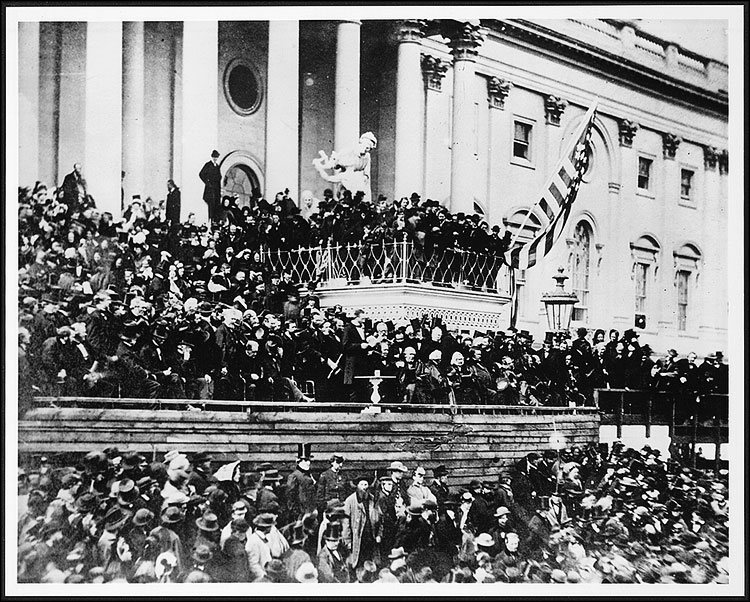
America’s most intense crucible was, of course, the Civil War. At the cost of half a million lives, it transformed America from a group of connected polities, plural (the United States are), to a nation singular (the United States is). Tragically, the alchemy of the Civil War was interrupted by the murder of our greatest president and his replacement by one of our worst. It can truly be said that one bullet from the assassin’s pistol did more harm to America than all the ordnance used against us in World War II.
With the two presidencies of Donald Trump and the interlude in between, we have been plunged into another period of national testing. It is by no means certain that our political system will survive in a form under which anyone but an oligarch would wish to live, let alone raise children.
Still, I see reason for hope. While walking home from the Sag Harbor vigil for Renee Good, a friend remarked that she was grateful that we could assemble and protest without fear of retribution, in contrast to where she grew up, where even such innocuous behavior as holding up a sign would result in imprisonment, torture, and, likely as not, death.
We have no guarantees. Life is contingent. Nevertheless, we can see cracks opening in the fascist enterprise. Our task now is to do what we can to widen these cracks and upend its social and political support structure.
The key is not to be our own worst enemies. We must avoid violence at all costs. There were times in history when one had to go to civil war, but this is not one of them. We must welcome potential allies in the fight to save democracy, even if we continue to disagree with them on issues that are important to us and to them. We must be smart. As Jesus urged his followers 2,000 years ago, we need to be “as shrewd as serpents, and innocent as doves” (Matthew 10:16).
Above all, we must be motivated by love, not hate. The greatest of revolutionaries, from Jesus of Nazareth himself to Mahatma Gandhi and Martin Luther King Jr., followed this path. Love doesn’t always win. We know that. But hate only breeds more hate. As the poet W.H. Auden wrote, “Those to whom evil is done / Do evil in return.” We need to find the weakest links in the chain of hate and weaken them further to the point of breaking, not add parallel chains that only reinforce hate.
This doesn’t mean we shouldn’t be angry. Jesus was certainly angry when he kicked over the money changers’ tables in the temple, but he never gave in to hate.
There was a time when I imagined people I didn’t like burning in hell. I still struggle with this. I am not yet cured. But now I know that the only real hells are the ones we humans create in the here and now. These hells are created by pride, resentment, and greed, but their fires are fed by hate. Let us choose love.