The potential construction of a parking lot at the Springs Library, which proponents say would alleviate the current shortage of parking in the area, was endorsed by six residents, and opposed by three others, when the East Hampton Town Board considered the proposal on Tuesday.
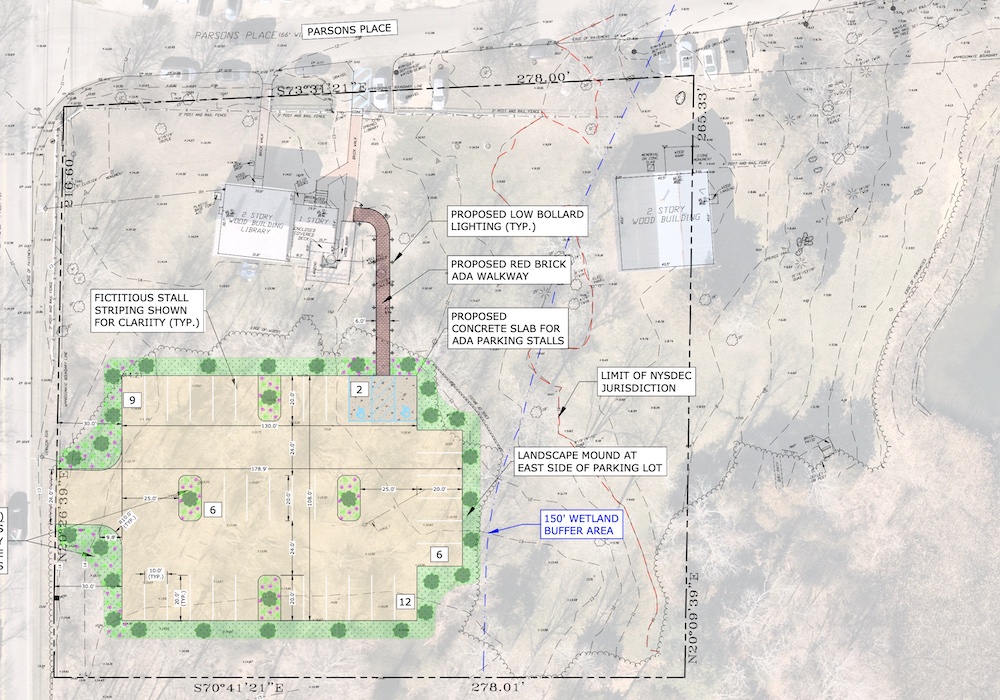
L.K. McLean Associates has prepared two layout options, one designed to accommodate 33 spaces, the other with 21. Each would include two additional handicapped spaces.
“The intent is for the parking lot to have a natural, landscaped character rather than the appearance of a conventional paved parking lot,” with a permeable gravel surface, according to a memorandum from Councilman Ian Calder-Piedmonte, the board’s liaison to the Springs Citizens Advisory Committee. The memorandum likens the proposed lot to that of the Parrish Art Museum in Water Mill, “where landscaping and greenery are incorporated into the parking area and help integrate the lot into the surrounding landscape.”
The lot, proponents say, is needed at the hamlet’s nexus, where the library, Ashawagh Hall, the Parsons Blacksmith Shop, and the Springs Presbyterian Church are in close proximity. A farmers market draws many to the lawn of Ashawagh Hall on Saturdays in the summer, and Springs residents who spoke in favor of the parking lot’s construction noted the number and scale of events at each of the locations.
Residents spoke during the public portion of Tuesday’s meeting, prior to the board’s discussion. The area becomes very congested on Saturday mornings, said Jennifer Fowkes. On Saturday, she said, multiple simultaneous events — including the farmers market, a private party at the church, a clothing sale inside Ashawagh Hall, and a children’s event at the library — demonstrated the need for additional parking.
It’s not just a problem in the summer, said Loring Bolger. Mahjong sessions at the library can draw 50 people, she said, and the Springs Food Pantry, at the Presbyterian Church, is busier in the off-season.
The proposed parking area is essential, said Ira Barocas, because parking spaces have been lost to private development along School Street, while the closed Springs General Store’s parking lot, which he said used to hold 20 vehicles, is now behind a fence.
A parking lot is “long overdue,” David Buda agreed.
Opponents, however, said cutting down trees to accommodate a parking lot is the last thing the town should do. Jackie Esposito, who said she takes food scraps to the farmers market for composting, called it ironic that “we’re talking about compost and at the same time considering cutting down trees and building a parking lot adjacent to wetlands and a vulnerable ecosystem.”
Wildlife habitat will be destroyed, she said, and leaking fluids from vehicles will poison the environment. The smartest solution, she told the board, would be to move the farmers market to another site, such as the Springs School. “In the long run,” Ms. Esposito predicted, “we will see this was a flawed proposal and regret it.”
It was also ironic, Krae Van Sickle suggested, that the town board is simultaneously planning to remove trees in favor of a parking lot and to amend the town code to protect trees from being cut down on residential property. He said he was “appalled by the idea of cutting down a big swath of trees in clear-cut fashion.” The town is “frequently rushing to accommodate the summer crunch when it only happens for a short time,” he added, suggesting “working with nature” instead and creating “parking nooks tucked away between where trees exist.” A parking lot, he said, will “scar the landscape.”
Members of the hamlet’s citizens advisory committee, the library, the Springs Historical Society, the Springs Improvement Society, and the Presbyterian Church “all said we need this,” Mr. Calder-Piedmonte reported.
The councilman did acknowledge environmental concerns, including runoff and potential impacts to Pussy’s Pond, which he said are valid and shared by the board but can be addressed. While the proposed lot would be situated in a wooded area, many of the trees there are dead, he said.
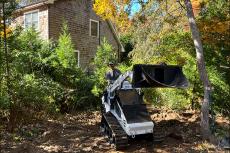
In fact, Mr. Calder-Piedmonte noted, the Springs Historic District guidelines call for the area to be cleared, and Robert Hefner, a historic preservation consultant to the town, “believes those trees should come down,” as their removal would restore a historic vista.
“The idea is to have something that improves the vista but also accommodates vehicles when needed,” Mr. Calder-Piedmonte said.
As demonstrated by aerial photography from decades past, the area was once open field, said Matt Jedlicka of LK Mclean Associates. Stormwater would be contained on the site, he said, construction to include drainage structures, a raised area, and grading so that the parking lot slopes away from the pond.
He described a “soft, natural lot” that appears to have been there for many years. There would be no curb, he said. The question of lighting would be addressed at a later time, board members agreed.
Mr. Calder-Piedmonte’s colleagues were supportive of the plan and favored the larger of the two designs, which will require around 17,000 square feet of clearing. The smaller-lot option would mean 15 percent less clearing but one-third fewer parking spaces.