Keep Those Windows Lively, Sag Harbor

Thu, 01/22/2026 - 11:50
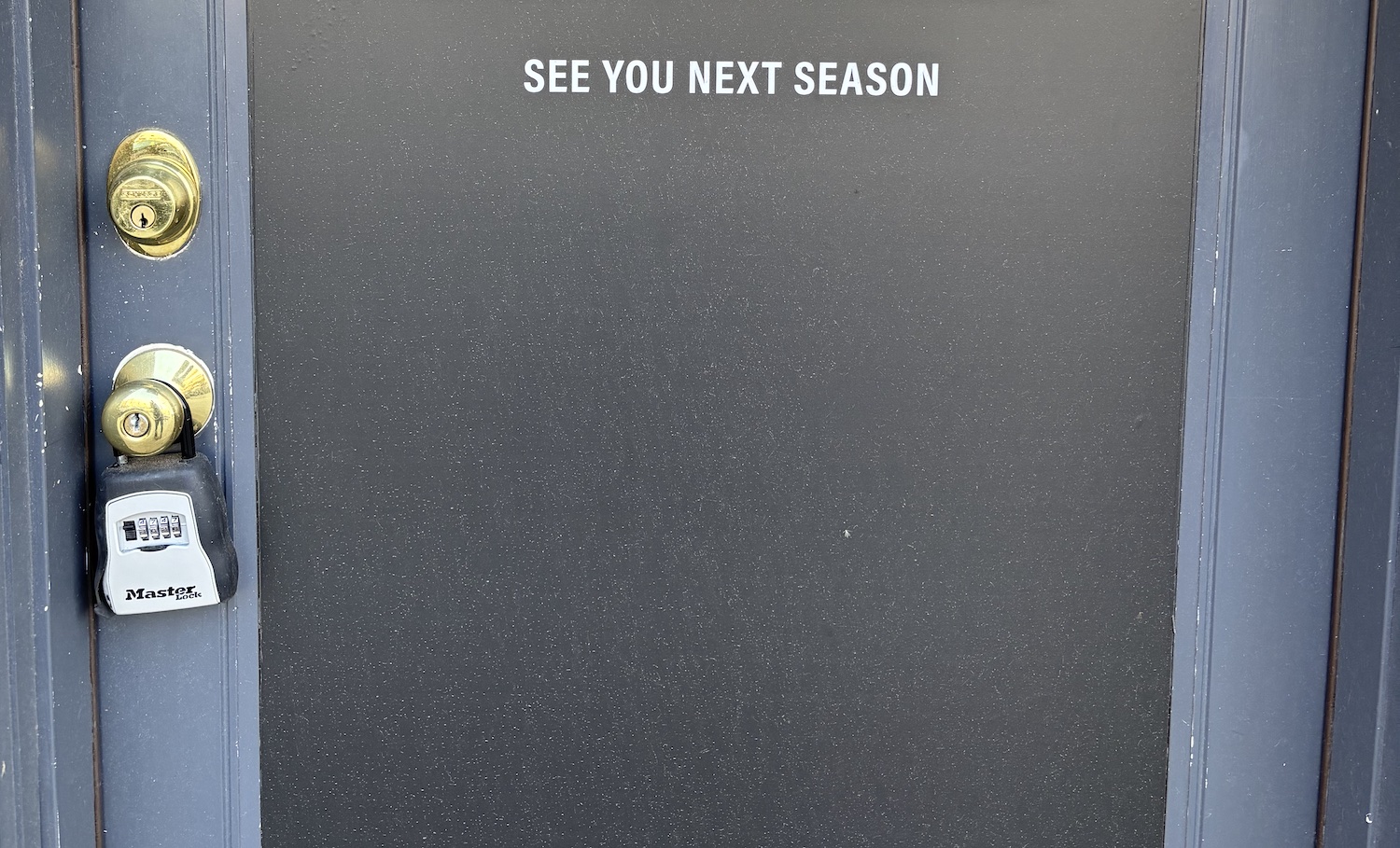
Newly approved legislation in Sag Harbor aims to avoid looks like this when stores are vacant for the off season.
Christopher Gangemi

The Sag Harbor Village Board held a public hearing on a proposed law that would require vacant storefront windows to feature a window display when it met on Jan. 13 and, hearing no comment from the public, closed the hearing and quickly adopted the law.

The intent is to prevent vacant storefronts from negatively impacting the aesthetic character of the village. Window displays, according to the resolution adopting the law, “contribute to the vitality and economic health of the village’s business districts by visually connecting interior activities with public space and pedestrians on the street.” Vacant or boarded storefronts have a negative impact on that aesthetic character, the law reads, and the purpose is “to promote the success of the businesses and the overall health of the village’s business districts, encourage an active and lively streetscape, and maintain the historic aesthetic character” of the business districts by requiring owners or tenants of nonresidential buildings to place a window display in all storefront windows.

A storefront window is deemed vacant if no licensed business is conducted there for at least one month, and includes seasonal closures. Fine art, sculpture, photography, or the village’s logo are suggested examples of a window display.

Under the new law, the aggregate area of window displays cannot exceed 50 percent of the storefront window. Adhesive materials used to affix the window display cannot be visible from the outside of the storefront window. A window display must face the exterior of the storefront window and cannot be farther than three feet from the interior of the window. It may be illuminated by shielded, direct, white light sources not exceeding 75 watts and so that no glare extends beyond the property lines or disturbs the vision of passing motorists or constitutes a hazard to traffic. Window screening such as blinds, draperies, curtains, or a covering made of cardstock or paper covering any portion of the window is not considered a window display. 

The law includes penalties in the form of a fine of between $1,000 and $2,500 upon conviction.    

Villages

In Real Estate Now, It’s All About Lifestyle

The name of the game in real estate marketing has always been print, signage, and Main Street storefronts showcasing the latest listings. While East Hampton Village still has about a dozen storefronts where potential buyers can swoon over photographs of what’s for sale, the marketing is shifting.

Mar 5, 2026

Rowdy Hall’s 2026 Giveback

Rowdy Hall in Amagansett is celebrating 30 years in business by launching a 1 Percent for the East End Giving Campaign, in which the locally owned restaurant will donate 1 percent of its monthly revenue to a rotating local charity serving the East End throughout 2026.

Mar 5, 2026

Item of the Week: Esther Mulford to Phebe Rysam, 1796

The story of the Mulfords, their extended family, and their James Lane homestead.

Mar 5, 2026


Your support for The East Hampton Star helps us deliver the news, arts, and community information you need. Whether you are an online subscriber, get the paper in the mail, delivered to your door in Manhattan, or are just passing through, every reader counts. We value you for being part of The Star family.

Your subscription to The Star does more than get you great arts, news, sports, and outdoors stories. It makes everything we do possible.