“The Disappearance of Landscape: Oakleyville, 1964-2022,” an investigation of the practices of five artists who lived and worked between New York City and the Fire Island community of Oakleyville, will open at the Watermill Center with a reception on Saturday from 4 to 6 p.m. and continue through March 20, 2027.
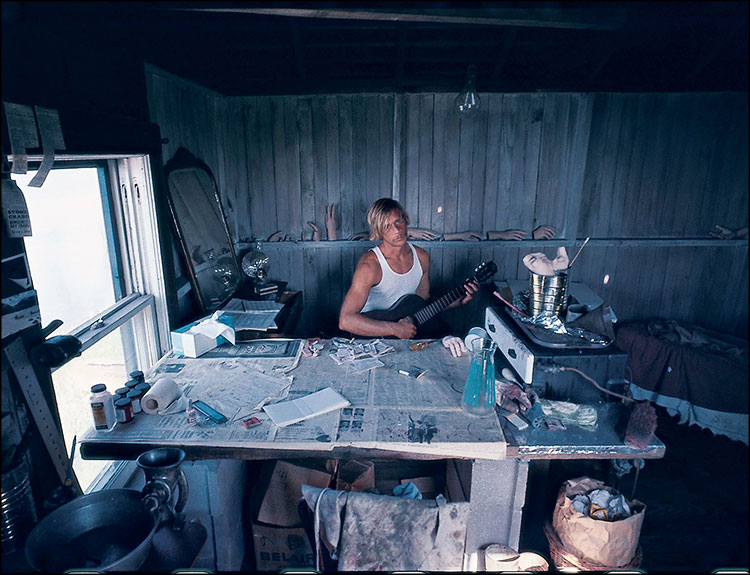
Organized by Marcelo Gabriel Yanez and Noah Khoshbin, the show features a selection of paintings, photographs, and sculptures made while living there by Sheyla Baykal (1944-1997), Peter Hujar (1934-1987), Paul Thek (1933-1988), Ann Wilson (1931-2023), and Matthew Leifheit (b. 1988).
Unincorporated and unlisted on maps, Oakleyville is an inholding within Fire Island’s maritime holly forest, which became a nexus for an interconnected network of queer downtown New York artists beginning in 1964.
The exhibition explores how Fire Island’s unique environmental conditions affected some of those artists’ work. With significant portions of the island projected to be submerged within the next 30 to 50 years because of sea level rise — and the maritime holly forest expected to be among the first areas lost — Oakleyville will soon become unreachable. (With only nine or 10 houses, it is now accessible primarily by boat and foot, with no public ferry dock or paved roads.)
Against that backdrop, according to the Watermill Center, the exhibition considers Fire Island as both an artistic community and a fragile environment increasingly under threat, reflecting the role of place not just as a subject of representation but as an active force in the creation of art.
The show also has a connection to Thek’s legacy at the center. In 1988, Thek left his estate to his friend and longtime collaborator Robert Wilson, the founder and artistic director of the center. In partnership with Thek’s estate, the center has worked to advance his legacy through the preservation of his archive and collection. It holds the most comprehensive collection of the artist’s works and papers and keeps a selection on permanent display.
The exhibition follows solo shows of work by Thek in New York City at the Pace Gallery and Galerie Buchholz. It takes its title from Yanez’s book-in-progress about artists on Fire Island between the 19th and 21st centuries.