
All Is Not Well In Colorland
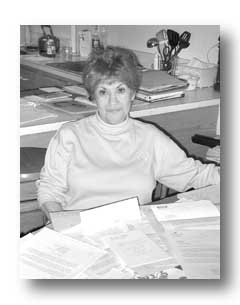
More than 15 years after self-publishing a children's book featuring humanoid cartoon crayons, Judy Sleed of East Hampton holds fast to the belief that "Tip," the Crayola company's mascot, was based on her design.
"Every time I look at Binney and Smith's crayon boxes with the animated crayons, my heart sinks, because those are identical with my illustrations in my book," Ms. Sleed wrote in a recent letter to an attorney for Crayola's parent company.
"The Fight of the Crayons" was conceived in the 1960s and printed by Vantage Press in 1984. Ms. Sleed still has her original sketched version of the book, in crayon and pencil on thick brown paper. She also has folders full of correspondence from several levels of management at Binney and Smith and lawyers on both sides of the issue, as well as many copies of the book and a slew of printed promotional T-shirts.
Her intention from the start, she said, has been to have her book published "by a major publisher. I want to share this story with the world. I think it's a wonderful story."
"Beyond the Mountain of Dreams and across the Ocean of Happiness lies the Kingdom of Colorland," it begins. "The subjects of this magical kingdom are Crayons. Life is beautiful in Colorland. The Crayons have only colorful thoughts, and they are ruled by a bright and kind king."
Children enjoy visiting Colorland to watch the Crayons at work as they keep everything beautiful. One day, however, things go sour when each crayon decides that its color is the prettiest, and a fight ensues. This causes the king to "summon the most feared subject in all of the Kingdom of Colorland. He called for the Eraser."
The colors get erased, Colorland becomes colorless, the kingdom is drab and droopy, and the children cry. The wise king then teaches all the crayons a lesson: He asks each one in turn to color everything in its color, and everyone agrees that nothing looks pretty when it's all monochromatic. Each color has its place, and when they all cooperate, life is again happy and harmonious.
Crayola Not Interested
Ms. Sleed wrote the story and knew what she wanted the crayon characters to look like, but, as she was not skilled at drawing, relied on Vantage Press to execute her ideas. "They used a staff artist," she said, to create simple line drawings of her designs, a cost-effective move that provided an interactive, coloring-book quality.
When the book came out, Ms. Sleed embarked on a publicity blitz. She appeared on "The Joe Franklin Show," a late-night TV talk show, had a book party at the Lombardy Hotel in Manhattan hosted by the society columnist Earl Wilson, among others, gave away many copies of "The Fight of the Crayons," and sent some to a long list of publishers - and to Binney and Smith, hoping the company would sell it along with boxes of Crayola.
Not only were they not interested, but "they kept claiming they never heard of me," she said. "Then I saw the crayons in my book illustrating their crayons," which prompted her to seek legal advice.
"Tip" debuted in January 1989. A letter dated May 10, 2000, from Diane F. Adams, manager of licensing and custom programs at Binney and Smith's Easton, Pa., headquarters, describes the character's genesis:
"The depiction of a product with human features is a very common advertising tool. We had previously used a version of our distinctive packaging with human features as a 'mascot' and when planning an updated version, the use of a Crayola crayon with human features was an obvious choice. When designing an anthropomorphic crayon, some basic elements must be present. The uses of these basic elements - arms, legs, and a face - are the only things in common between your book and our 'Tip' character. The style and particular traits of each are very different."
Responses like this from the giant corporation have been very frustrating for Ms. Sleed. "My problem is, I have no money to fight this," she said.
A letter similar to Ms. Adams's was even more dismissive. Albert P. Mauro Jr., the lawyer for Binney and Smith with whom Ms. Sleed has been corresponding, responded to her August letter at the beginning of November.
"I understand that you will not accept our protestations of innocence," he wrote, "but your correspondence will not change the facts regarding the creation of our character or our view of those facts."
Ms. Sleed said it might be possible to make a case for copyright infringement, had she the financial resources. A lawyer she consulted, Jay H. Begler of the Manhattan firm Liddy Sullivan Galway Begler & Cohen, wrote to Binney and Smith in January 1998, stating, in part, that "it is not necessary, in a case of copyright infringement, to show that each element of the design, e.g. clothing, size of arms and legs, and facial details, are similar, much less identical - only that the total 'look and feel' of the two works is the same."
"Look And Feel"
Suzanne Shane, an attorney with the East End firm Twomey Latham Shea & Kelley, explained this week that it was standard in such cases to consider "look and feel" when determining the origin of creative material. It would not be easy, though, she said, because the criteria are subjective and it would take some research to find relevant precedents.
There are many similar cases, she said, citing one involving the inspiration for George Harrison's song "My Sweet Lord." In that case, the writers of another song claimed Mr. Harrison had used their melody, whether consciously or not, and a court agreed.
Fighting a large corporation is never simple, however, Ms. Shane said. "A huge amount of discovery would have to go on against a huge company, but it's not impossible. Like any litigation, you'd have to steel yourself for it."
But Ms. Sleed is no stranger to hardship, having survived the Holocaust in her native Hungary and coming to this country at the age of 15, the only member of her family to be spared. Shortly after, in November 1949, her first writing was published, an autobiographical story for the Hungarian "Magyar Magazin."
"During the war we were hiding in a basement," she said. Also hiding there was a frightened 6-year-old girl. "I don't know what happened to her, so I just wrote about her."
"I've been writing all my life," Ms. Sleed said, but that story and the crayon book are her only published works. She has also written plays and is working on her memoirs. "I'm a product of the Holocaust and I finally feel free to talk about it," she said.
None of her struggles have dimmed Ms. Sleed's enthusiasm and tenacity. Now almost 70, she takes great pride in her family - two daughters, a son, and four grandchildren - and she maintains a positive outlook.
She has been living at Windmill Village for nearly a year and said, "I love it here. I feel very lucky. The people are very nice. It's just heaven."
At this point she has all but given up on the legal route, with its many associated costs. "I just want to make some noise," she said. What frustrates her most, she said, is Binney and Smith's corporate attitude. "If they told me this was no good for them" - "this" being her crayon design - "how come they are using it? That's my whole point."
As she closed her letter to Mr. Mauro in August, "I am not letting this go. I'd like to see my work recognized before I die."